+1 315 210 4488
 +91 99888 06489


September 4, 2026
Crypto wallets have become an important part of the digital asset market, creating opportunities for businesses to build products around crypto storage, payments, trading, transfers, and asset management. However, choosing the right wallet model is one of the first decisions entrepreneurs need to make.
The two main approaches are custodial and non-custodial crypto wallets. While both allow users to manage digital assets, they differ in who controls the private keys, how transactions are managed, and what responsibilities the business takes on.
For businesses, the choice is not simply about technology. It can affect security, compliance requirements, user experience, operational control, development complexity, and revenue opportunities. That’s why it is important to choose the right crypto wallet. In this post, we have discussed everything about custodial vs non custodial wallet.
Launch a Scalable Crypto Wallet with RichestSoft
Launch a Scalable Crypto Wallet with RichestSoft
What Is a Custodial Crypto Wallet?
A custodial crypto wallet is a wallet run by a firm or third-party provider that owns the private keys on behalf of consumers. Essentially, the firm is responsible for the technical side of things in terms of storing and maintaining the crypto, and customers utilize the platform to access their money.
This makes crypto more accessible, particularly for folks who may be uneasy with keeping private keys or recovery phrases on their own. But it also means the corporation is taking on more responsibility to safeguard users’ assets and wallet infrastructure.
How Does a Custodial Wallet Work?
The process is similar to using an online financial account. Users create an account, deposit crypto, and manage their assets through the platform. The provider handles the underlying wallet and transaction infrastructure.
It generally works like this:
User creates an account
The user signs up on the platform and completes any required verification.
Business manages the keys
The platform or its custody provider controls the private keys connected to the user’s assets.
User manages crypto through the platform
Users can view balances, send or receive crypto, and perform supported transactions.
Platform handles transactions
The business manages the technical process required to execute transactions.
Business protects the assets
The provider is responsible for security measures and safeguarding the keys.
Business Opportunities With Custodial Wallets
For entrepreneurs, a custodial wallet can be more than a storage tool. It can become part of a larger crypto business platform where users can manage assets and access additional services.
Businesses can use the custodial model to build:
- Crypto exchange platforms
- Crypto trading apps
- Crypto payment solutions
- Managed digital asset platforms
- Crypto investment services
- Wallet-based financial products
The main advantage for businesses is the ability to create a managed and user-friendly crypto experience. However, custody also brings greater responsibility for security, asset protection, and applicable regulatory requirements.
What Is a Non-Custodial Crypto Wallet?
A non-custodial wallet gives users control of their own private keys or recovery credentials. The wallet provider builds the software and infrastructure but does not take custody of the user’s assets.
This model gives users greater control and independence, but it also means users are responsible for protecting their wallet credentials.
How It Works
- User controls the private keys
- Assets remain under the user’s control
- Transactions are signed by the user
- Business does not hold customer funds
- Recovery responsibility largely stays with the user
Business Opportunities
Non-custodial wallets can be developed for:
- DeFi platforms
- Web3 applications
- NFT ecosystems
- Crypto payment solutions
- Token management platforms
- Decentralized applications
Custodial vs Non-Custodial Wallets: Key Differences
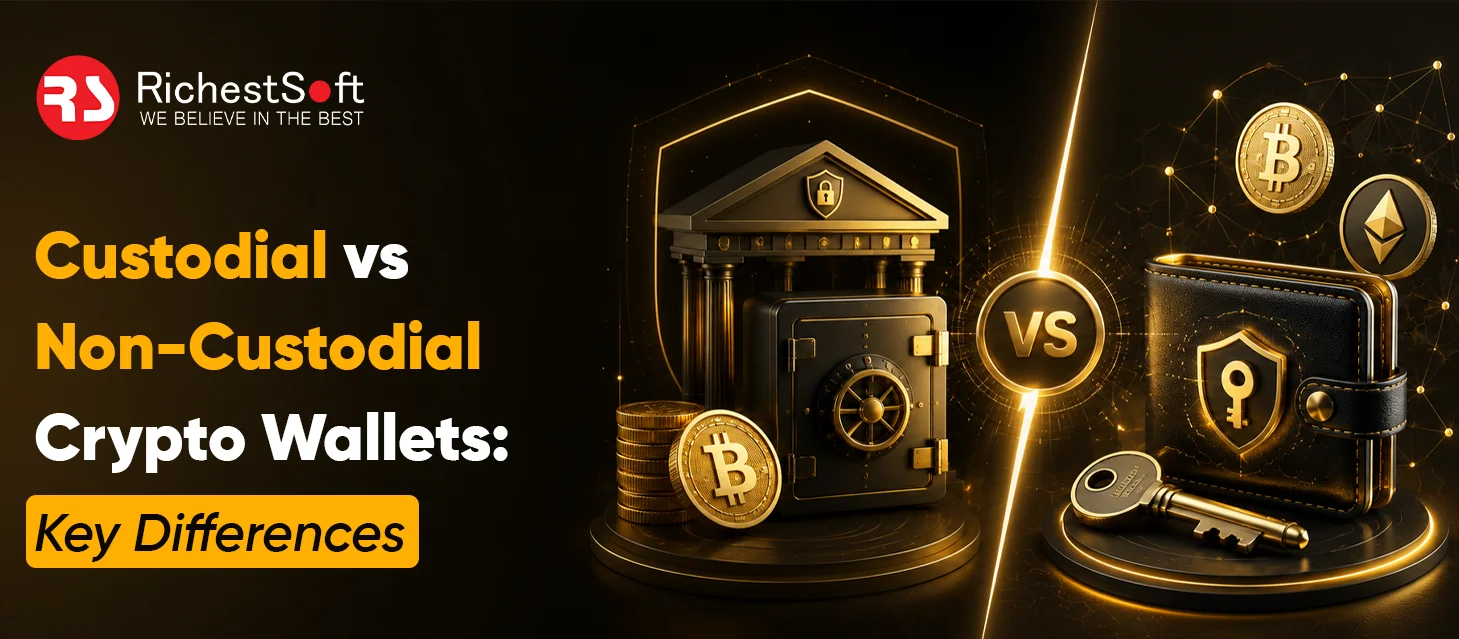
While both wallets store and handle crypto assets, the private keys are controlled differently. This distinction impacts wallet operation, user control, security, and business model.
| Factor | Custodial Wallet | Non-Custodial Wallet |
|---|---|---|
| Private Key Control | Controlled by the platform | Controlled by the user |
| User Control | Lower | Higher |
| Ease of Use | Generally easier for beginners | Requires more user responsibility |
| Asset Management | Platform manages custody | User manages their assets |
| Account Recovery | Platform may provide recovery options | User is responsible for recovery credentials |
| Security Responsibility | Mainly handled by the provider | Mainly handled by the user |
| Business Control | Higher | Lower |
| Best Suited For | Exchanges and managed crypto services | DeFi and Web3 applications |
| Development Focus | Custody, account management, security, compliance | Key management, wallet security, blockchain interaction |
| Business Flexibility | Strong for centralized services | Strong for decentralized products |
The right choice depends on what you want your crypto wallet business to offer. A custodial wallet provides more platform control and a simpler user experience, while a non-custodial wallet gives users direct control over their assets and keys.
Custodial vs Non-Custodial Wallet: Which One Should You Choose?
There is no unique wallet model that fits everyone. Well, it depends on your company strategy, target consumers, services, and how much control you are willing to give up. The major distinction is that a custodial wallet is controlled by the platform, whereas a non-custodial wallet allows users to have full control over their own keys and assets.
Choose a Custodial Wallet for a Managed Experience
If you want your company to maintain users’ crypto assets and deliver a seamless account-based experience, a custodial wallet is a fantastic solution. The platform has the private keys, but users may access their funds via their account.
This model can be useful for:
- Crypto exchanges
- Trading platforms
- Crypto payment services
- Managed crypto platforms
- Beginner-friendly crypto apps
With this approach, users get a simpler experience, but the business takes more responsibility for security, asset custody, account protection, and applicable regulations.
Choose a Non-Custodial Wallet for User Control
A non-custodial wallet is better if you want users to have direct control over their crypto and private keys. Your business provides the wallet technology, while users are responsible for protecting their recovery phrase or private keys.
This model is commonly suitable for:
- DeFi platforms
- Web3 applications
- NFT platforms
- DApps
- Self-custody crypto products
- Blockchain-focused services
The biggest advantage is user ownership. However, users also have more responsibility because the business generally cannot recover assets if their private keys or recovery information are lost.
Custodial vs Non Custodial Wallet- Which One Is Right for Your Business?
If your goal is to offer simple, managed crypto services, a custodial wallet may be the better option. If your goal is to give users full control and build around self-custody or Web3, a non-custodial wallet may be more suitable.
Before choosing, consider your business model, target market, security responsibilities, compliance needs, and long-term growth plans.
Launch a Scalable Crypto Wallet with RichestSoft
Launch a Scalable Crypto Wallet with RichestSoft
Conclusion
Choosing between a custodial and non-custodial crypto wallet is an important business decision. The right model depends on your target audience, service offering, revenue goals, security requirements, and the level of control you want to provide users. With the right technology partner, businesses can build scalable crypto, blockchain, or Web3 apps. That’s exactly when RichestSoft can help!
With 19+ years of experience in crypto wallet development, RichestSoft is a best crypto wallet development company helping businesses build secure, scalable wallet solutions tailored to their business model, technical requirements, and growth goals.
Our team can help you build:
- Custodial wallets with managed asset services
- Non-custodial wallets that give users complete control of their keys
- Multi-chain crypto wallets
- MPC and advanced security-based wallet solutions
- DeFi and Web3 wallet platforms
- Crypto payment and trading wallets
- Custom wallet solutions for startups and enterprises
RichestSoft helps with wallet development from business strategy and product design to blockchain integration, security implementation, testing, deployment, and maintenance.
We help you identify the correct wallet model and design a solution that meets your long-term goals, whether establishing a crypto product or updating an existing platform.