+1 315 210 4488
 +91 99888 06489


August 25, 2026
Shared mobility is changing how people travel, with platforms like BlaBlaCar connecting drivers and passengers heading in the same direction. This makes travel more affordable, convenient, and efficient.
For businesses, building a BlaBlaCar-like app presents a strong opportunity to enter the growing carpooling and shared mobility market. However, the development process requires careful planning, as the cost can vary significantly based on features, technology stack, and overall complexity.
The cost to build a BlaBlaCar-like app can range from $30k to $250k+, depending on the app’s features, technology, platform, development team, and business model. A basic MVP with essential ride-booking features will cost less, while an advanced platform with AI-based ride matching, GPS tracking, online payments, in-app chat, ratings, verification, and a powerful admin panel will require a larger investment.
Want to know about the cost in detail? Below is a detailed cost breakdown for building a BlaBlaCar-like app.
Build a feature-rich BlaBlaCar-like app with RichestSoft.
Build a feature-rich BlaBlaCar-like app with RichestSoft.
What Is BlaBlaCar?
BlaBlaCar is a community-based transport platform that connects drivers and passengers traveling in the same direction. Drivers may offer their spare seats, and passengers can get a convenient trip and split the expense of travel. The website employs technology to connect customers based on routes and travel needs.
BlaBlaCar has moved beyond carpooling and also links users with bus and rail travel choices in approved regions. This gives it a broader shared-travel marketplace than just a ride-sharing app.
How Does BlaBlaCar Work?
- Drivers post a trip: Drivers add their route, travel date, time, available seats, and cost contribution.
- Passengers search for rides: Passengers enter their pickup point, destination, and travel date.
- The platform matches users: Available rides are shown based on the passenger’s route and requirements.
- Passengers book a seat: Users can select a suitable ride and complete the booking through the platform where online booking is available.
- Drivers and passengers connect: After confirmation, they can coordinate the trip through the platform.
- Travel costs are shared: Drivers receive a contribution toward eligible trip costs rather than using carpooling to make a profit.
Business Model of BlaBlaCar
BlaBlaCar follows a cost-sharing marketplace business model. Instead of hiring professional drivers, it links individuals who are already heading in the same direction. Drivers provide their empty seats, and passengers may get into the ride and chip in on the cost of the trip. BlaBlaCar is an online platform that allows users to identify, match, book, and manage shared rides.
Key Pillars of the Model
Cost Sharing, Not Driver Profit
Drivers can ask passengers to contribute toward actual trip costs such as fuel, tolls, and other travel expenses. BlaBlaCar states that drivers cannot use carpooling to make a profit.
Asset-Light Marketplace
The platform connects drivers and passengers without needing to own the cars used for carpooling. This allows the business to scale its marketplace without maintaining a traditional vehicle fleet.
Trust-Based Community
User profiles, verification, ratings, reviews, and platform rules help create trust between drivers and passengers.
Route-Based Matching
BlaBlaCar’s technology matches drivers with available seats to passengers traveling in the same direction, making the platform useful for long-distance shared travel.
How BlaBlaCar Generates Revenue
- Service Fees: BlaBlaCar can charge a service fee on eligible carpooling bookings. The fee can vary based on factors such as the trip, location, and booking amount.
- Subscription Fees: In some markets, the platform may use subscription fees instead of individual service fees.
- Bus and Train Services: BlaBlaCar distributes tickets from bus and rail operators and may charge service costs for using the platform.
- Transport Partnerships: The platform works with transport operators to offer more travel choices through its marketplace.
For businesses planning a BlaBlaCar-like app, the key takeaway is that revenue comes from building a strong marketplace around bookings and transport services—not from allowing drivers to profit from individual carpooling trips.
Cost Breakdown to Build a BlaBlaCar-Like App
BlaBlaCar-like app development costs depend on several factors. A full-scale platform with smart ride matching, GPS tracking, verification, chat, and extensive analytics will cost more than a simple MVP with ride posting, search, booking, and payments. According to current industry estimates, BlaBlaCar-like app development costs between $25k and $150k or more, depending on scale and complexity.
Estimated Cost Breakdown
| App Version | Estimated Cost | What It Includes |
|---|---|---|
| Basic MVP | 25k–50k | Registration, ride posting, ride search, booking, basic payments |
| Mid-Level App | 50k–100k | GPS/maps, payments, chat, notifications, ratings, admin panel |
| Advanced App | 100k–150k+ | Smart matching, real-time tracking, advanced security, analytics, custom integrations |
| Enterprise Platform | $150k+ | Multi-city support, advanced AI, large-scale infrastructure, multiple integrations |
Factors Influencing The Cost To Build a BlaBlaCar-Like App
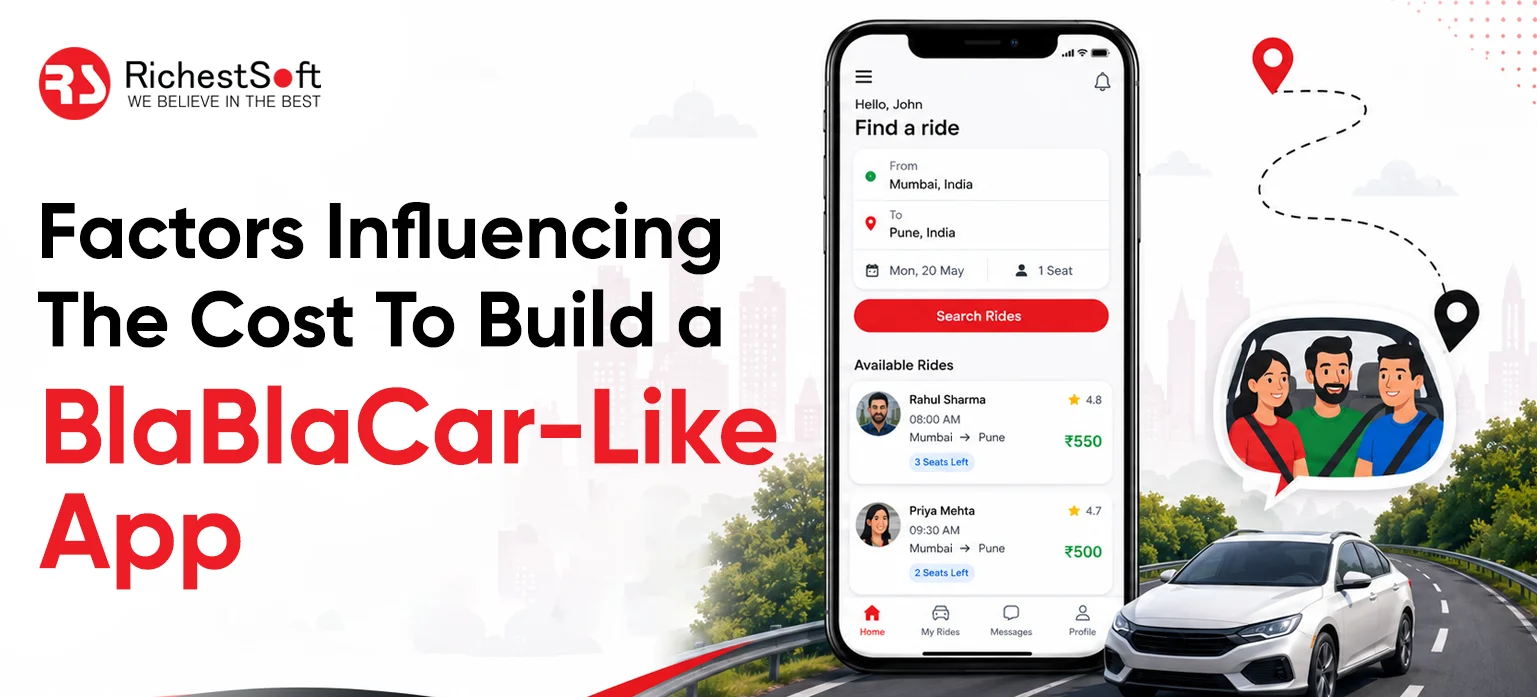
The development budget can change significantly based on the features, technology, and business requirements of your carpooling platform. The key cost factors include:
1. App Features
More features require more development time and resources.
- Ride posting and search
- Ride booking and cancellation
- Driver and passenger profiles
- Ratings and reviews
- In-app chat
- Push notifications
2. Ride-Matching System
A basic matching system costs less than an advanced one.
- Route-based matching
- Pickup and drop-off matching
- Available-seat matching
- Date and time matching
- AI-powered ride recommendations
3. GPS and Maps Integration
Location-based features add development and third-party API costs.
- Live location tracking
- Route planning
- Distance calculation
- Pickup locations
- Navigation and ETA
4. Payment Integration
The number and type of payment options can affect the budget.
- Multiple payment gateways
- Card and digital wallet payments
- Automated refunds
- Payment history
- Secure transactions
5. User Verification and Safety
Strong safety features require additional development and security work.
- Driver verification
- Identity verification
- Ratings and reviews
- Report and block options
- Emergency assistance
6. Number of Platforms
Building for multiple platforms increases development costs.
- iOS app
- Android app
- Web platform
- Admin dashboard
- Cross-platform development
7. Admin Dashboard
A feature-rich admin panel requires additional development resources.
- User and driver management
- Ride and booking management
- Payment monitoring
- Complaint handling
- Reports and analytics
8. Technology and Integrations
Advanced technologies and third-party services can increase the overall budget.
- Cloud services
- AI and machine learning
- Map APIs
- Payment APIs
- Communication APIs
9. Development Team
The team’s location, expertise, and size also influence the cost.
- Developers
- UI/UX designers
- QA testers
- Project managers
- Backend specialists
10. Maintenance and Support
The cost continues after the app is launched.
- Bug fixing
- Security updates
- Performance improvements
- Server maintenance
- New feature development
Build a feature-rich BlaBlaCar-like app with RichestSoft.
Build a feature-rich BlaBlaCar-like app with RichestSoft.
Conclusion
Overall, development costs can vary significantly depending on several factors, as mentioned in this post above. However, choosing an experienced development partner can help you plan the right features and budget from the start. That’s exactly when RichestSoft can help!
RichestSoft develops business-first carpooling apps with a strong user experience that scales with your business. As a best taxi app development company, RichestSoft can support businesses looking to develop transportation and mobility solutions. From MVP development to a full-scale BlaBlaCar-like platform, we tailor ride booking, driver and passenger management, GPS, payments, admin controls, and monetization features to your business model.