+1 315 210 4488
 +91 99888 06489


March 13, 2026
Ride-hailing platforms are accelerating urban transportation and on-demand logistics. And guess what! Some major brands, like Uber, Lyft, and Ola Cabs, hold a strong presence in the mobility sector. Uber provides economy, premium, and more services and has 35% of the global market. Ola Cabs is famous in India since it offers several transportation options. However, North America recognizes Lyft as a creative and environmentally friendly platform.
All three platforms include driver networks, demand-based pricing, and mobile booking. However, their goals, focus, and strategies vary.
Want to know about each platform in detail? Keep reading this post! Below, we have shared a detailed guide on Uber vs. Lyft vs. Ola Cabs.
Uber vs. Lyft vs. Ola Cabs- Understand Each Business Model
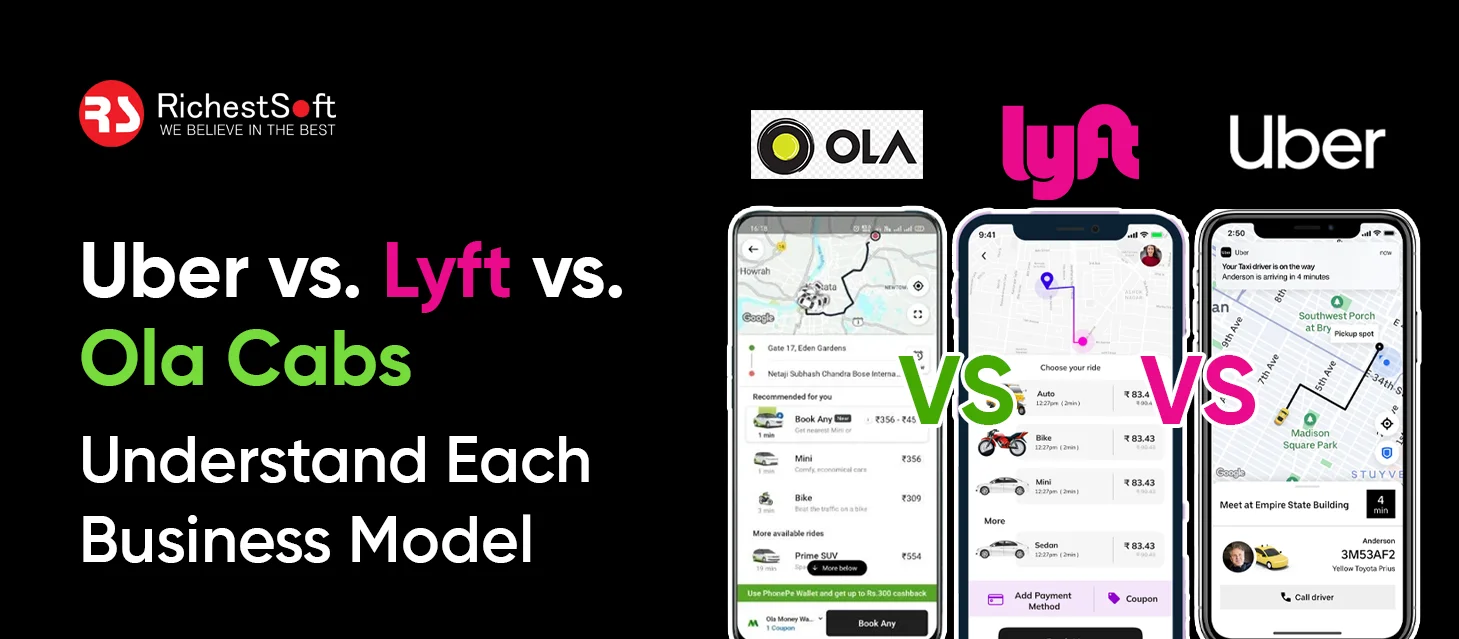
Let’s analyze and contrast the different platforms:
Uber
Business Approach
A ride-hailing marketplace is the foundation upon which Uber is built. It does this by connecting drivers with passengers via an app. Profit for Uber comes from a combination of things including a cut of each fare, delivery fees, and subscription services like Uber Pass.
App Type: Ride‑hailing platform connecting riders and drivers through a smartphone app.
Key Points:
- Uber doesn’t own cars — it uses a platform‑only model, meaning it connects users and drivers and manages the technology.
- It makes money by collecting 15–30% of transportation fares.
- The app makes money from trips (economy, premium, shared) and other services like food delivery and freight handling.
- Surge pricing raises rates during peak demand.
Lyft
Business Approach
Lyft operates on a commission-based marketplace basis. This article sheds light on sustainable and environmentally conscious ridesharing services in North America.
App Type
Ride‑hailing and mobility platform with a strong focus on user experience.
Key Points:
- Like Uber, Lyft doesn’t own the cars- it runs the app and platform only.
- Lyft earns by charging commission on ride fares and sometimes booking or service fees.
- It also employs dynamic pricing (increased prices when demand is strong).
- Lyft generates additional income via in-app commercials, subscriptions (e.g., Lyft Pink), car rental programs, and corporate trips.
- To develop outside North America, the corporation is entering new markets and offering new services, including acquisitions in Europe.
Ola Cabs
Business Approach
Ola is a ride-hailing and transportation network that mostly caters to the Indian market. It was founded in 2015. Some of the services it offers include taxis for both motorbikes and vehicles. Ola generates revenue via membership fees, in-app advertisements, and commissions on rides.
App Type
Ride‑hailing platform focused on local transport with multiple vehicle options.
Key Points:
- Ola earns revenue mainly by taking a percentage of each ride fare from drivers.
- It uses surge pricing to adjust rates during busy times.
- The platform also offers different ride categories (like micro, mini, prime, auto), making it suitable for many types of users.
- Ola includes additional money‑making features like digital wallet payments, subscriptions, corporate accounts, and ads.
- Recently, Ola introduced flat fee or subscription options for drivers so they can keep more of their earnings in exchange for a daily access fee, rather than paying per ride.
Comparative Analysis– What This Means for Uber App Development
| Platform | App Type | Main Revenue Source | Extra Income Streams |
|---|---|---|---|
| Uber | Global ride‑hailing platform | Commission from rides | Delivery, logistics, subscriptions |
| Lyft | Ride‑hailing & mobility | Ride commission & fees | Ads, subscriptions, rentals, corporate |
| Ola Cabs | Local ride‑hailing | Ride commission | Wallet payments, subscriptions, corporate, ads |
Why Choose RichestSoft for Your Uber Clone App Development
Building a successful ride-hailing service requires the appropriate partner. RichestSoft is a reputable Uber Clone App Development Company for mobility-focused enterprises.
Uber App Development
Our team has developed scalable, feature-rich, and user-friendly ride-hailing apps.
Full Cycle Taxi App Development
From app design and backend programming to deployment and maintenance, we handle it everything.
Customizable Solutions
We customize every app for your target market, whether economic, luxury, or regional transit.
Quality and Security
Our applications use the latest technology to assure speed, dependability, and secure transactions.
Delivery & Support
We use agile development methods to deliver projects on time and offer post-launch support.
Conclusion
The success of any taxi app development is determined by the strength of its business plan and functionality. And let us inform you that you may economically do this if you have a thorough understanding of industry champions like Uber, Lyft, and Ola Cabs.
Working with an Uber Clone Development Company, such as RichestSoft, is essential for the success of your Uber clone app. By assisting clients in developing Uber clones tailored to the demands of local customers, we put our knowledge to good use.

FAQ
Q: What is an Uber clone app?
A: It’s a mobile ride-hailing service like Uber that lets customers book trips.
Q: What does taxi app development cost?
A: Features, app type, and platform determine prices, which range from $15K to $50K+.
Q: Is an Uber clone app customizable?
A: Apps may be tailored to local markets, payment methods, vehicles, and branding.
Q: Uber, Lyft, or Ola—which should be copied?
A: According to your target market, Uber is worldwide, Lyft is North American, and Ola is big in India.
Q: Can an Uber clone app provide numerous services?
A: Economics, premium rides, delivery, and rentals, depending on your business strategy.