+1 315 210 4488
 +91 99888 06489


March 19, 2026
Germany mobility industry is competitive and rapidly shifting toward digital, app-based transportation services. As commuters increasingly prefer booking rides through mobile platforms, businesses are exploring opportunities in the on-demand mobility sector. For companies planning to invest in digital transportation solutions, taxi app development offers a scalable and efficient way to enter in the industry.
Interestingly, several ride-hailing and taxi platforms are already expanding their presence in Germany by offering convenient booking systems, real-time ride tracking, and flexible transport options. These apps not only improve customer experience but also help mobility businesses streamline operations and generate new revenue streams.
By studying the strategies and service models of these platforms, entrepreneurs and transport companies can gain valuable insights into how successful taxi apps operate. In this blog, we explore the top taxi apps in Germany and what businesses can learn from their approach to digital mobility.
About Taxi App Development
As the use of mobile applications for transportation grows, taxi app development services have emerged as a promising industry. Startups and established companies alike are putting money into taxi applications that link riders with drivers via an easy-to-use digital platform. Businesses may streamline their operations with the aid of a well-designed taxi app that allows customers to make reservations, monitor their journeys, pay, and more.
Types of Taxi Apps Businesses Can Launch
MVP Taxi App
An MVP (Minimum Viable Product) is the first functional version of your taxi app. Unlike a demo or prototype, it’s a real, usable product that can be released to the market. This is a great option for new businesses looking to test the waters with less capital outlay.
White-Label Clone
Characteristics of well-known ride-hailing apps are the basis for a taxi app clone. Using a tried-and-true business strategy and tailoring the platform to meet market demands, this kind of software helps startups launch more quickly.
Custom Taxi App Development
A custom taxi app is built for the firm according to its specifications. Therefore, companies can build unique logos, features, and services that fit their needs and the wants of their customers.
Platform Options for Taxi App Development
Android
Due to the massive user base of Android devices, companies can tap into a vast pool of potential customers using Android applications. Startups aiming for a wide audience often choose it first.
iOS
By developing iOS apps, you target Apple users. This approach emphasizes paying customers and streamlining their experiences. Businesses make iOS apps for Apple fans.
Cross-Platform or Hybrid Apps
It is possible to create hybrid apps that are compatible with both Android and iOS using the same set of source code. Businesses may reach people on various platforms while reducing development time and expense using this technique.
Other Things to Consider When Developing a Taxi App
- Admin, driver, and passenger panels for ride and operation management
- Monitoring and optimization of routes in real-time using GPS
- Scalable architecture for business growth.
- Integrate secure digital payments.
- Featured services include ride scheduling and fare estimation
Integrating these components into a reliable taxi app can help entrepreneurs scale in the expanding on-demand mobility sector.
Why Businesses Should Invest in Taxi App Development
Explore these business advantages of taxi app development:
On-demand transport
More individuals choose mobile transportation booking applications since they save time and are convenient. Taxi app development helps firms satisfy this need and attract mobile-first clients.
Flexible Business Structures
Entrepreneurs running taxi apps may access varied audiences by offering a variety of services, such as ride-hailing, carpooling, bike taxis, luxury excursions, and corporate transportation.
Collaborative Opportunities
Taxi ride platforms can collaborate with local companies, airports, hotels, and travel agencies to boost bookings and streamline operations. Taxi apps might alter the electric vehicle fleet, shared ride, and delivery firms.
Lower market entry barriers
Taxi app platforms let companies access the transportation sector without a fleet. Businesses may link drivers and passengers via mobile platforms.
New Revenue Streams the
Business income from taxi applications includes ride commissions, surge pricing, driver subscription plans, and passenger service fees.
Scalability of Business
Companies may quickly expand into new places using a cab app. Businesses may add drivers and users without complicating operations.
Stronger Market Position
Investment in a taxi app helps companies construct a contemporary digital transportation platform to compete with other mobility service providers and strengthen their brand.
List of Best 5 Taxi Apps In Germany
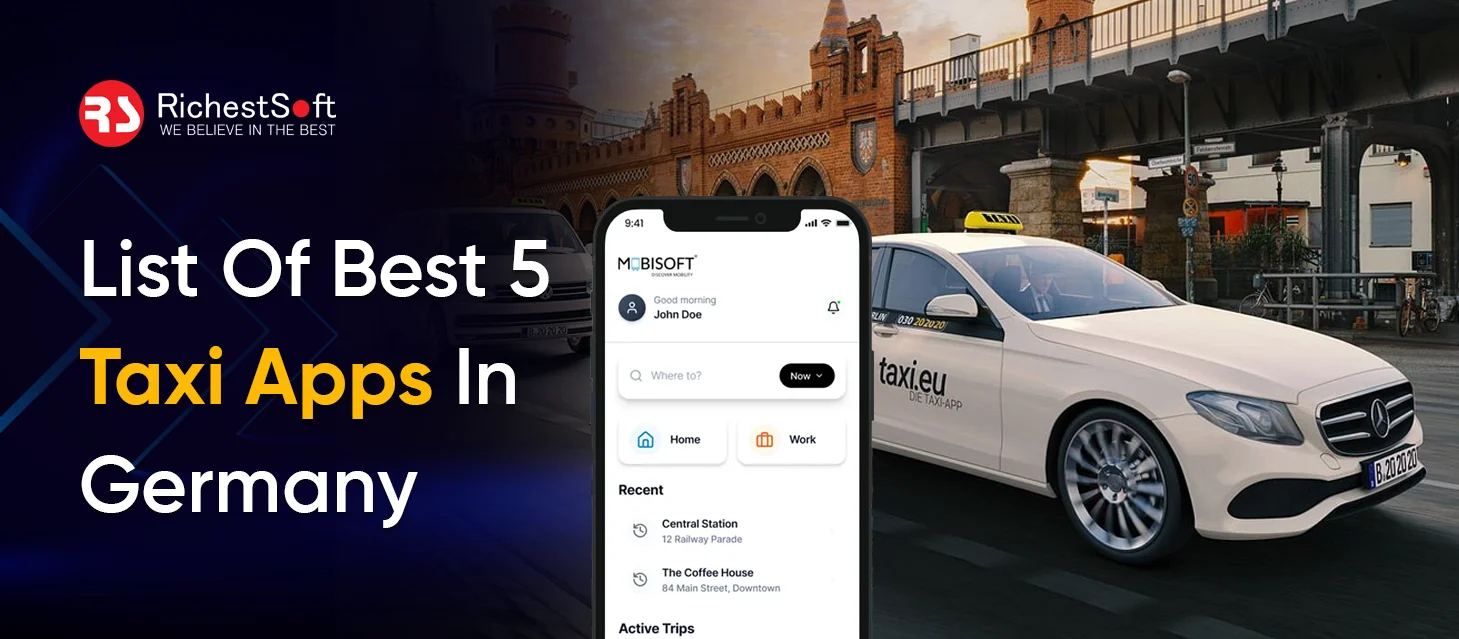
Businesses considering developing their own ride-hailing platform can explore the taxi apps listed below and draw inspiration from their business strategies:
Uber
Uber operates on a ride-hailing marketplace model, allowing passengers to schedule rides using the app and interact with drivers in their local proximity. The platform makes revenue by charging a commission on each travel, and drivers may keep the leftover amount for themselves.
FREE NOW
A hybrid mobility strategy is used by FREE NOW, which offers consumers the opportunity to connect with licensed taxis as well as private automobiles via a centralized platform. Commissions on rides, booking fees, and agreements with companies that offer mobility services are the primary sources of revenue for the firm.
Bolt
Using the Bolt app, independent drivers are able to offer transportation services to customers. Bolt is a ride-hailing platform. The business makes revenue by withholding a portion of each ride that is successfully completed while also providing competitive prices in order to attract customers.
Taxi.eu
Taxi.eu is a digital booking website that acts as a connection between consumers and licensed taxi fleets in a number of different locations. In addition to serving as a dispatch system for taxi businesses, the platform generates income via the collection of booking fees and the formation of service agreements.
Gett
Through the provision of transportation services to business travelers and enterprises, Gett primarily focuses on the corporate mobility market sector. In order to generate revenue, the company relies on business-to-business ride management, corporate alliances, and service commissions on rides that have been completed.
Cost To Build Taxi Apps in Germany
The taxi app development cost in Germany depends on the app’s type, functionality, platform, and development team. When evaluating their development budget, taxi platform startups should consider these factors:
Considerations That Affect the Price of Developing a Taxi App
App Features and Functionality
The number of taxi app features affects development cost. GPS monitoring, trip booking, payment integration, and driver administration need more development time.
Platform Choice
Companies have the option of creating cab apps for either iOS or Android, or perhaps both. Launching on a single platform is more cost-effective than developing applications for several platforms.
UX and UI Design Complexity
Although development expenses go up, user experience goes up with a well-designed user interface. It takes more time and energy to create animations, branded graphics, and custom layouts.
Third-Party Integrations
The integration of mapping services, payment channels, and notification systems is a common need for taxi applications. More development time and money will need to be spent on licensing for these outside services.
Backend Development
Payment processing, driver matching, and real-time tracking are backend functions. A powerful and adaptable backend system demands skilled development, increasing project costs.
Development Team Location
The location of the development team also influences cost. Developer hourly rates by location greatly impact project budgets.
Updates and Maintenance
After launching the app, organizations must invest in periodic maintenance, upgrades, and performance improvements to maintain the platform’s competitiveness.
Conclusion
Taxi apps have revolutionized the way we travel in today’s cities. Global companies, including those in the mobility and automotive sectors, are now partnering with on-demand taxi app development providers to create scalable digital mobility solutions.
RichestSoft enables companies to develop and deploy robust taxi apps more quickly with scalable architecture, intelligent features, and exceptional user experience—robust ride-hailing applications that foster growth and customer loyalty.