+1 315 210 4488
 +91 99888 06489


March 17, 2026
The Software-as-a-Service (SaaS) business model has become one of the most effective ways for tech startups to build scalable and sustainable digital products. Instead of selling software through one-time purchases, SaaS companies deliver their apps through the cloud and charge customers a recurring subscription fee.
Many successful companies, such as Salesforce, Slack, and HubSpot, have demonstrated how powerful this model can be for driving consistent growth and predictable revenue. SaaS enables digital businesses to build innovative products, reach global consumers, and scale operations without the challenges of conventional software distribution.
In the blog for beginners, we will explain everything about the SaaS business model.
About a SaaS Business Model
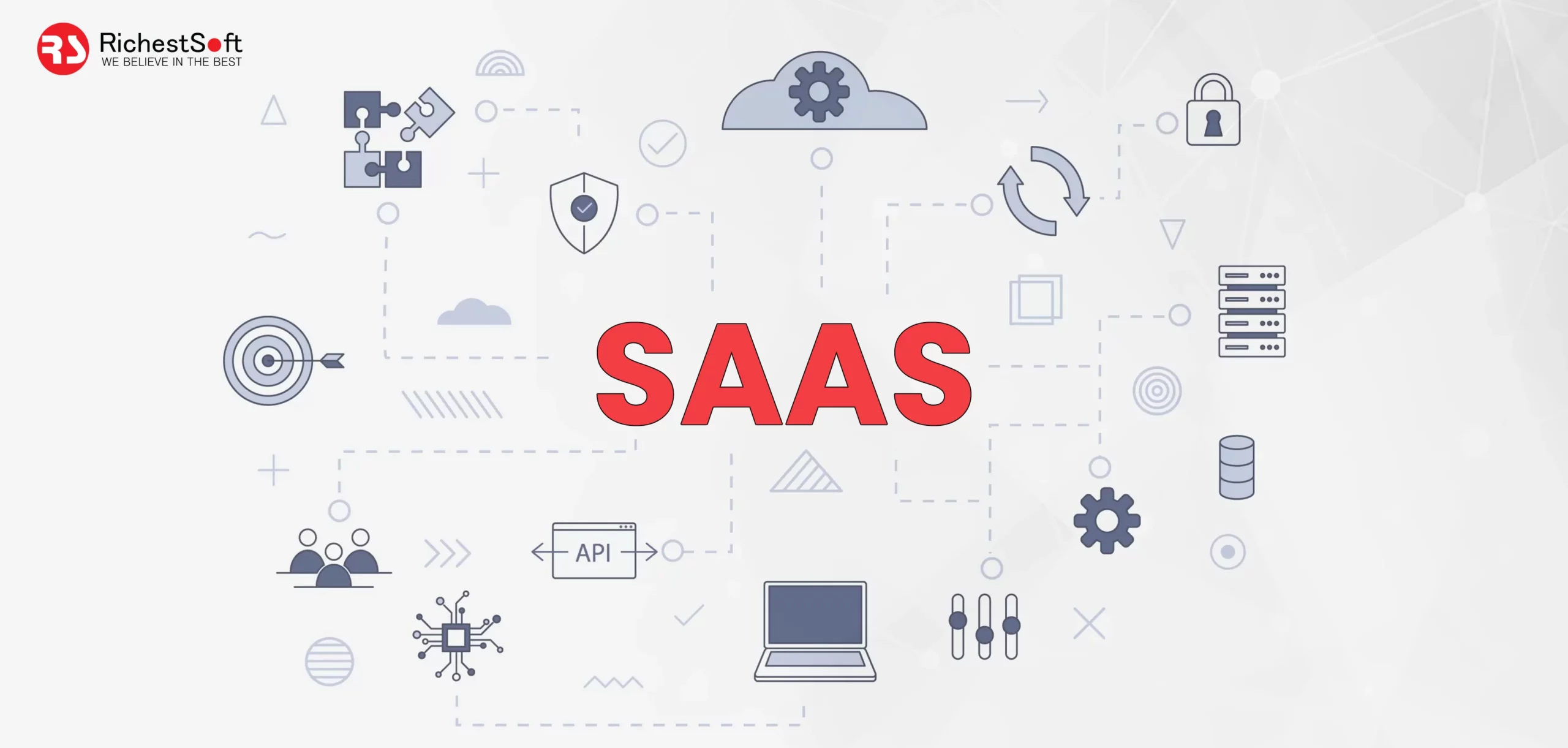
Instead of installing software on desktops and operating systems, SaaS (Software-as-a-Service) directly delivers its services using the cloud. By using a web browser or mobile app, customers have access to the program, while the provider takes care of the cloud servers, updates, security, and maintenance. Businesses charge consumers a monthly or annual subscription fee, creating a consistent cash stream. Its scalability, accessibility, and upgrade ease make this model a great investment choice.
Below are some common types of SaaS business models:
B2B SaaS
Small and big companies utilize these SaaS solutions for different purposes like marketing, sales, accounting, and project management. Popular B2B SaaS products include Grammarly, HubSpot, and Slack. B2B SaaS plans often cost more and take longer to sell.
B2C SaaS
B2C SaaS offerings target individuals, not businesses. These apps tackle writing, learning, and entertaining issues. Grammar applications, productivity apps, and streaming platforms are examples. B2C SaaS targets many customers with easy onboarding and low prices.
Vertical SaaS
Vertical SaaS solves industry-specific challenges. These platforms focus on healthcare, banking, real estate, and food. Due to its industry-specific design, the software frequently has more functionality and integrations.
Enterprise SaaS
Enterprise SaaS solutions serve huge companies. For sophisticated corporate processes, these systems include extensive capabilities, strong security, and customization choices. Higher contracts, specialized support, and business system integration are typical of enterprise SaaS.
White-label SaaS
White-label SaaS lets companies rebrand and sell software. Companies may introduce digital goods quickly without creating technology using this technique. Many firms and organizations utilize white-label SaaS to provide services under their own brand.
Revenue Strategies for the SaaS Business Model
Instead of one-time software purchases, SaaS firms utilize pricing and revenue structures that match user usage. Wondering how? Below are some popular SaaS income strategies:
Subscription Model
Customers pay monthly or annually for software under the subscription model. If the subscription is active, users may utilize the platform and get updates and assistance. This approach is popular because it generates predictable company income.
Freemium Model
Freemium products have restricted functionality. The program may be tried for free and upgraded to access additional features. This strategy attracts many people and converts some into paying clients.
Usage-Based Pricing (Pay-as-You-Go)
This strategy charges clients per software use. The quantity of API requests, storage, or transactions may determine expenses. This price structure is flexible since consumers only pay for what they use.
Tier Pricing
Tier pricing covers Basic, Pro, and Enterprise plans with different features and restrictions. Customers may choose the best bundle and upgrade as they grow. This allows SaaS companies to serve varied customers.
Per-User Pricing
This per-seat pricing model charges consumers for each user who accesses the product. Collaboration and CRM tools utilize it because the more team members who use it, the more its worth is enhanced.
Feature-Based Pricing
Various plans provide various benefits under feature-based pricing. Basic subscriptions contain core capabilities, while premium options include analytics, automation, and connectors. Upgrades are encouraged when consumers require greater features.
Enterprise Licensing
Enterprise licensing provides protection, flexibility, and specialist assistance for large organizations. Long-term contracts and customized pricing are used for corporate solutions.
Benefits of Investing in a SaaS Business Model
Best Business Model App SaaS gives startups and organizations seeking to develop scalable digital products several benefits. What are the benefits? Explore in detail:
Recurring Revenue
Subscription revenue is a major advantage of SaaS. Customers pay monthly or annual fees, helping firms estimate and stabilize income.
Lower Initial Costs
An online business model app SaaS doesn’t need costly hardware or massive deployments. Companies may develop and operate their software with less initial cost, making market entry simpler for startups.
Scalability is easy
SaaS systems scale with businesses. Businesses may add users, features, and services without costly infrastructure upgrades.
Global Access
SaaS programs are cloud-based, so users may access them anywhere with an internet connection. This lets companies serve global clients and support distant staff.
Auto-updates and maintenance
The SaaS supplier handles software upgrades, bug patches, and maintenance. Users always receive the latest version without manual installation.
Quicker Product Improvements
Based on customer input, SaaS firms may deploy new products and enhancements quickly. This keeps companies competitive and improves customer service.
Price Flexibility
SaaS companies may provide subscription, tiered, or usage-based pricing. This adaptability lets organizations offer diverse clientele and boost conversions.
Key SaaS Metrics Every SaaS-Based Business Should Track
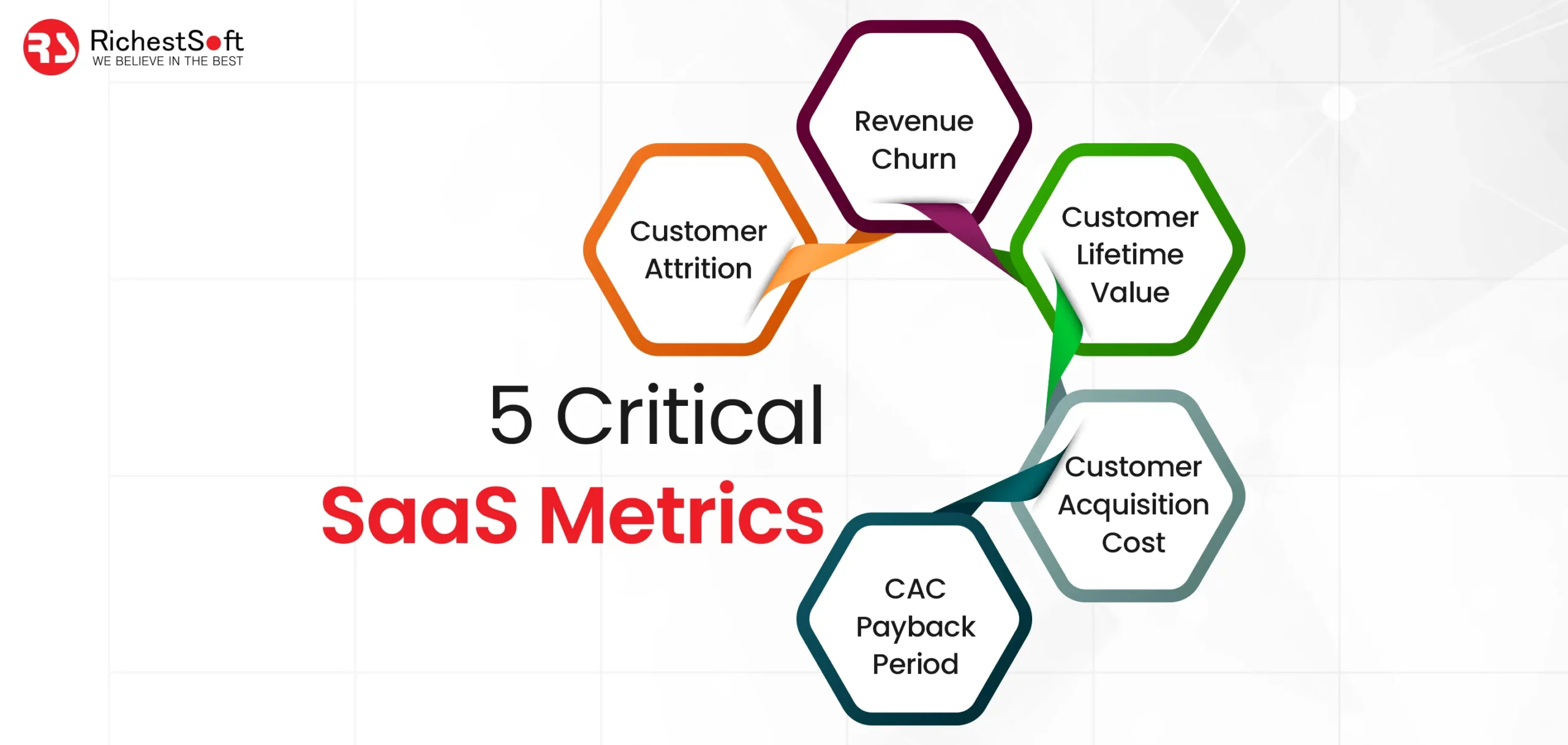
Monitoring vital metrics such as churn, revenue, leads, and others is paramount for business success. Here are the pivotal SaaS metrics that demand your attention:
Customer Attrition
Churn rate signifies the percentage of customers who cease using your services within a specified period. It serves as an indicator of your business impact. Analyzing this metric involves understanding why customers disengage and devising strategies to win them back.
Revenue Churn
This metric calculates the financial loss over a defined period. It becomes particularly crucial when certain clients contribute more revenue than others.
Customer Lifetime Value
CLV represents the total revenue a SaaS business garners during a client’s tenure with the company. The CLV formula is defined as: (Client Revenue × Years of Client Retention) – Customer Acquisition and Retention Costs. Prolonged client subscriptions result in a higher Customer Lifetime Value.
Customer Acquisition Cost
This metric denotes the total expenditure on advertising and promotions to acquire new customers. Its computation involves dividing the total advertising spending by the number of new customers acquired within a specific period.
CAC Payback Period in Months
This formula determines the total number of months required to recoup the expenses incurred on customer acquisition. A successful business relationship is established when a customer begins generating profit for the company.
How to Successfully Launch a SaaS Business
Successful SaaS businesses need more than a solid concept. It needs the right strategy and ideas.
Below are the key SaaS business model startup steps:
Create Something New
First, identify a market issue and create a SaaS solution. Before creating the product, study your audience and their demands.
Proof of Concept Validates Idea
Proof of Concept (PoC) tests if the concept is technically feasible and user-friendly. This process verifies the idea before committing time and money.
Develop A Prototype
An early product prototype shows how the program will function. It promotes companies to investors, stakeholders, and early users and may help them raise funds.
Minimum Viable Product launch
MVPs have just the characteristics required to tackle the key issue. Startups may test their product, get user input, and analyze consumer behavior by launching an MVP.
Improving Product Based on Feedback
Review customer comments and use statistics after MVP launch. Use these findings to enhance the product, add valuable features, and create a market- and user-friendly pricing plan.
Why Partner with RichestSoft for SaaS Development
Successful SaaS product development requires strategy, methodology, and technical understanding. RichestSoft helps startups and businesses scale digital solutions. With years of software and application development experience, the business helps clients design, construct, and deploy high-quality SaaS systems that meet market standards.
Here is how RichestSoft helps businesses develop profitable SaaS solutions:
Expert SaaS Product Development
Custom SaaS application developers and designers at RichestSoft are skilled. They create quick, secure, scalable, and business-specific solutions.
Develop Prototypes and MVPs
Startups require MVPs to quickly test ideas. RichestSoft assists businesses in market testing and investor recruitment via MVPs and prototypes.
Integrating Cloud and Advanced Tech
It specializes in scalable SaaS apps, cloud computing, AI, blockchain, and DevOps. These technologies boost security, automation, and performance.
Custom Web and Mobile App Development
SaaS companies use RichestSoft’s cross-device internet and mobile solutions. The products prioritize performance, usability, and seamless user experience.
Full Development Support
RichestSoft assists with product ideas, design, testing, and launch. Their tight collaboration with enterprises guarantees the product matches market and corporate objectives.
Industry Expertise And Global Exposure
RichestSoft has helped entrepreneurs and businesses build new digital products and develop online for over a decade.
Conclusion
At last, we would say that the SaaS business model is a strong option for software entrepreneurs looking to scale their digital products. However, concept, product-market fit, and user feedback-driven improvements may help startups grow their SaaS company.
Working with RichestSoft, an experienced SaaS App Development Company, helps businesses turn unique ideas into scalable SaaS products and compete in the fast-growing digital market with the correct development competence and strategic assistance.
FAQs
1. What does SaaS mean?
A: SaaS, or Software-as-a-Service, delivers software online rather than installing it.
2. How do SaaS firms earn money?
A: Most SaaS firms make money via monthly or annual subscriptions.
3. What’s a SaaS MVP?
A: An MVP is a simple product used to test a concept and get customer feedback.
4. Is SaaS startup-friendly?
A: Yes, entrepreneurs should embrace SaaS for its scalability, minimal initial expenses, and regular income.
5. What constitutes a successful SaaS?
A: A successful SaaS solution addresses a client’s issue, adds value, and improves with user input.