+1 315 210 4488
 +91 99888 06489


March 5, 2026
Today, pickup and delivery apps are growing in many different industries. From food and groceries to medicine, laundry, and parcel services, every niche has its own type of app. But not all pickup and delivery apps work in the same way. Each niche has different features, customer needs, and business models.
So when these apps “clash,” the real question is — which one fits your needs or business idea and market demand? The right choice depends on multiple factors. Want to know like what?
Continue reading this article! We’ve included a thorough comparison of the top pickup and delivery apps below so you can see how they differ and select the best one for your requirements.
Understanding Pickup and Delivery Apps
Apps for pickup and delivery are similar to providing your company with a smart, round-the-clock assistant. Consumers only need to tap their phone to place an order and select options for pickup and delivery. The app then quickly connects them to your store and sends a nearby delivery partner to handle the rest.
From a business point of view, building a pickup and delivery app is not just about convenience- it’s about creating steady income streams. These apps can generate regular and long-term revenue in different ways.
Here are some common revenue types:
- Commission on Each Order
You can charge a small percentage from every order placed through the app. As orders increase, your earnings grow.
- Delivery Charges
Customers can pay a delivery fee for doorstep service. This creates direct income from every completed delivery.
- Subscription Plans
Offer monthly or yearly membership plans for free delivery or special benefits. This gives you recurring revenue.
- Listing Fees
Companies can pay to have their services or businesses listed on your platform.
- Featured Listings & Ads
Stores can pay extra to appear at the top or promote their products inside the app.
- Surge Pricing
During busy hours, you can increase delivery charges to boost profits.
Various Pickup and Delivery App Types
- Food Delivery Apps: Meals from restaurants can be delivered to consumers’ homes through food delivery apps.
- Grocery delivery apps: Transport necessities and groceries from retailers to residences.
- Retail Delivery Apps: Provide clients with direct delivery of goods purchased via internet retailers.
Know About the Best Pickup and Delivery Apps in 2026
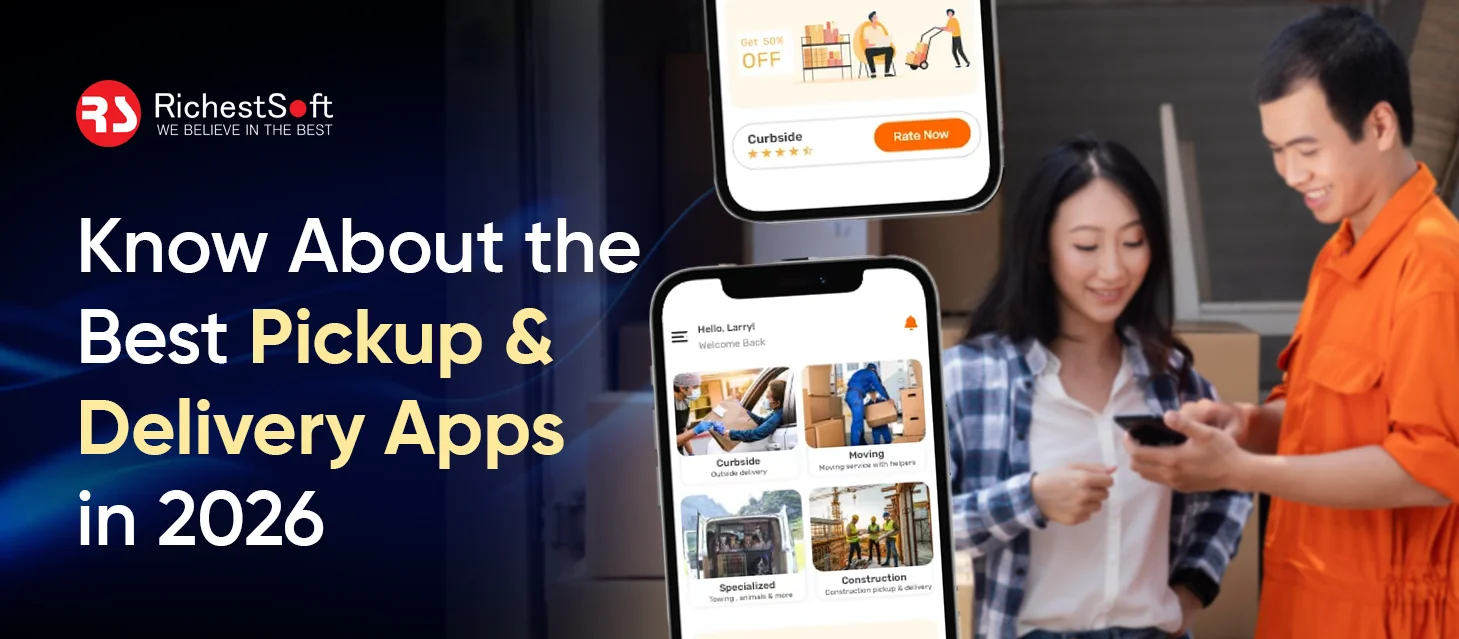
There are numerous on-demand delivery services available online, and each has a distinct business strategy. Want to know about them? Explore these below:
Uber Eats
With Uber Eats, customers can place orders for food from local eateries and have it delivered right to their door.
Business Model:
- Charges delivery fees from customers
- Takes a commission from partner restaurants on each order
- Offers surge pricing during high demand
- Earns from advertising and featured listings for restaurants
DoorDash
For food and grocery delivery, DoorDash links consumers with nearby eateries and shops.
Business Model:
- Charges delivery and service fees to users
- Takes commissions from Dash merchants
- Offers a subscription for free delivery and reduced fees
- Charges promotional fees for better app placement
Postmates
Food, groceries, and even items from nearby stores are delivered by Postmates.
Business Model:
- Adds delivery and service charges to customer orders
- Takes commissions from partner stores
- Offers an unlimited paid subscription for perks
- Charges for priority delivery and partner promotions
Gruzhub
The primary focus of Grubhub is meal delivery from eateries to residences or places of business.
Business Model:
- Earns through commissions from restaurants
- Charges delivery fees and service fees to customers
- Offers membership plans for free delivery
- Includes advertising options for restaurants
Instacart
Instacart delivers household goods and food from local retailers.
Business Model:
- Charges delivery fees based on order size and time
- Takes commissions from partner retailers
- Offers Instacart+ membership for free delivery and lower service fees
- Earns through tips and priority delivery pricing
Deliveroo
A well-known meal delivery service in several foreign countries is Deliveroo.
Business Model:
- Charges delivery fees to users
- Takes commission from restaurant partners
- Offers subscriptions for unlimited free delivery
- Charges for featured restaurant promotion
Comparative Analysis: Pickup and Delivery Apps Clash
Check out a simple comparison table below to learn how these apps differ.
| App Name | Main Focus | Revenue Model | Subscription Option | Unique Strength |
|---|---|---|---|---|
| Uber Eats | Food Delivery | Commission Delivery Fee Ads | Uber One | Strong global presence and fast delivery network |
| DoorDash | Food & Groceries | Commission Service Fee Promotions | DashPass | Large U.S. market share and wide restaurant network |
| Postmates | Food & Retail | Commission Delivery Fee | Postmates Unlimited | Delivers food, groceries, and retail items |
| Grubhub | Restaurant Food | Commission Delivery Fee Ads | Grubhub+ | Focused restaurant partnerships |
| Instacart | Groceries | Commission Delivery Fee | Instacart+ | Strong grocery store partnerships |
| Deliveroo | Food Delivery | Commission Delivery Fee Featured Listings | Deliveroo Plus | Popular in international markets |
Considerations To Choose the Right App for Your Needs
When selecting your on-demand delivery services, keep the following points in mind:
Recognize Your Audience
Consider who is most likely to utilize your app. Are they shoppers purchasing groceries, busy families placing food orders, or individuals in need of prompt item delivery? Determining which features and services your app needs depends on your target.
Understand Your Business Goal
Choose the revenue-generating strategy for your app. Are you going to charge for ads, commissions, subscriptions, or delivery? The kind of app you select and the way you handle orders and users are influenced by your revenue plan.
Assess Demand in the Market
Examine your competition and local market. A food app might be successful if a lot of people utilize food delivery services. Pick a market niche if grocery delivery is expanding quickly. Meeting demand contributes to the success of your company.
Development and Budget Expenses
Consider your budget for promotion, launch, and development. Powerful, feature-rich apps require a larger budget than simple apps. Costs can be kept in line with your objectives by selecting the appropriate features.
Features and User Experience
Select the features that are most important, such as enjoyable reward points, rapid chat assistance, simple payments, or live tracking. Users will like and return to your platform when it is easy to use.
Conclusion
At last, all we would say is that the finest Pickup Delivery App Development will ultimately depend on what your business truly needs. However, you need to speak with the appropriate development specialist for more precise details.
Richestsoft can assist you in transforming your concept into a robust and intuitive solution if you intend to create your own pickup or delivery app. Our team of experts creates apps that are easy to use, intelligent, and prepared to expand with your company. We have a thorough understanding of various business strategies.
FAQs
1. What is the main difference between pickup and delivery apps?
A: Pickup apps allow customers to collect their orders from a nearby store or restaurant. Delivery apps bring the product directly to the customer’s home. The main difference is convenience versus customer self-collection.
Q2. Which type of app is better for a new business?
A: Pickup apps are great for keeping costs predictable and manageable. Delivery apps require more logistics but can dramatically increase customer convenience — and that convenience often drives more sales.
Q3. How do pickup and delivery apps make money?
A: These apps earn in several ways — delivery fees paid by customers, commissions from restaurants or stores, subscription plans for premium features, ads inside the app, and higher charges during peak hours.
Q4. Are Courier and delivery apps different from food delivery apps?
A: Courier apps are about shipping goods from point A to point B. Food delivery apps concentrate solely on connecting customers with restaurants.