+1 315 210 4488
 +91 99888 06489


April 1, 2026
The rapid growth of NFTs in today’s digital era has created a new digital economy around collectibles, digital ownership, and creator-driven assets. For businesses planning to invest in the NFT-driven platform, one technology is profitably powering the entire ecosystem- crypto wallets. NFT storage solutions are not just for cryptocurrency; they have become the core infrastructure that enables users to buy, store, manage, and trade digital collectibles securely.
These tech-advanced wallets support secure NFT transactions and allow users to interact smoothly with NFT marketplaces and platforms. Want to know how?
Keep reading this blog! Below, we have shared a detailed guide on how the NFT boom is reshaping the digital collectibles market.
Crypto Wallets in NFT Transactions
Crypto wallets are the foundation of every NFT experience. Without them, users wouldn’t be able to own, move, or trade NFTs in a secure way.
Role of Crypto wallets for NFTs
For crypto wallets, NFTs are blockchain-backed assets. Each wallet holds the private keys that prove ownership, making sure users truly own what they buy.
Importance of Transferring and Trading NFTs
When someone buys, sells, or transfers an NFT, the wallet handles the transaction. It verifies ownership, signs the transaction, and ensures the NFT moves safely from one user to another—without relying on a central authority.
Types of Wallets Ideal for NFTs
Not all wallets are created equal. The best option depends on the experience the business wishes to provide to its customers.
- Online Wallets: Easy to use and a good option for beginners. They are frequently adopted by NFT marketplaces wishing for quick onboarding and little friction.
- Mobile Wallets: Ideal for users who want convenient access to their money. Mobile wallets are suitable for lifestyle-centric platforms.
- Hardware Wallets: They provide the highest level of security. They’re typically the choice of serious collectors or those with high-value NFTs to hold.
Ways NFT-Centric Crypto Wallets Are Shaping the Digital Collectibles Market
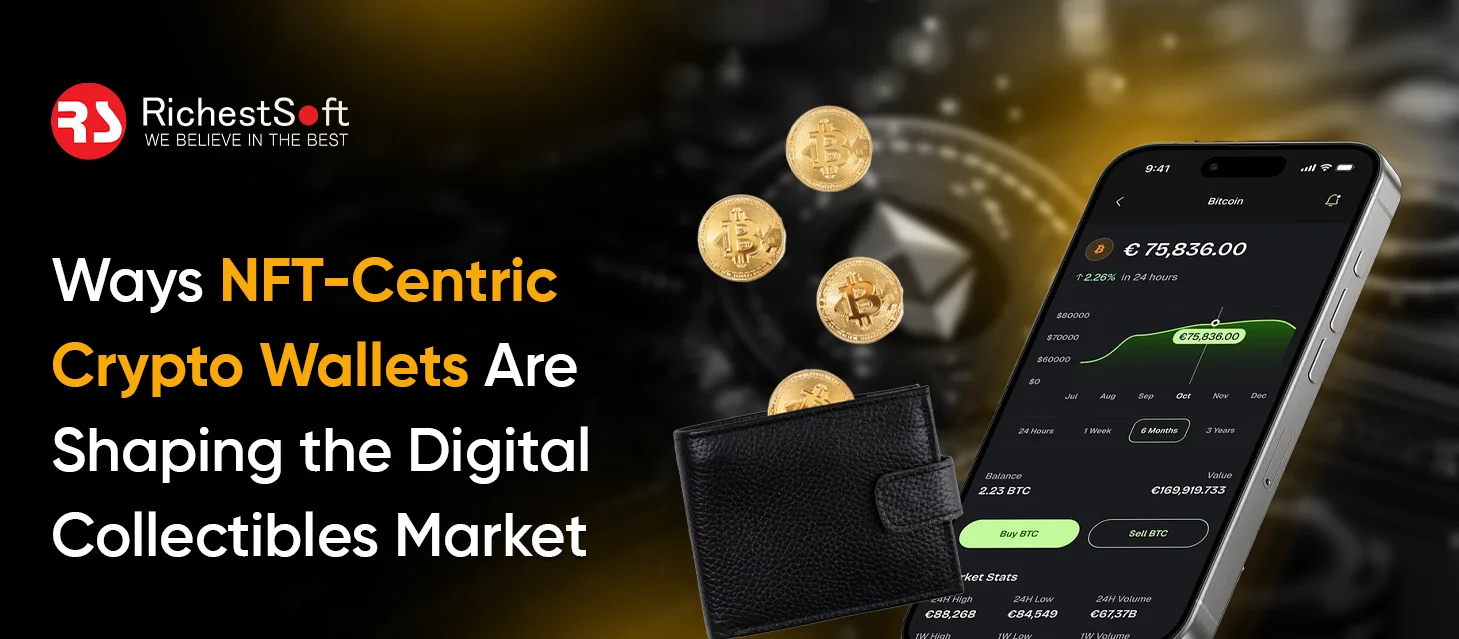
Here are some key ways NFT-centric crypto wallets are shaping the digital collectibles market:
Enabling Verified Digital Ownership
NFT wallets allow users to securely store and verify ownership of digital collectibles using blockchain technology. This builds trust in the Digital collectibles wallets market because each asset has a clear and verifiable owner.
Simplifying Digital Collectibles Sales
Modern crypto wallets are NFT marketplace-integrated. This connection makes buying, selling, and transferring collectibles easy, improving platform user experiences and marketplace activity.
Scalable NFT Platform Support
Businesses establishing NFT marketplaces or collection platforms employ wallets to connect consumers to blockchain networks. They provide transactions, asset management, and large-scale user support on digital collectible platforms.
Improving Collector Asset Management
Users can arrange and maintain various Digital collectibles wallets with the help of non-fungible tokens. This enhances user experience and simplifies digital asset and portfolio tracking for collectors.
Enhancing NFT Ecosystem Security
Security is crucial in digital asset marketplaces. Encrypted storage, private key security, and secure transaction validation make NFT wallets safer for users and digital asset trading.
Increasing Digital Creator Opportunities
NFT wallets let producers sell digital items directly to purchasers. This enables artists to create new income models and companies to strengthen digital creative ecosystems.
Maximize Your NFT Investments with the Right Crypto Wallets from Richestsoft
Maximize Your NFT Investments with the Right Crypto Wallets from Richestsoft
How Businesses Can Build an NFT-Enabled Crypto Wallet
As the requirement for more digital collectibles wallets grows, many businesses are considering investing in NFT software development services. However, building the wallet infrastructure with the right strategy is essential for reliable performance. Here are some steps to build an NFT-Enabled Crypto Wallet:
Define Wallet Purpose
Define the wallet’s function in your platform first. Some wallets store NFTs, while others trade, manage portfolios, and access marketplaces. Businesses may design features that meet platform objectives by defining the purpose.
Select a Blockchain Network
Blockchain networks manufacture and sell digital assets; NFT wallets must be linked. Companies choose networks depending on transaction speed, costs, and ecosystem support. NFT transactions go more smoothly with the correct blockchain.
Create a User-Friendly Interface
Many NFT users aren’t tech-savvy, thus the wallet should be straightforward to use. Easy dashboards, asset viewing, and speedy transactions may boost user experience and platform engagement.
Add NFT Marketplace Support
Businesses link the wallet to NFT markets to improve its functionality. Users may purchase, sell, and transfer collectibles from the wallet without switching platforms.
Secure and Protect Assets
Any crypto wallet must prioritize security. Private key management, encryption, and secure authentication safeguard digital valuables and promote platform trust.
Add NFT Management Features
Digital treasures should be easy to examine, organize, and manage in NFT wallets. Users may better manage NFTs with portfolio views, asset classification, and transaction history.
Future Trends in NFT Wallet Development
Crypto wallets are becoming digital asset management solutions as the NFT ecosystem grows. Understanding wallet patterns may help NFT startups design more scalable and competitive offerings. Here are some key NFT wallet development trends businesses might experience in the coming years:
Advanced Security and Asset Protection
Security will remain a priority in NFT wallet development. Smart security features like transaction simulation, fraud alarms, collection locking, and tighter authentication are protecting digital assets in new wallets.
Integration With DeFi Ecosystems
NFT wallets are adding DeFi functionality. This gives NFT holders and enterprises additional financial options by letting them lend, utilize, or earn incentives from their digital assets.
Metaverse and Gaming Integration
NFT wallets will manage in-game assets, avatars, and digital land as blockchain gaming and virtual worlds evolve. This would boost daily wallet use and strengthen gaming platform-NFT ecosystem links.
Social and Community Features in Wallets
Social features may allow users to exhibit collections, follow producers, and connect with NFT communities directly in future NFT wallets. This may boost user engagement and digital communities.
Multi-Chain and Cross-Chain Wallet Support
Future NFT wallets will handle Ethereum, Polygon, Solana, and more chains in one UI. Users may handle all their NFTs in one location without switching wallets, boosting ease and NFT platform market reach.
Support for Real-World Asset NFTs
NFT is going beyond digital art into real estate, luxury goods, and collectibles. Future Blockchain wallets for NFTs will enable real-world asset tokens, allowing users to manage digital and actual assets.
How RichestSoft Supports NFT Wallet & Web3 Development
RichestSoft is a leading crypto wallet development company providing NFT Wallet & Web3 Development services. We are passionate about creating wallets that are safe, scalable, and easy to use.
From NFT wallet app development and marketplace integrations to smart contract support and multi-chain capabilities, our experts enable brands to transform complex blockchain concepts into robust digital products. RichestSoft is the solution provider that helps you bridge the gap between technology and user trust.
Final Thoughts
As the NFT market develops, crypto wallets have become a core component of the way users experience ownership, security, and trust in digital assets. And guess what! Businesses can build the best NFT platforms only with the help of the right development partners. At RichestSoft, we believe in delivering wallet and nft solutions that enhance user confidence, seamless experience, and long-term business growth in the constantly evolving Web3 space.
FAQs
Q1. Why are businesses investing in NFT wallets?
A: Modern companies are investing in NFT wallets to enter the digital collectibles industry. These wallets enable organizations increase revenue, user engagement, and NFT platform support.
Q2. Which NFT crypto wallet features are necessary?
A: A good NFT wallet should include safe storage, NFT viewing, marketplace integration, quick transfers, and private key protection and authentication.
Q3. Does building secure NFT wallets need special attention?
A: Yes, security is crucial. For user data security and platform trust, businesses must utilize encryption, secure key management, and robust authentication.
Q4. Can startups make NFT crypto wallets?
A: With blockchain development skills, companies may create NFT wallets. Businesses may manage functionality, connect markets, and offer unique user experiences with a personalized wallet.
Q5. How long does NFT crypto wallet development take?
A: The development schedule relies on features and Blockchain wallets for NFTs. Advanced platforms with marketplace integration might take months longer than a simple NFT wallet.