+1 315 210 4488
 +91 99888 06489


March 5, 2026
In a world where everything is expected to happen at breakneck speed, city residents now value ease of access and mobility. The services of ridesharing apps have transformed transport, making it an inexpensive, convenient, and trustworthy alternative to the traditional taxi industry. With the rise of global and regional providers like Uber and Lyft, the daily commuter is not the only one who benefits; the entrepreneur can also benefit by starting their own ride sharing platform.
If you are going to create a ride sharing service like Uber, here is everything you should know, from essential features, development cost, to the ways to win in a competitive market.
Why Ride Sharing App Development is a Smart Business Move
The size of the ride-sharing market has grown to extraordinary levels in the past decade. Contributors to that growth are:
- Urbanization: Urban congestion is a fact. People hate traffic jams. The cities are overpopulated, and having a car is costly.
- Cost-efficient: Riders simply want to pay only for the rides they take, not for owning a vehicle.
- Digital ease: Due to smartphones and smart mobile payments, hailing a ride is a cinch.
Entrepreneurs can have a good prospect in the ride-sharing app market, and it’s a nice idea for business owners to consider investing in it.
But building an app is about more than just writing code – it’s about planning, it’s about filling a hole in the market, and it’s about partnering with the right development team.
Core Features of a Ride Sharing Business Software App
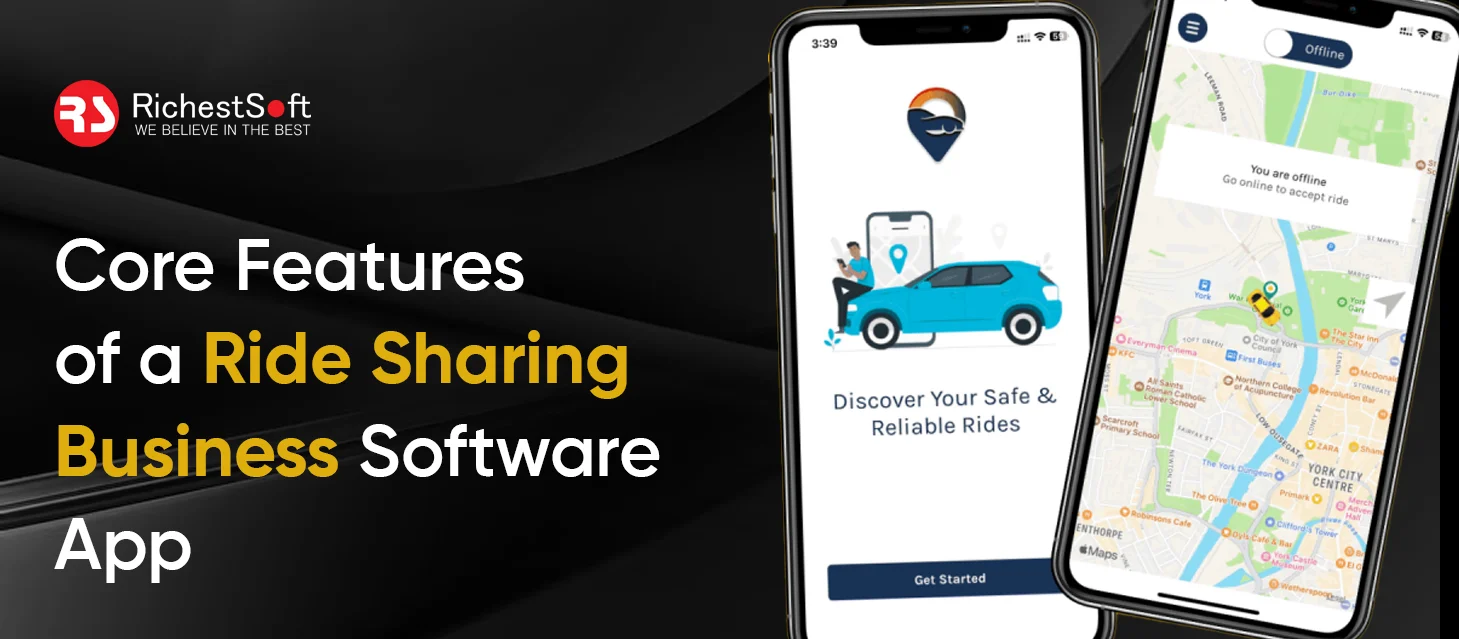
Check out the must-have features for a ride-sharing business software app:
1. User Registration and Profile Management
The app must provide its users with fast registration through phone number or email, or through social media accounts. Riders and Drivers can also keep their personal information, ride history, and payment information safe with Profile Management.
2. Ride Booking and Matching
Riders should be able to book rides with just a couple of taps. Passengers must be automatically matched with the closest drivers through an intelligent algorithm that reduces their waiting time. GPS and mapping services integration allows you to specify exactly where you want to be picked up and dropped off.
3. Real-Time Tracking
With live tracking, you can see the location of your driver, your driver’s ETA, and the route. Transparency establishes trust, which makes this one of those features you simply have to have.
4. Multiple Payment Options
Allow multiple payment options—credit/debit cards, digital wallets, UPI, and even cash. Users should feel that their transactions are safe and hassle-free.
5. Ratings and Reviews
Ratings and reviews add a layer of accountability on drivers and ensure service consistency. The positive reviews can also be used to reward the drivers.
6. Push Notifications
Prompt notifications notify users of their ride confirmation, deals, or safety messages. It improves user experience and retention.
7. Ride History and Receipts
A comprehensive ride history gives users the ability to keep track of their expenses and helps them organize expense reports, making it beneficial for those who travel for business.
8. In-App Chat and Support
Rider-driver communication within the app made it more convenient. Additional support treats concerns or disputes efficiently.
9. Admin Dashboard
The Backend Admin Panel allows you to control the users, drivers, pricing, routes, and statistics.
Factors Affecting Ride Sharing App Development Cost

1. Choice of Platform
Are you building for:
- iOS only?
- Android only?
- Or both platforms?
A single-platform app will be cheaper in the beginning. But if you want to target a wider audience with a cross or dual platform app, you are going to put more money into it.
2. Features & Complexity
A simple ride sharing application with essential features such as booking, tracking, and payments is more cost-effective.
But costs increase when you add:
- AI-based route optimization
- Dynamic surge pricing algorithms
- Multi-language support
- In-app wallets
- Advanced analytics dashboards
- Corporate ride modules
3. Design & UI/UX
A simple interface with basic screens is cheaper to build.
But if you want:
- Smooth transitions
- Interactive maps
- Clean, premium design
- Frictionless booking flow
- Custom animations
It requires more design strategy and testing.
Investing in professional UI/UX can dramatically improve user retention. And in ride sharing, retention equals revenue.
4. Backend Infrastructure
Your backend is the engine of your platform.
It powers:
- Real-time ride matching
- Live GPS tracking
- Payment processing
- User management
- Surge pricing logic
- Data analytics
The more scalable and secure you want it, the higher the infrastructure cost.
5. Development Team
Working with an experienced ride sharing app development company ensures:
- Better architecture planning
- Faster development cycles
- Fewer technical errors
Indeed, going offshore to lower-cost countries can help reduce initial costs. But bad communication, time zone differences, or inexperience lead to hidden costs down the road.
6. Maintenance & Ongoing Updates
Many founders forget this part.
After launch, you’ll still need:
- Bug fixes
- App store updates
- Security patches
- Performance optimization
- Feature improvements
A well-maintained app runs longer, better, and keeps users happy.
So, What is the Overall Cost So Far?
If you are developing in markets such as the USA or UK, the approximate cost of the ride sharing app development usually hovers around: $25,000 to $150,000+
The final number depends on:
- Scope
- Features
- Design quality
- Infrastructure strength
- Team expertise
Tips to Choose the Right Ride Sharing App Development Company
Some tips to consider:
- Expertise: Experience means they already know ride matching, live tracking, driver panels, payments, surge pricing, and the real-world problems behind them.
- Work Speaks for Them: A genuine portfolio tells a story. Explore their previous apps. Are they smooth? Are they user-friendly? What do clients say about them? Real reviews and working products reveal far more than sales presentations ever will.
- Strong Technical Foundation: A ride-sharing app needs to function perfectly — especially during rush hour. The team should be well versed with modern frameworks (React Native/ Flutter) for Mobile & a robust backend (Node.js) capable of processing real-time data without crashing/lagging.
- No Hidden Cost Surprises: A professional company will give you a transparent breakdown of ride sharing app development cost — covering design, development, testing, deployment, and maintenance. If numbers feel vague, that’s a red flag.
- They Stay After Launch: Your journey doesn’t end once the app goes live. Bugs need fixing. Features need upgrades. Security needs updates. Scaling becomes essential as users grow. A reliable team stays committed beyond launch day.
Steps to Develop a Ride-Sharing App
Step 1: Start With Deep Market Research
Ask yourself:
- Who exactly am I building this for?
- What are competitors doing right — and wrong?
- What gap can I realistically fill?
- What are the local transport laws and licensing rules?
- What pricing model makes sense for this market?
Market research reduces guesswork. And in mobility businesses, guesswork is costly.
Step 2: Start with MVP
Start with a Minimum Viable Product (MVP) — just the essential features:
- Ride booking
- Real-time tracking
- Secure payments
- Driver onboarding
- Admin dashboard
Step 3: Choose the Right Technology Stack
You’ll need to decide on:
- Frontend (what users interact with)
- Backend (where operations run)
- Database systems
- Cloud hosting
- Payment gateway integrations
Step 4: Focus on UI/UX
Users don’t want complexity. They want:
- Fast booking
- Clear pricing
- Easy navigation
- Minimal steps
Good design is invisible — it just works.
Step 5: Development & Relentless Testing
You need to ensure:
- Zero critical bugs
- Secure user data
- Smooth ride matching
- Stable performance during peak demand
A ride-sharing app cannot afford technical instability.
Step 6: Launch Smart
Once your app is stable, it’s time to launch.
Plan:
- Digital marketing campaigns
- Local promotions
- Referral programs
- Driver recruitment drives
- Fleet partnerships
Step 7: Monitor
- User ratings
- Ride completion rates
- Cancellation trends
- Driver feedback
- App performance analytics
Strategies to Scale Your Ride-Sharing Business
- Make Drivers Your Priority: When drivers make good money and feel respected, they stay. A consistent service depends on a consistent pool of drivers.
- Focus On One City at A Time: Test your business in one city, then scale.
- Let the Data Drive Your Decisions: Watch your peak hours and hot zones, cancellations, and ride trends. Go where scale is proven — not where it “feels” right.
- Begin with Solid Unit Economics: Each ride should be theoretically profitable. If your margins are thin, scaling up is not going to fix that; it’s going to magnify it.
- Invest in Trust & Safety: Verified drivers, quick support, and transparent pricing build long-term loyalty. Nothing grows businesses faster than trusting discounts.
Final Words
Building a ride sharing app isn’t about copying a global giant. It’s about building something that actually works in your market.
It’s about:
- Solving real local mobility problems instead of cloning features.
- Creating strong operational systems for drivers, payments, and support.
- Choosing the right ride sharing app development company — like RichestSoft, a team that understands both technology and business logic.
- Understanding your ride sharing app development cost realistically, including scaling and maintenance.
- Thinking beyond launch day and planning for long-term growth.
When done strategically, a ride sharing business software app can evolve into a strong recurring revenue model with consistent demand.

FAQs
1. Should I make separate apps for drivers and riders?
Yes. The best ridesharing app on the market should come with at least three systems for the rider app, driver app, and admin dashboard. There are different levels of functions, and dividing them also makes the user interface much better.
2. Is it preferable to start with a white-label app or develop my own app?
If you’re trying out the concept with little investment, a white label solution can enable you to get to market faster. On the other hand, when it comes to scaling your business in the long run, hiring a professional development team is always a better choice.
3. What legal hurdles do I need to clear?
- Transport permits
- Driver background verification
- Commercial insurance
- Local business license
- Compliance with the data protection laws
Not paying attention to the legalities may shut down your business before it starts.
4. How do I get drivers to my platform in the beginning?
Early-stage platforms often struggle with supply. Add to the list of ways you can get drivers:
- Increased initial share of commission fees
- Signing bonuses
- Flexible payout cycles
- Referral rewards