+1 315 210 4488
 +91 99888 06489


March 16, 2026
With growing shifts in consumer behavior toward quick-commerce apps, whether for food or groceries, platforms like Uber Eats are rapidly expanding and generating significant profits, while also increasing competition in the market. Many entrepreneurs and businesses are now considering investing in this industry through a white-label food delivery app clone. Are you also among those smart enthusiasts?
Don’t worry, this blog provides a clear guide on how investing in food delivery apps like Uber Eats can become a profitable business opportunity, along with insights into the revenue potential and growth opportunities in this fast-growing digital market.
About the Original Platform- Uber Eats
Uber Eats unites consumers, restaurants, and delivery partners on a single digital platform. The platform acts as an intermediate marketplace where restaurants publish their menus, users make orders via the app, and independent delivery partners fulfill them.
Uber Eats operates as a multi-sided platform. This strategy lets the firm expand while earning income from many ecosystem players. The network effect strengthens as additional restaurants and users join the platform, increasing order volumes and profitability. Food delivery is becoming a big income source for Uber.
Uber Eats’ Key Business Model Elements
Restaurant commission plan
Partner restaurant commissions provide significant profits on Uber Eats. Restaurants pay 15%–30% of platform orders, depending on partnership agreements and delivery services. Restaurants get a vast digital consumer base and a ready-to-use logistical network.
Customer Delivery/Service Fees
Customers pay delivery and service fees to the platform. These costs depend on distance, order size, and demand. Delivery costs average $2–6 per order, and service fees amount to 5–15% of the order value, establishing a constant customer income stream.
Uber One Subscription Revenue
The website also generates revenue from membership programs such as Uber One, which provide free delivery, discounts, and priority services. This approach improves the predictability of platform revenue, client loyalty, and order frequency.
Ads, Sponsored listings
Restaurants may buy prominent listings, sponsored results, and homepage promotions on the app. These advertising services boost restaurant exposure and order volume, while the platform generates high-margin advertising income from user traffic.
Dynamic Pricing and Demand
The platform raises delivery fees during peak hours or congested places using dynamic pricing methods. This balances demand with delivery partners and boosts platform profitability during high-traffic times.
Market Insights of Food Delivery Apps Like Uber Eats
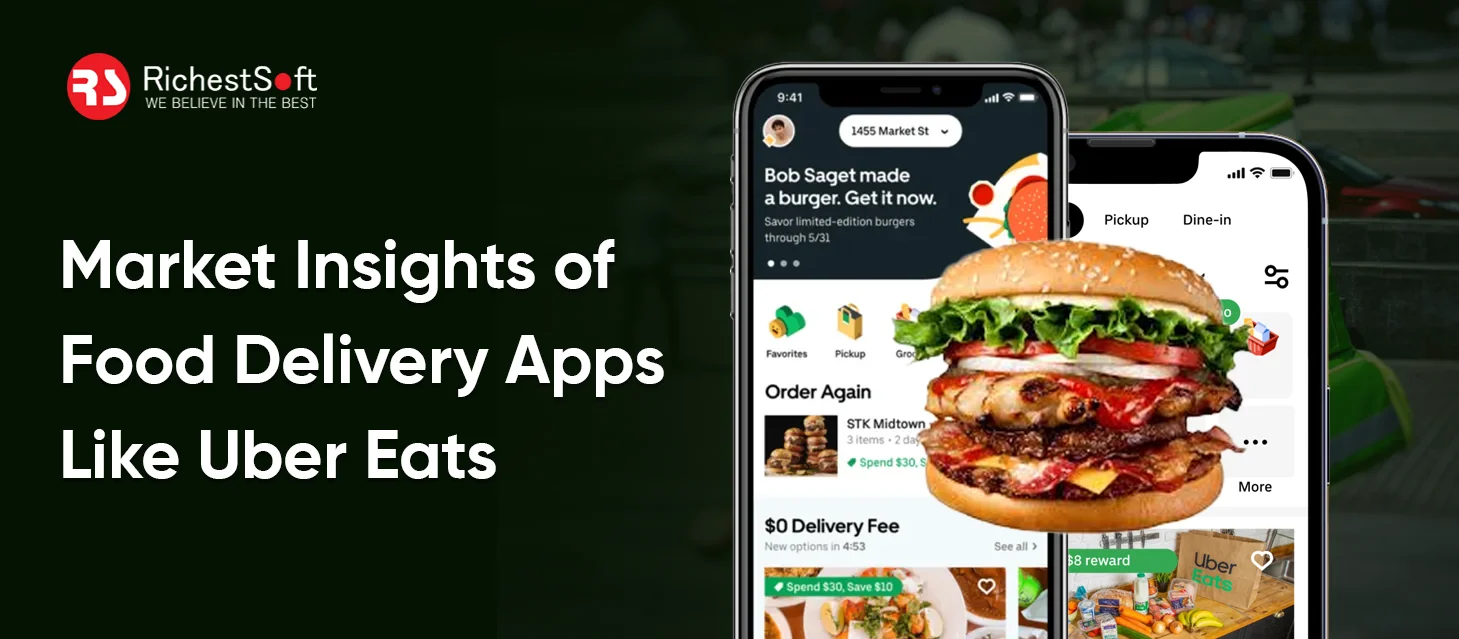
Below are some market insights showing this industry’s development potential.
Rapid Market Growth
The worldwide internet meal delivery business is estimated to reach over $597 billion by 2035, growing rapidly from $165 billion in 2024.
Higher Demand for Fast Commerce
Customer expectations are rising to 30–60 minute delivery. Rapid growth of quick commerce models drives platforms to invest in speedier logistics networks and delivery technology.
Large Global User Base
Large platforms operate in thousands of cities globally. The sector is massive, with millions of users and over one million restaurant partners in over 11,000 cities on Uber Eats.
Multiple Business Partnerships
Restaurants, grocery shops, and cloud kitchens help food delivery applications grow. These partnerships allow platforms to increase order volume while helping businesses reach more customers digitally.
Innovation Driven By Tech
AI-based logistics, real-time tracking, and automated delivery systems are improving food delivery efficiency and consumer experience.
What Makes Uber Eats Clone a Profitable Startup
Proven Marketplace Business Model
An Uber Eats–style platform follows a tested marketplace model that connects restaurants, delivery partners, and customers, allowing startups to generate revenue from multiple sources within one ecosystem.
Faster Market Entry
Businesses can directly invest in a pre-developed version of Uber Eats. This makes it easier for entrepreneurs to start a food delivery service without having to design the whole thing from scratch.
Multiple Revenue Streams
Commissions from restaurants, fees for delivery and service, and promotional advertising all provide opportunities for businesses to monetize their platform presence.
Scalable Platform Growth
Due to the scalability of the business model, food delivery apps may simply grow into other locations by partnering with additional restaurants and delivery services.
Growing Demand for Convenience
Uber Eats-like food delivery apps are in high demand due to the preference of modern customers for online food ordering.
Opportunity for Local Market Leadership
Entrepreneurs may tailor the platform to individual cities or areas, allowing them to create strong local connections and compete successfully in localized marketplaces.
Logistics & Partner Delivery
The app can grow a multi-sector logistics ecosystem if entrepreneurs leverage delivery-as-a-service beyond restaurant deliveries.
Niche Entrepreneurship Opportunities-
- Online and retail delivery: Startups may work with local retailers to deliver products same-day or planned.
- Grocery & Quick Commerce: Growing quick-commerce markets may be reached via high-demand grocery delivery.
- Pharmacy and Healthcare Delivery: Urban markets are becoming more interested in drug delivery.
- Last-Mile Logistics Services: Enable merchants to link the platform’s delivery network into their applications or websites, while the platform oversees drivers and completes client deliveries.
Uber Eats Revenue Generation Strategies
Uber Eats generates revenue through various strategies, like-
- Restaurant Commission
- Customer Delivery Fees
- Service Charges on Orders
- Subscription Memberships
- Logistics & Partner Deliveries
- In-App Advertising & Promotions
Entrepreneurs building an Uber Eats–style clone can adopt similar strategies and also incorporate other revenue streams. Want to learn about them? Explore the unique revenue generation strategies mentioned below:
Peak-Time Surge Pricing
The platform may charge surge or busy-area fees at peak hours or places. Dynamic pricing balances demand and boosts profits.
Fees For Cancellation And Late Orders
Platforms impose cancellation or late alteration fees for orders canceled after preparation or shipment. This protects partner eateries and generates income.
Restaurant Startup & Onboarding Costs
New restaurants may pay a one-time setup charge for registration, menu integration, and technical assistance to sell on the marketplace.
Analytics and Business Insights
Restaurants may buy analytics dashboards from delivery systems to enhance sales by learning about customer behavior, peak order periods, pricing tactics, and performance indicators.
Cloud Kitchen Partnerships
Platforms may collaborate with or create delivery-only ghost kitchens. It makes money from rent, commissions, and operational partnerships by hosting several virtual companies in shared kitchens.
Payment Processing Fees
The platform may charge a modest processing fee for in-app wallet, card, and digital payment transactions to generate extra revenue.
Co-Marketing & Brand Collaboration
Food delivery apps can partner with huge restaurant chains, beverage brands, and FMCG companies for limited-time specials, sponsored deals, and bundled services to generate marketing revenue.
Step-by-Step Guide to Build a Food Delivery App Like Uber Eats
Here are the key steps involved in investing in an Uber Eats app development:
Do Market Research
Assess the local food delivery market, competition, and client demand. Understanding customer preferences, price patterns, and restaurant alliances helps firms choose a strategy and audience.
Define Business Model
Choose the platform’s revenue model. Restaurant commissions, delivery, service, subscription plans, and in-app advertising are prevalent monetizations.
Choose The Right App Platform
Android, iOS, or both for app creation. Cross-platform programming saves money and increases the consumer base for many companies.
UI/UX Designing
Make a user-friendly interface for consumers, delivery partners, and eateries. A simple purchasing process and navigation boost consumer happiness and engagement.
Include Key App Features
Restaurant listings, menu browsing, order placing, real-time monitoring, digital payments, and delivery partner management are necessary.
Create Admin, Driver, Customer Panels
To easily manage orders, performance, and platform operations, provide dashboards for administrators, restaurants, and delivery partners.
Test App
Perform thorough testing before releasing to detect technical, security, and performance concerns to provide a solid user experience.
Platform Launch and Promotion
After creation and testing, deploy the app in your target area and promote it via digital marketing, restaurant partnerships, and promotions.
Regular Upkeep
Keep adding features, speed, and security to the software. Businesses maintain the platform to stay competitive and improve customer experience.
Conclusion
Uber Eats’ quick growth indicates that online meal delivery systems provide great income possibilities for contemporary businesses. An organized food delivery platform lets businesses expand easily. Businesses that collaborate with the right development experts can safely join the competitive food delivery industry and construct a successful on-demand delivery platform for long-term growth.
However, a successful platform needs the correct technology, scalable infrastructure, and business strategy. This is where RichestSoft helps. We assist startups and corporations in building high-performance food delivery applications with innovative features, smooth user experience, and dependable backend infrastructure.
FAQs
1. Is a food delivery app investment profitable?
A: Food delivery applications may make money via commissions, delivery fees, and subscriptions with the correct business plan and restaurant agreements.
2. How does Uber Eats generate money?
A: It makes money via restaurant commissions, delivery, service, and in-app advertising.
3. How long does food delivery app development take?
A: Development might take 3–6 months, depending on features and platform.
4. What are the main meal delivery app features?
A: Restaurant listings, online ordering, real-time monitoring, secure payments, and delivery partner