+1 315 210 4488
 +91 99888 06489


September 7, 2026
Choosing the right digital learning platform can directly affect how students learn, how teachers manage courses, and how institutions deliver education. While traditional Learning Management Systems (LMS) have long been the standard for education, modern education apps are changing how learners access lessons, communicate with instructors, complete assignments, and stay engaged.
Education App vs Traditional LMS: the right choice depends on your institution’s teaching model, student expectations, budget, scalability, mobile requirements, and long-term digital strategy. Understanding the differences between an education app and a traditional LMS can help schools, colleges, universities, training institutes, and EdTech businesses choose the platform that best fits their needs. This post covers everything about Education and traditional LMS!
Build a modern education platform with RichestSoft
Build a modern education platform with RichestSoft
Education App vs Traditional LMS: Understanding the Basics
Before comparing the two, it is important to understand what each platform offers.
What Is an Education App?
An education app is a mobile-first or mobile-friendly digital learning platform designed to make education accessible through smartphones and tablets. It can bring lessons, video classes, quizzes, assignments, live sessions, discussions, notifications, payments, and other learning tools into one convenient application.
Education apps are particularly useful for institutions that want to provide on-the-go learning and highly interactive student experiences.
Depending on the institution’s requirements, an education app can include:
- Live and recorded classes
- Video and audio lessons
- Digital study materials
- Online quizzes and assessments
- Assignment submission
- Student-teacher communication
- Push notifications
- Progress tracking
- Gamification
- Online payments
- Personalized learning
- Attendance management
What Is a Traditional LMS?
A traditional LMS is a centralized software system used to create, manage, deliver, and track educational courses and training programs. It is commonly accessed through a web browser and provides administrators and instructors with tools to manage learners, course content, assessments, grades, and reports.
Popular LMS platforms are often built around structured course management rather than mobile-first engagement.
A traditional LMS typically provides:
- Course and curriculum management
- Student enrollment
- Learning materials
- Assignments and tests
- Grade management
- Attendance tracking
- Teacher dashboards
- Student performance reports
- Certification
- Administrative controls
Education App vs Traditional LMS: Key Differences
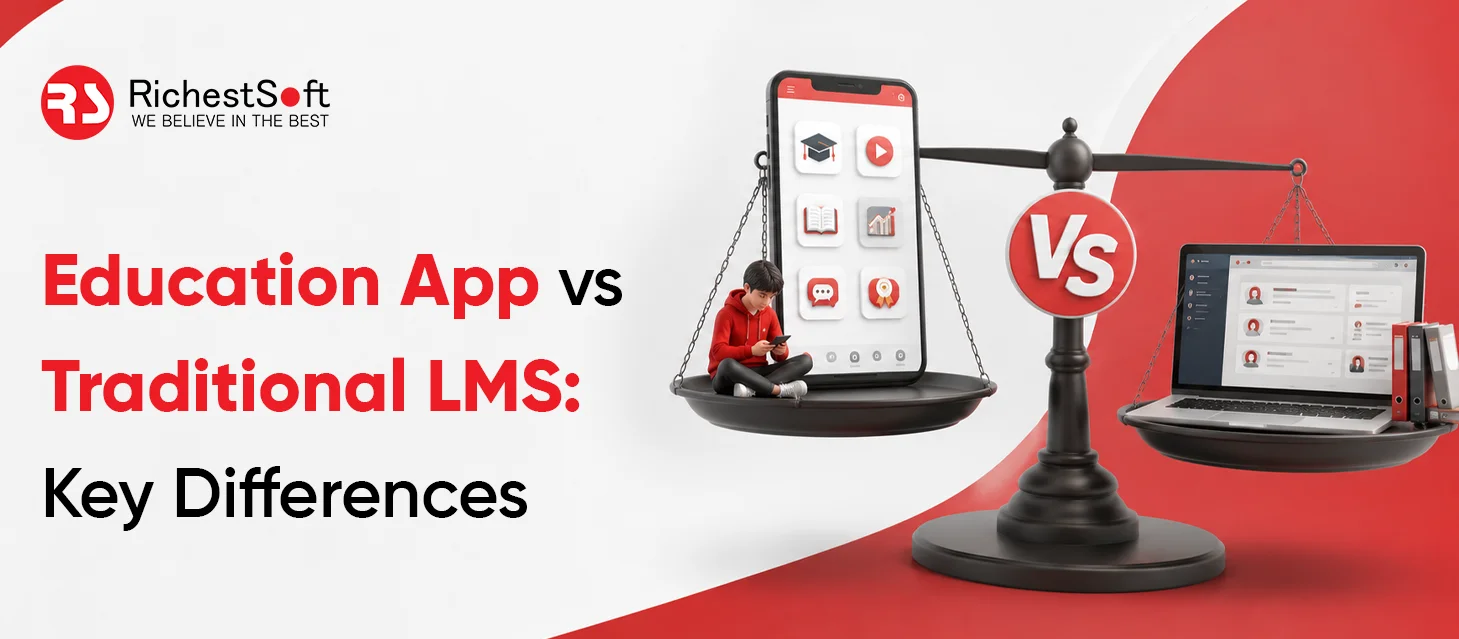
Explore the key differences between Education App vs Traditional LMS below:
Education App vs Traditional LMS Comparison
| Key Difference | Education App | Traditional LMS |
|---|---|---|
| Main Focus | Mobile learning and student engagement | Course and learning management |
| Learning Experience | Interactive and personalized | Structured and course-based |
| Customization | Highly customizable | Depends on the LMS platform |
| Student Engagement | Notifications, chat, gamification, interactive activities | Discussions, announcements, and course activities |
| Mobile Learning | Designed mainly for mobile users | Usually web-based with mobile access |
| Course Management | Can be customized based on requirements | Built-in course management tools |
| Assessments | Quizzes, tests, and interactive activities | Assignments, quizzes, tests, and grading |
| Personalization | Can offer personalized learning paths | Depends on available LMS features |
| Communication | Chat, notifications, messages, and live classes | Discussions, messages, and announcements |
| Development | Usually requires custom development | Can use an existing platform |
| Cost | Higher initial cost for custom development | Often more affordable to start |
| Flexibility | High flexibility for new features | Limited by the selected LMS |
| Best For | Mobile-first and engaging learning | Structured academic and course management |
Learning Experience
Education apps are designed to make learning more convenient and interactive, especially on mobile devices.
- Mobile-friendly learning
- Interactive lessons
- Video classes
- Quizzes and activities
- Personalized learning options
Traditional LMS platforms provide a more structured learning environment.
- Course-based learning
- Assignments and tests
- Learning materials
- Grades and assessments
- Student progress tracking
Customization
A custom education app gives institutions more freedom to design the platform around their specific requirements.
- Custom features
- Branded interface
- Personalized student experience
- Flexible learning tools
Traditional LMS platforms usually provide ready-made features, although some platforms allow additional customization.
Student Engagement
Education apps can include features that encourage students to use the platform regularly.
- Push notifications
- Learning reminders
- Chat
- Interactive activities
- Gamification
LMS platforms generally focus more on managing courses and academic activities.
Course Management
Traditional LMS platforms have strong tools for organizing and managing courses.
- Course creation
- Assignments
- Tests and quizzes
- Grades
- Student records
- Progress reports
Education apps can also provide these features, but they may need to be developed based on the institution’s requirements.
Mobile Access
Education applications are also created for mobile users, making it easier for students who want to study via smartphones and tablets.
Traditional LMS systems allow mobile access but the experience is different depending on the platform being utilized.
Customization
Education applications may be built to provide customized instruction depending on the student’s interests, progress and learning requirements.
Depending on the LMS, customisation may also be supported by traditional LMS systems
Education App vs Traditional LMS: Which One Should You Choose?
There is no single solution that works for every institution. The right choice depends on your students, teaching model, budget, technology requirements, and long-term goals.
Choose an Education App If:
An education app may be the better option if your institution wants to create a highly customized and mobile-first learning experience.
It can be suitable if you want:
- A dedicated mobile learning experience
- Custom student features
- Push notifications and reminders
- Interactive learning
- Live classes
- Personalized learning
- AI-powered learning features
- Direct student communication
- A unique branded platform
Choose a Traditional LMS If:
A traditional LMS may be more suitable if your main priority is managing structured courses and academic activities.
It can be useful if you need:
- Course management
- Assignments and quizzes
- Student progress tracking
- Grades and assessments
- Learning content management
- Teacher tools
- Reports and analytics
- A ready-made learning platform
Build a modern education platform with RichestSoft
Build a modern education platform with RichestSoft
Choose a Hybrid Solution- Education App & Traditional LMS
Institutions don’t necessarily have to choose one or the other. An education app may run along with an LMS, providing students with a better mobile experience while the LMS takes care of course administration, assessments, and learning records.
This strategy might be effective for universities wishing to combine a structured academic administration with a contemporary mobile learning experience.
How RichestSoft Can Help With Education App Development
Building an education app requires more than simply creating a mobile interface. The platform should support the institution’s teaching model, student needs, content, and future growth.
RichestSoft helps businesses and educational organizations develop custom education and eLearning solutions based on specific requirements.
Custom Education App Development
RichestSoft can build education apps based on your specific requirements instead of forcing your institution to work with a fixed platform.
- Custom student and teacher experiences
- Branded app design
- Flexible learning features
- iOS and Android app development
- Web-based education platforms
Engaging Learning Experiences
RichestSoft can help create features that make digital learning easier and more engaging for students.
- Video lessons
- Live classes
- Quizzes and tests
- Learning activities
- Student discussions
- Push notifications
AI-Powered Learning Features
For institutions looking to offer more personalized learning, RichestSoft can integrate AI-powered features into education platforms.
- Personalized learning suggestions
- AI learning assistants
- Smart recommendations
- Automated support
- Student performance insights
Secure and Scalable Platforms
Education platforms need to handle student information, learning content, and growing numbers of users. RichestSoft focuses on building solutions that are secure, reliable, and ready to scale as the institution grows.
Complete Development Support
From the initial idea to launch, RichestSoft can support the complete development journey.
- Planning and consultation
- UI/UX design
- App development
- Testing
- Third-party integrations
- Deployment
- Maintenance and support
Build a modern education platform with RichestSoft
Build a modern education platform with RichestSoft
Conclusion
For institutions seeking greater control over digital learning experience, a custom education app offers the flexibility to build features around specific teaching, learning, and business goals. That’s where RichestSoft can help.
We assist educational organizations in turning ideas into scalable digital learning solutions. With expertise in custom app development, eLearning platforms, AI solutions, and mobile technologies, RichestSoft can build an education solution designed around your institution’s requirements and future growth.
Ready to build a modern education platform for your institution? Partner with RichestSoft to create a customized learning experience that supports students, educators, and long-term institutional growth.