+1 315 210 4488
 +91 99888 06489


January 6, 2026
The gaming sector has undergone notable transformations in the last few years, many of which have been led by blockchain technology. In fact, the global blockchain gaming market is estimated to surge from USD 4.6 billion to USD 65.7 billion by 2027.
Blockchain has the potential to change the gaming industry—and how players and developers connect.
In this blog, we will discuss the influence of blockchain on the gaming industry, the benefits it offers, and the challenges when applying this technology. Also, learn about the future of blockchain in gaming industry and how the technology could be used to further change the gaming market.
What is Blockchain and How is it Used in Gaming?
The blockchain technology is a distributed ledger system that permits secure and transparent transactions without the intervention of a third party. This technology is increasingly popular in gaming culture because it offers numerous benefits, such as enhanced security, a better user experience, verification, trading resources, prize draws, and integrated gaming profiles. Let’s explore how blockchain is being used in the gaming world.
Cryptocurrency in Gaming
Cryptocurrency is a digital asset used as currency in the gaming industry. It can be spent on virtual goods like game items, characters, and power-ups, and it is also possible to take part in virtual events and tournaments. Additionally, all trade is secure and transparent, since it’s recorded on the blockchain.
NFT’s
Non-fungible tokens (NFTs) are unique digital tokens, which means they cannot be traded one-for-one like cryptocurrencies. These tokens can be used to buy in-game goods, such as characters, power-ups, and other items. NFTs are held on the blockchain, so they can also be used to represent the ownership of in-game assets and track their value.
Play & Earn
The blockchain has allowed gamers to earn tokens by playing and participating in virtual events and tournaments. These rewards can be in-game items, virtual currency, or even real money. This has enabled gamers to earn money by playing and be rewarded for their play.
Virtual Events and Tournaments
Since the development of blockchain technology, virtual events and competitions have gained more traction in the gaming world. These events run on decentralized platforms and make it possible for gamers to battle one another for rewards and prizes. Blockchain technology makes the outcome of these events both secure and transparent.
How Blockchain Technology Will Benefit The Gaming Industry?
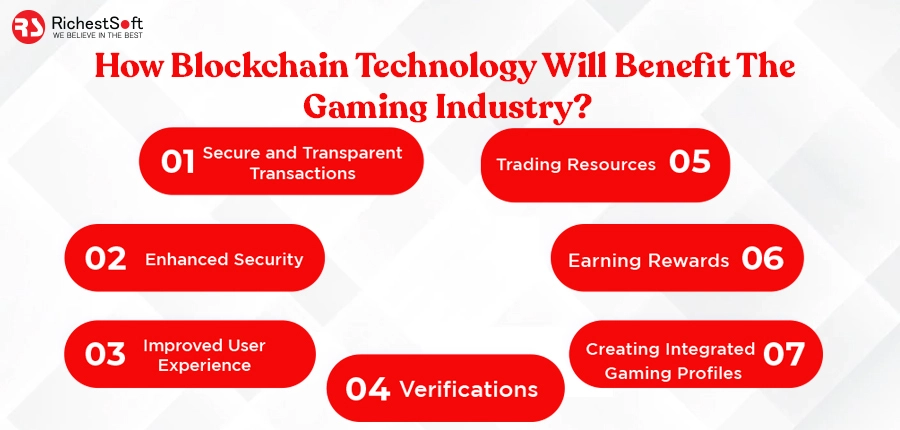
Blockchain technology is revolutionizing the gaming world by enabling a safe and transparent way for users to perform transactions, access enhanced security, have a better user experience, utilize verifications, trade resources, earn rewards, and develop integrated gaming profiles.
1. Safe and Transparent Transactions
Blockchain technology is a secure, transparent, distributed ledger system in which all transaction details are stored and cannot be altered or deleted. This makes all transactions safe and trackable, for more transparency.
2. Enhanced Security
The application of blockchain in the gaming industry contributes to enhancing security since transactions are sealed in a distributed ledger. This makes all the transactions safe and tamper-proof.
3. Improve User Experience
Blockchain technology also delivers a better user experience: PlayEvers is one such project that allows gamers to play and earn, shop for virtual goods, and compete in virtual events and tournaments. This helped gamers to make money while playing games and rewarded them for their efforts.
4. Verifications
Furthermore, all transactions on blockchain technology can be verified. It also guarantees that all transactions are legitimate and trusted .
5. Trading Resources
Gamers have also been able to trade resources , such as in-game items, virtual currency, and power-ups, facilitated by blockchain technology. This allowed gamers to earn money from playing games and be rewarded for their efforts.
6. Earning Rewards
Blockchain technology enables gamers to compete in virtual events and tournaments held on or hosted by decentralized platforms. These prizes may be in-game items, virtual currency, or even real money.
7. Creating Integrated Gaming Profiles
Gamers could also create holistic gaming profiles that track their progress, hold their in-game items, and carry their rewards using blockchain technology. This has allowed players to monitor their gaming activities and their progress.
Limitations of Blockchain Technology in Gaming
Despite the potential of blockchain technology in the gaming industry, there are also a few limitations that come with its use. These include:
Complexity
Blockchain technology can be complex to use, as one needs a certain level of technical knowledge to grasp the concepts behind it and apply them.
Regulatory Hustles
Applications of blockchain technology in the game industry may also be obstructed by legal concerns. This is possible because blockchain technology is still new and not yet regulated in most countries.
Competition
The video game world is a cutthroat market, and dozens of games have already integrated blockchain. It could make it harder for new games to compete and gain an edge in the market.
Real-World Examples of Blockchain Games
There are many real-world examples of blockchain games that have successfully gained a foothold in the gaming industry. These include:
CryptoKitties
CryptoKitties is a game built on Ethereum where players can buy, sell, and breed virtual cats. The game has been successful in gaining an edge in the gaming industry because it represents a quite innovative use of blockchain technology.
Decentraland
Decentraland is a blockchain virtual world where users can buy land and provide virtual homes and virtual businesses. The game has been successful in establishing a niche in the gaming world by allowing gamers to earn rewards for their efforts.
Gods Unchained
Gods Unchained is a blockchain card trading game that offers players the possibility to buy, collect, trade, and sell cards. It offers traditional competitive gameplay and true ownership of your cards by combining blockchain technology.
Future of Blockchain in the Gaming Industry

It’s a great time for the future of blockchain gaming, driven by development teams working toward actual digital ownership, transparent economies, and player-driven ecosystems. With blockchain, players can purchase in-game assets as NFTs, including characters, skins, and virtual land, and exchange or move assets across platforms. This trend is shifting toward capitalizing on players’ real ownership of their time, skills, and investments in the game, promoting long-term engagement and trust.
With developments in blockchain technology, gameplay will become smoother, transaction costs will be reduced, and scalability will be enhanced. All of these would nudge more gamers towards blockchain games. Innovations such as play-to-earn models, interoperable game assets, and metaverse-style experiences will gradually reshape game production and monetization. Expect the next few years to bring even more convergence between traditional video game development and blockchain.
Conclusion: How RichestSoft Can Help?
RichestSoft is the top blockchain app development company, providing blockchain game development solutions to help you deliver next-generation gaming experiences.
Our experienced blockchain specialists can develop bespoke games, ranging from simple to complex, that harness the power of blockchain technology to deliver secure and dependable gaming. From planning to developing and launching the game, we handle everything. In addition, we offer post-release support and maintenance for the game.
As a leading game development company, we employ the latest methodologies and technologies to ensure the game is protected against all types of malicious attacks. We make the game efficient and cheap. We are also always up to date with the latest security standards and technologies, ensuring your game is secure and reliable.
FAQs
Q1: What is a Blockchain Development Company?
A: A blockchain development firm assists enterprises with the design, development, and operation of blockchain systems. Usually, the support includes consulting services, custom development, integration, deployment, and maintenance of blockchain systems.
Q2: What do they provide?
A: They offer solutions, including app and smart contract development, wallet services, and distributed ledger-based solutions, along with guided advice on security, compliance, and scalability.
Q3: Do they provide support after app launch?
A: Yes. Quite a few companies, like RichestSoft, provide post-launch support such as updates, bug fixes, performance tuning, and technical consulting.
Q4: How to pick the right company?
A: Seek demonstrated experience, successful projects in the past, transparent pricing, and the ability to provide long-term support.
Q5: What is the total cost of a blockchain app development?
A: Prices depend on the scope and complexity of the project, from a few thousand to 100k dollars. It’s better to set your budget and requirements in advance.