+1 315 210 4488
 +91 99888 06489


December 15, 2025
Building an app is exciting. Watching it grow is even better. But turning your app into a real business, the kind that pays for itself and eventually becomes a scalable revenue engine, requires choosing the right monetization strategy.
Today, two models dominate the market: ad-based monetization and subscription-based monetization. Both can be highly profitable when implemented correctly and disastrous when done without a strategy. In this blog, we break down how each model works, when to use them, and how to maximize your app’s revenue without compromising user experience.
Why Monetization Strategy Matters More Than Ever
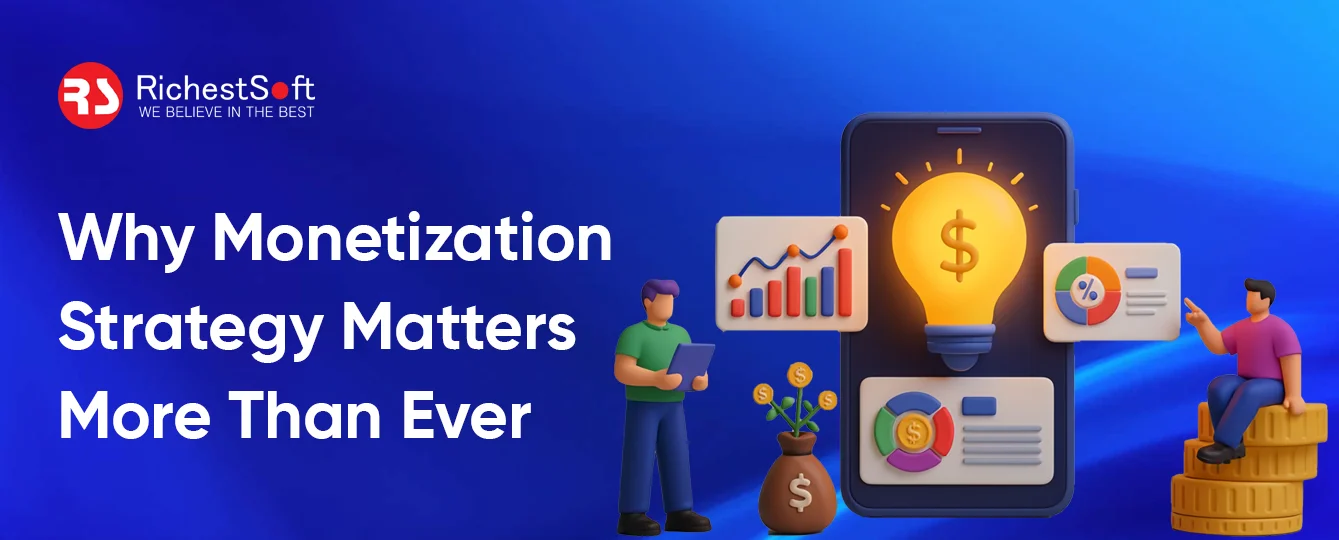
The app market is crowded. Users expect convenience, performance, and value. Most importantly, they don’t like paying unless they feel the value instantly.
A strong monetization strategy does three things:
- Keeps your app financially sustainable
- Aligns revenue with user behavior and expectations
- Delivers value without frustrating your audience
The “right” strategy is not about copying what others do; it’s about choosing a model that matches your app’s purpose, category, and audience.
Ad-Based App Monetization
Ads are one of the simplest ways to earn revenue from your app—especially if it’s free to download. The key is balance: not so many ads that users uninstall, but enough that your revenue grows consistently.
Below are popular ad models and how they work.
1. Banner Ads
Standard image or text ads are displayed at the top or bottom of the screen.
Best For
- News apps
- Utility apps
- Low-engagement apps
Pros
- Non-intrusive
- Easy to implement
Cons
- Low revenue per impression
- Easy for users to ignore
2. Interstitial Ads
Full-screen ads are shown at natural breakpoints (e.g., between game levels, after task completion).
Best For
- Gaming apps
- Entertainment apps
- Productivity apps with clear transitions
Pros
- Higher revenue than banners
- Great for high-traffic apps
Cons
- Can feel intrusive if overused
3. Rewarded Video Ads
Users voluntarily watch a video ad in exchange for rewards—bonus coins, extra lives, unlocks, etc.
Best For
- Gaming apps
- Freemium apps
- Apps with virtual economies
Pros
- Users like rewarded ads
- Highest engagement among ad types
- Strong revenue potential
Cons
- Requires reward mechanics
- Not suitable for all app categories
4. Native Ads
Ads designed to look and feel like part of your app’s UI.
Best For
- Social apps
- Content apps
- Feed-based apps
Pros
- Non-disruptive
- Higher click-through rates
Cons
- Requires more design work
When to Choose Ad-Based Monetization
Use an ad-first model if:
- Your audience expects a free experience.
- Your app has high daily engagement.
- Your revenue relies on volume, not individual paying users.
- You’re in gaming, entertainment, tools, or content categories.
If done with balance, ads can become a predictable and scalable revenue stream.
Subscription-Based App Monetization
If ads are about volume, subscriptions are about value. This model has exploded across industries because it offers consistent recurring revenue.
But users will only pay if you offer something they cannot get elsewhere for free.
1. Freemium Model
Users get a basic version for free and pay for premium features.
Works Best For
- Productivity tools
- Health & fitness apps
- SaaS apps
- Editing tools (photo/video)
Pros
- Huge audience funnel
- Lets users try before they buy
Cons
- Premium must feel genuinely valuable
2. Full Subscription Access
Your app is entirely behind a paywall after a free trial.
Works Best For
- Niche SaaS
- Professional tools
- Premium fitness/learning apps
Pros
- High-quality, committed user base
Cons
- Smaller user acquisition funnel
3. Tiered Subscription Model
Different plans for different user needs (Basic, Pro, Enterprise).
Works Best For
- SaaS
- B2B apps
- Marketplace and analytics platforms
Pros
- Maximizes revenue by serving multiple user segments
- Helps with scaling
Cons
- Requires careful pricing strategy
4. One-Time Lifetime Purchase
One fee for unlimited access.
Best For
- Apps with limited long-term maintenance.
- Tools with fixed features.
Pros
- Attracts quick users
- Great for branding new apps
Cons
- No recurring revenue
- Not ideal for apps with ongoing costs
Which Monetization Strategy Is Right for Your App?
Choosing between ads and subscriptions depends on your app’s nature:
Choose Ads If:
- Your app gets high daily traffic.
- User actions repeat frequently.
- Your audience resists paying up front.
- Your content refreshes constantly (news, games, entertainment).
Choose Subscriptions If:
- Your app delivers long-term value.
- Your product replaces or upgrades a real-world service.
- You offer continuous updates and premium features.
- You want predictable monthly revenue.
Hybrid Models Work Too
Many apps succeed by combining:
- Free app + rewarded ads + premium subscription
- Freemium + native ads
- Free content + paid pro features
As long as the user experience remains smooth, a hybrid model often yields the highest revenue.
Final Thoughts
No one’s got the perfect app monetization blueprint. The experts launch light, track what users love, and iterate like pros. Play with ad spots, subs, or price tests continuously. RichestSoft, the leading custom mobile app development company, helps brands build a revenue engine that works seamlessly for your app. We can create a custom model that powers your app’s success.