+1 315 210 4488
 +91 99888 06489


March 31, 2026
With rising traffic congestion and increasing demand for short-distance travel solutions, micro-mobility platforms are becoming an important part of modern urban mobility. Micro-mobility platforms like Yulu have proven that app-based bike sharing is not just a convenience for users—it’s a strong business model with measurable returns.
For entrepreneurs and mobility startups, developing a micro-mobility app like Yulu represents a strategic opportunity to enter the micro-mobility industry with a competitive edge. However, a successful project launch demands the right development strategy, efficient feature integration, and expert support. Thus, entrepreneurs need to be very careful and wise when developing a Yulu bike-like app. So, wondering how to invest in such apps?
Keep reading this blog! Below, we have shared a detailed guide on how businesses can start a micro-mobility app like Yulu.
Build Scalable Bike-Sharing Apps like Yulu with RichestSoft
Build Scalable Bike-Sharing Apps like Yulu with RichestSoft
About The Original Platform- Yulu Bike
Before starting development, you must understand everything about the original business model- Yulu.
Yulu is a popular Electric bike-sharing platform in India that lets people ride bikes and electric two-wheelers. The platform addresses traffic, pollution, and last-mile connectivity in cities. Many major cities have begun to see the platform as an attractive micro-mobility option. Here is some key information about its business model:
-
Addressed Urban Travel Issues
Yulu was launched in Bengaluru in 2017 to simplify and lower city transit costs. Simple: supply small shared vehicles for shorter trips instead of cars or motorbikes.
-
Focus on Short Distance Travel
The platform mostly helps individuals commute the first and last mile, including from the subway to work or home to neighboring locations.
-
Electric and Eco-Friendly Vehicles
Yulu’s main vehicles are lightweight electric bikes for local errands. These automobiles use less fuel and pollute less in heavily populated metropolitan areas.
-
Strong Technology Behind the Platform
With the use of the Internet of Things (IoT), machine learning, and artificial intelligence, Yulu’s platform optimizes the availability of vehicles and the user experience.
-
Growing Presence in Indian Cities
In Bengaluru, Mumbai, and Delhi NCR, Yulu serves thousands of shared vehicles and millions of consumers for daily travel.
In short, Yulu created a successful micro-mobility ecosystem using basic technology, shared cars, and a compelling urban mobility notion. This platform’s operation helps enterprises build a micro-mobility app.
Steps to Build an App Like Yulu Bike
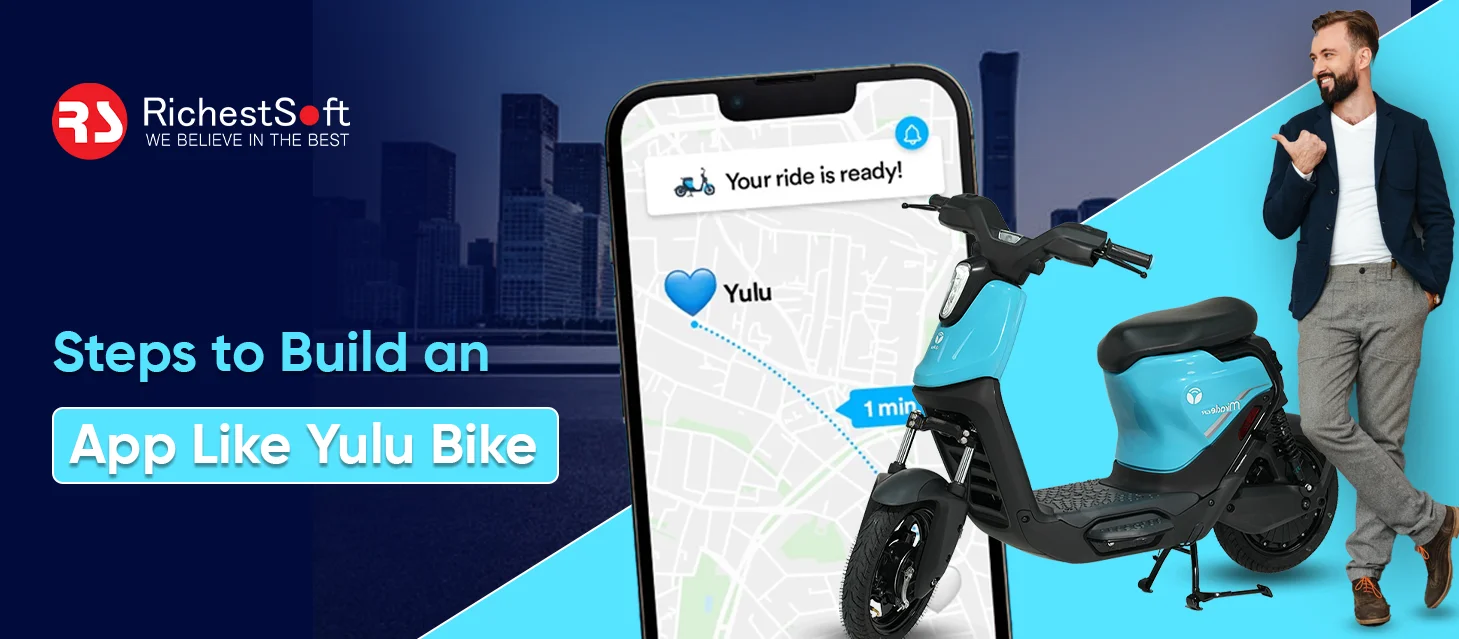
A well-organized development approach is necessary for creating a micro-mobility platform such as Yulu. Each stage, from conceptualization to app launch and vehicle management, is critical to the final product. Here are the key steps businesses must follow to build an efficient app like Yulu:
Define the Idea and Business Requirements
Establishing your desired kind of mobility service is the first stage. Make a decision on the kind of electric bikes and scooters that will be available on your marketplace. The service’s price plan, target consumers, and operational cities must also be defined.
At this point, companies also decide on crucial details like service zones, rental length, and ride price. The development process as a whole benefits from having a well-defined company strategy.
Design the App Interface and User Flow
The user experience design process follows. Anyone should be able to use the app to locate and hire a bike without any hassle.
Standard user flow often consists of:
- Making an account and filling out the profile
- Locating bicycles on a map
- Scanning a QR code to unlock the vehicle
- Starting and ending the ride
- Using online payment methods
Users anticipate the procedure to take little more than a few seconds; an uncluttered interface is crucial.
Determine Core App Features
Once the design is complete, the developers begin constructing the functionalities of the app. With these additions, riders may engage with the bikes in a variety of ways and finish rides.
Typical key qualities are:
- User registration and login
- GPS map showing nearby bikes
- QR code scanning to unlock vehicles
- Ride tracking and duration calculation
- Secure online payment system
- Ride history and notifications
In addition to the user app, the platform should have a driver/operations panel and an administrator panel. The driver or operations panel assists field workers in managing bike availability, battery state, and repositioning vehicles in various places. App owners can regulate rides, users, pricing, payments, and system performance via the admin interface.
Customers often stay on the platform that loads quickly and is highly engaging; thus, keep the interface clean, simple, and speedy.
Build the Backend and Admin Panel
In order to run the whole platform, a robust backend infrastructure is needed to support the mobile app. This system handles user data, vehicle tracking, payments, and ride information.
An admin dashboard is also built so that the company can:
- Monitor all active rides
- Track vehicle locations
- Manage pricing and offers
- View analytics and usage reports
This system helps businesses control operations efficiently.
Test the App & System Integration
Extensive testing of the app is required prior to the platform’s introduction. Developers should check that the GPS tracking, payment processing, and car connection systems are operational before continuing with development.
The software’s compatibility with all major OSes and device types is also confirmed during testing. Preventing problems after launch requires fixing flaws now.
Launch the App
After the platform has completed testing and integrations, it is time to launch it on app marketplaces like the App Store for iOS and the Play Store for Android.
Monitor Performance & Upgrade
Once the system is live, firms keep a close eye on it using analytics and feedback from users. Locating popular spots, periods of high use, and operational problems becomes much easier with this.
Companies can use this data to enhance the platform, introduce new service zones, and increase their fleet.
Build Scalable Bike-Sharing Apps like Yulu with RichestSoft
Build Scalable Bike-Sharing Apps like Yulu with RichestSoft
Conclusion
At last, all we would say is that Micro-mobility platforms like Yulu are reshaping how people move within cities. So, it is a great start-up opportunity! However, launching a successful micro-mobility app requires a clear development strategy and expert support.
Where RichestSoft, a top Taxi Booking App Development Company, shines is in this area. Our team has extensive expertise in developing mobility and on-demand apps. We assist organizations in creating conversion-focused micro-mobility apps like Yulu bike that meet specific market objectives. Throughout the whole process of creating a successful mobility platform, RichestSoft assists organizations with everything from planning and user interface design to development and deployment on a large scale.
If you want to create a bike-sharing platform similar to Yulu, teaming up with the right developers may make all the difference in making your vision a reality.