+1 315 210 4488
 +91 99888 06489


January 27, 2026
Android vs. iOS app development is not a technical debate; it’s a business debate. The development platform you choose to target has implications, not only for the cost of development, but also for time-to-market, user acquisition strategy, revenue potential, and long-term scalability.
While Android has more freedom and access to the market, iOS is known for more spending users and controlled environment. When you’re building an app that can actually make you money (as opposed to just downloads), It’s important to understand how each platform supports your business goals.

Android vs iOS Mobile App Development: A Quick Reality Check
So, let’s start with some fundamentals. Android and iOS are not the same when it comes to business needs and target audiences.
- Android is flexible, scalable, and can be deployed to a huge number of users around the world. This enables companies to reinvent themselves and integrate a wide range of functionalities, as well as support a variety of device formats.
- When it comes to quality, security, and a superior user experience, iOS is the clear winner. Apps in the iOS space often provide polished performance, better brand credibility, and higher revenue per user, which makes it best for the companies that target the premium market or have revenue based model.
The decision isn’t only a technical one; it’s a strategic one about how your app fits in (or not) with your business goals and target market.
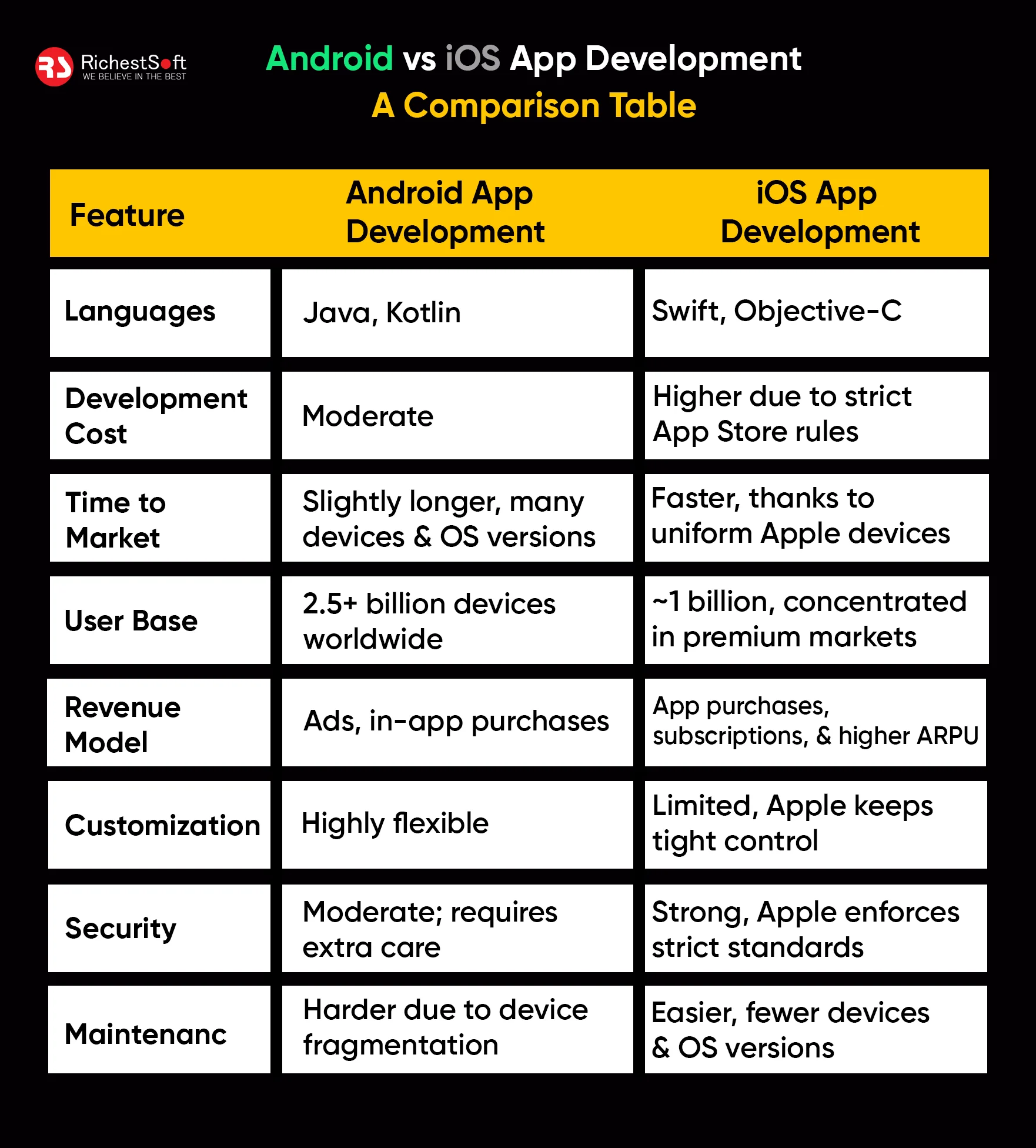
Android vs iOS App Development: A Comparison Table
Why You Should Consider Android First
Consider this: your app has been built for millions of people across Asia, Europe, and South America. You want to be free to innovate and experiment, and you want to have the flexibility to bring in services such as Google Maps or Google Pay, or even AI-driven recommendations. That’s Android.
Some perks:
Worldwide Availability: Android rules in the developing world. For a company with a mass market, it’s a no-brainer.
Flexibility: From quirky social apps to complex enterprise solutions, you can build anything. Android application development professionals are accustomed to this.
Value for Money: Android delivers quality without breaking the bank.
Integration-Friendly: Android integrates better with third-party apps and services to enrich your toolbox ecosystem.
Real-World Example: Using Android’s flexibility, India’s Flipkart — the largest e-commerce site — processes millions of transactions every day, while seamlessly integrating payment gateways, a personalization engine, and AI-based recommendations.
Note: Businesses that partner with Android application development experts can create future-ready applications that seamlessly scale, integrate emerging techno solutions, and delight users.
Why iOS May Make a Better Investment
The other side is iOS, which is all about luxury and performance. If your audience is located in the upper end of the market or you are creating a revenue-heavy app, iOS might just pull ahead of Android.
Key advantages:
Great Experience: The apps flow naturally from iPhone to iPad to Mac, and now even across other Apple devices, making the experience feel the same and smooth in the Apple ecosystem.
Strong Security and Privacy: With a very secure, encrypted OS, and strict App Store review guidelines, iOS is considered the best OS for apps in fintech, healthcare, and other industries dealing with privacy.
More Monetization Opportunities: iOS users tend to pay for premium apps and subscriptions more than Android users, so it is a better platform to earn steady and more income.
Fewer Device Variations: The updates are rolled out more smoothly as there are fewer devices.
Real-World Example: Netflix demonstrates the power of strong mobile apps to engage users in large numbers. Its iOS application is designed for efficiency, customization, and fluid streaming — leveraging the brand to keep users engaged and increase monthly revenue across platforms.
Looking Ahead: The Future of Mobile App Development

If you are looking to the future, both platforms are changing rapidly. Here’s what’s trending:
Cross-Platform Development: Frameworks such as Flutter and React Native enable companies to develop Android and iOS applications more quickly with a common codebase.
AI & Machine Learning: Smart recommendations, chatbots, and predictive insights are making their way as default features in today’s apps.
AR/VR Integration: AR and VR are increasingly bolstering user participation.
5G Optimization: New networks that are as fast as lightning will come to make your apps more responsive, fluid, and resource-heavy.
Price Estimation
Application development cost varies from platform to platform, based on its features. Basic Android and iOS apps cost an average of $15,000 to $30,000, and a moderate business app complexity ranges between $30,000 and $70,000. Because of the device fragmentation, there might be higher testing and maintenance costs associated with Android apps, but, at the same time, iOS apps might require a higher initial investment because of design quality and performance standards. The best choice really comes down to your budget, timeline, and expected returns.
How to Decide Between Android and iOS
Here’s a simple thought process:
- Know Your Audience: Are they Android users in India, Brazil, and Southeast Asia, or iOS enthusiasts in the US and Europe?
- Budget & Revenue Expectations: Android can be less expensive to get started with, but iOS tends to lead to greater returns per user.
- Features & Complexity: Custom apps that push the envelope work best on Android; streamlined, efficient apps work best on iOS.
- Schedule: Because of the smaller number of devices, iOS may be quicker to market, while Android will require additional testing among devices and OS revisions.
Many companies operate on one platform first to collect insights, then scale to the next, minimizing risk and maximizing potential audience.
Why Partner with RichestSoft for Your Mobile App Development
At RichestSoft, we don’t just develop apps, we create experiences. So if you are searching for a top Android app development company or want to work with the best iPhone app development company, our development experts can make your ideas come to life with accuracy, creativity, and a futuristic solution.
Whether it’s complex enterprise applications or consumer interactions, we make sure that your application is not only functional but that it also shines through in an overcrowded market. RichestSoft brings your vision to innovation, expertise, and real results.
Conclusion
Android is known for its worldwide accessibility, flexibility, and cheaper development. Conversely, if you are targeting a high-end user experience, better monetization, and high-end security, then iOS is the winner.
With an expert software and mobile app development company like RichestSoft as your development partner, you get the best of both Worlds – scalable, future-ready applications tailored to captivate your users, foster growth, and perfectly align with your business objectives.
FAQs
Q1: What is the least expensive development platform?
A: Up-front Android expenditure seems smaller, but since iOS revenue is greater, the cost balances out.
Q2: For Android and iOS, can I develop one app?
A: Yes! Cross-platform frameworks like Flutter and React Native enable you to write code once and run it on different platforms, which helps in cost and time savings.
Q3: Which is the best platform for my business?
A: Location of the audience, budget, number of expected features, and app revenue potential etc., are some of the parameters that can help you in deciding between Android and iOS.
Q4: User experience: iOS versus Android?
A: This is the difference that really puts the two systems apart: iOS is more integrated and seamless, whereas Android is more open and customizable, even among the general user base.
Q5: What are the advantages of working with the top-rated Android app development company?
A: Custom Android app development services play a big role in making your app the best it can be and getting you the revenues you want for your business.