+1 315 210 4488
 +91 99888 06489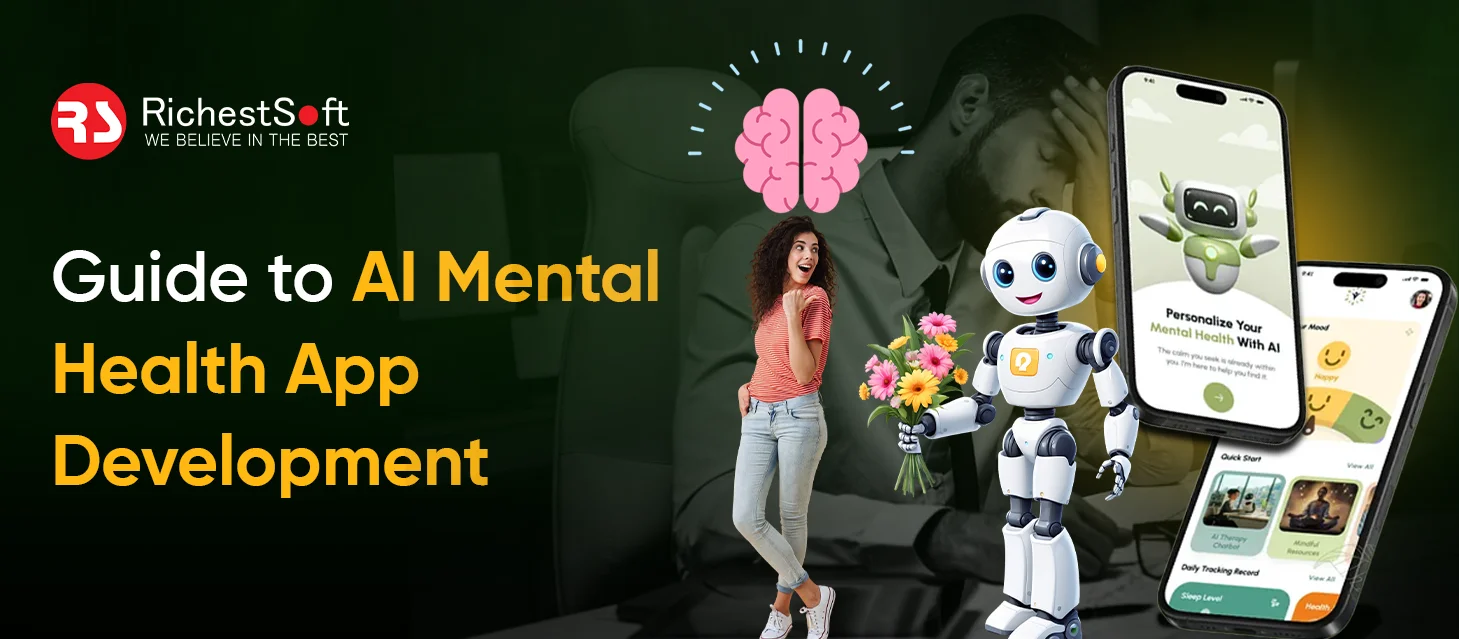


April 10, 2026
Mental health has become a growing priority for healthcare providers, businesses, and digital health startups worldwide. The demand for mental health services is outpacing the available supply, and organizations are being pushed to adopt technology solutions to enable better care. According to industry reports, the global market for mental health apps is anticipated to reach around 17.5 billion by 2030.
This growth has led healthcare firms to invest in AI-driven mental health solutions that deliver scalable, personalized, full-time support. Developing AI mental health apps is a way to build intelligent platforms that not only enable better care access but also provide clear business value.
Keep reading to get a better understanding of AI Mental Health App Development.
Launch your AI mental health app with RichestSoft
Launch your AI mental health app with RichestSoft
The Significance of AI Mental Health Apps
AI mental health applications employ artificial intelligence to track emotional trends, offer mental health services, and support therapists or medical professionals. These applications may leverage technologies like natural language processing (NLP), machine learning, and predictive analytics to analyze behavior of users and provide guidance.
For B2B firms, these apps are often built for several use cases:
- Digital therapy support provided by healthcare institutions
- Corporate Employee wellness programs
- Preventive mental health solutions offered by insurance companies
- Subscription-based platforms for mental health startups
Why Businesses Are Investing in AI Mental Health Apps
1. High Scalability
AI platforms can handle tens of thousands of users simultaneously. Organizations may now provide mental health advice to enormous numbers of people without having to recruit a number of therapists or support workers.
2. Customized Solutions
Through analysis of users’ actions and mood states, AI solutions offer personalized recommendations, including breathing exercises, meditation sessions, and cognitive behavioral therapy (CBT) techniques.
3. Cost-Effective Approach
Mental health AI solutions have the potential to reduce the cost of operations by enabling businesses and care providers to automate consultations, assessments, and mental health monitoring.
4. Uninterrupted Support
Unlike traditional therapy that takes place in pre-arranged appointments, applications powered by AI technology can provide around-the-clock emotional assistance that serves not only patients but also employees.
Key Features of an AI Mental Health App
Listed below are a few key features that are necessary to enable effective and safe mental health assistance.
AI Chatbot for Emotional Support
Such chatbots can mimic conversations with people using natural language processing. These chatbots listen to worries, provide ways to cope, and refer users to helpful resources.
Mood Tracking and Emotional Analysis
Users can record their mood every day. AI-predictive processing of such data identifies emotional patterns and sends alerts over sustained negative patterns.
Personalized Therapy Programs
AI-enabled platforms can develop unique mental care regimes by taking into consideration the user’s habits, stress levels, and mental well-being objectives.
Voice and Sentiment Analysis
Advanced mental health apps use native AI to analyze tone, speech patterns and sentiment of voice or text messages to better understand the user’s mental state.
Guided Meditation and Mindfulness Tools
AI apps often include meditation practices, breathing exercises, or even stress management programs to assist users in coping with feelings of anxiety or emotional discomfort.
Therapist Integration
Many B2B products collaborate with licensed therapists to provide a pathway to professional help if the AI identifies a significant mental health risk.
Steps to Develop an AI Mental Health App
1. Market Research
Define the target users, the industry vertical and the main mental illness the app would address. This stage adds more clarity to the unique selling points of the product.
2. Define main Features
Choose the AI features that the app will provide. Initially, have a minimum viable product (MVP) with core functionalities like chatbot support, mood tracking, and analytics.
3. Develop AI Models
Design emotional machine learning models that take user input. They do need to be trained on datasets that are both ethical and clinically meaningful.
4. Create an Appealing Interface
Mental health applications must have an appealing and user-friendly interface. While using the product, users should feel comfortable and secure when expressing emotional vulnerabilities.
5. Data Privacy and Security
Security is essential in mental health. Add encryption, security protocols, authentication systems, and secure cloud storage to protect sensitive information.
6. Evaluate, Test, and Clinically Validate
Test the app comprehensively to make sure the solutions of AI are safe, accurate, and clinically applicable.
7. Deployment And Continuous Improvement
AI systems need to learn continuously post-launch from user interactions, within ethical and privacy boundaries.
Cost of Developing an AI Mental Health App
The price of developing an AI mental health app varies by features, the complexity of the employed AI, and security considerations. A simple app with basic features, such as mood tracking may cost anywhere between $40,000 –$80,000.
Sophisticated platforms with personalized recommendations, analytics, and therapist integration can go anywhere from $80,000 to $200,000+.
The majority of companies start with an MVP to test the market and add more advanced AI capabilities as the platform progresses.
Future of AI in Mental Health Technology
The role of AI in the mental health space is anticipated to grow. So, in the next few years, we will have:
- Enhanced emotion recognition with voice/facial analysis
- AI-powered predictive mental health risk models
- Improved integration of AI platforms and licensed therapists
- Customized programs for mental wellness based on behavioural data
This means B2B companies now have the opportunity to develop new digital health products that can help improve mental wellness at scale and provide additional revenue streams.
Launch your AI mental health app with RichestSoft
Launch your AI mental health app with RichestSoft
Wrap Up
AI mental health apps are helping organizations offer more accessible, scalable and personalized mental health aid through smart technology. With the addition of AI capabilities such as chatbots, sentiment analysis and predictive insights, organizations can promote user wellness and discover new digital health solutions.
The organizations that are interested to develop such platforms can partner with the expert technology providers, such as RichestSoft, which offers AI development services to help startups and enterprises in building powerful and scalable AI-based healthcare applications.
FAQs
Q1. What is an AI mental health app?
A: An AI mental health app is designed as a conversational agent and capable of emotional support, mental health treatment, and tailored wellness guidance based on AI technologies such as machine learning and natural language processing.
Q2. How much does it cost to build an AI mental health app?
A: The price may vary based on features, AI complexity, and platform needs. Expect $40,000 –$80,000 for a simple AI-based mental health app and more than $200,000 for a complex platform integrated with predictive analytics and therapist guidance.
Q3. Are AI mental health apps safe?
A: Yes, these applications have source-friendly features, like encryption, secure cloud infrastructure, and adherence to mental health data privacy laws.
Q4. Can an AI replace human therapists?
A: AI can never replace therapists. It’s a support system for initial guidance, emotional tracking, and self-help tools, and it directs users to professional therapists when necessary.