+1 315 210 4488
 +91 99888 06489


August 28, 2026
Fashion eCommerce continues to create opportunities for businesses looking to build digital shopping platforms and reach customers beyond traditional retail. A shopping app like LimeRoad can combine product discovery, multiple sellers, curated collections, social shopping, and convenient checkout to create a more engaging buying experience.
For startups and entrepreneurs, the LimeRoad model can be a practical startup idea for entering the fashion marketplace. However, to ensure success, businesses should consider target audience, product categories, seller model, revenue strategy, and customer experience before development begins. This post covers everything about how to build a shopping platform like LimeRoad.
Build Your LimeRoad-Like Shopping App with RichestSoft.
Build Your LimeRoad-Like Shopping App with RichestSoft.
About LimeRoad and Its Business Model
LimeRoad is an Indian fashion & lifestyle discovery portal that was launched in 2012. LimeRoad marketplace business was bought by V-Mart Retail in 2022 and currently runs as part of V-Mart’s digital marketplace division.
The site is designed to let users find, browse, and buy fashion & lifestyle items. The company’s approach blends marketplace buying with interactive elements such as Scrapbook, where users are able to design and share their own fashion and lifestyle looks.
If you want to develop a shopping app like LimeRoad, understanding the app’s model helps you launch a better app.
Customer Shopping Experience
Customers may explore items, various categories, build collections, and buy things using the site.
The platform focuses on:
- Product discovery and search
- Fashion and lifestyle categories
- Curated collections
- Product details
- Shopping cart and checkout
- Order and return management
Seller Marketplace
LimeRoad operates as a marketplace, allowing businesses and sellers to offer products through its digital platform. V-Mart identifies the acquired business specifically as the LimeRoad marketplace business.
A similar marketplace can provide sellers with:
- Product listing
- Product and pricing management
- Order management
- Seller account management
- Sales tracking
- Customer order information
Social Shopping and Product Discovery
A key part of LimeRoad’s original positioning was making shopping more interactive. Its Scrapbook lets users combine products to create fashion or lifestyle looks and share those creations with others.
This model can include:
- Create fashion looks
- Product collections
- Shareable looks
- User-generated content
- Community engagement
- Creator rewards
LimeRoad’s current Scrapbook system also allows users to earn LR Credits when someone purchases from their shared look, creating an incentive for users to keep creating and sharing content.
Marketplace Revenue
LimeRoad’s business is built around its marketplace rather than simply selling products as a traditional retailer. V-Mart’s financial reporting identifies commission and other income associated with providing the LimeRoad platform to vendors.
A similar shopping marketplace can explore revenue opportunities such as:
- Seller commissions
- Featured product placements
- Brand promotions
- Advertising opportunities
- Sponsored collections
Business Growth Opportunity
The LimeRoad model shows how a fashion marketplace can combine product discovery, seller participation, social engagement, and online shopping in one platform. For entrepreneurs, this provides a practical model for building a fashion marketplace that can be customized around a specific audience, product category, market, and business strategy.
Features to Include in a LimeRoad-Like App
A successful shopping app needs features for both customers and the business operating the marketplace.
Customer Features
- User registration and login
- Personalized home feed
- Product search and filters
- Product categories
- Product details and images
- Size and color selection
- Wishlist
- Shopping cart
- Secure checkout
- Multiple payment options
- Order tracking
- Returns and exchanges
- Ratings and reviews
- Personalized recommendations
- Push notifications
Social Shopping Features
If you want to create a shopping experience inspired by LimeRoad, social and discovery features can become an important part of the platform.
- Create and share looks
- Curated collections
- User-generated content
- Follow creators or stylists
- Like and save products
- Share products and collections
- Style recommendations
- Social shopping feeds
Seller Features
A multi-vendor shopping platform also requires tools that allow sellers and brands to manage their products and orders.
- Seller registration
- Product listing
- Inventory management
- Pricing management
- Order management
- Sales tracking
- Promotion management
- Customer communication
- Seller analytics
Admin Features
The admin panel provides control over the complete marketplace.
- User management
- Seller management
- Product and category management
- Order management
- Payment management
- Commission management
- Content moderation
- Coupon and offer management
- Reports and analytics
- Notification management
Step-by-Step Process to Build a Shopping App Like LimeRoad
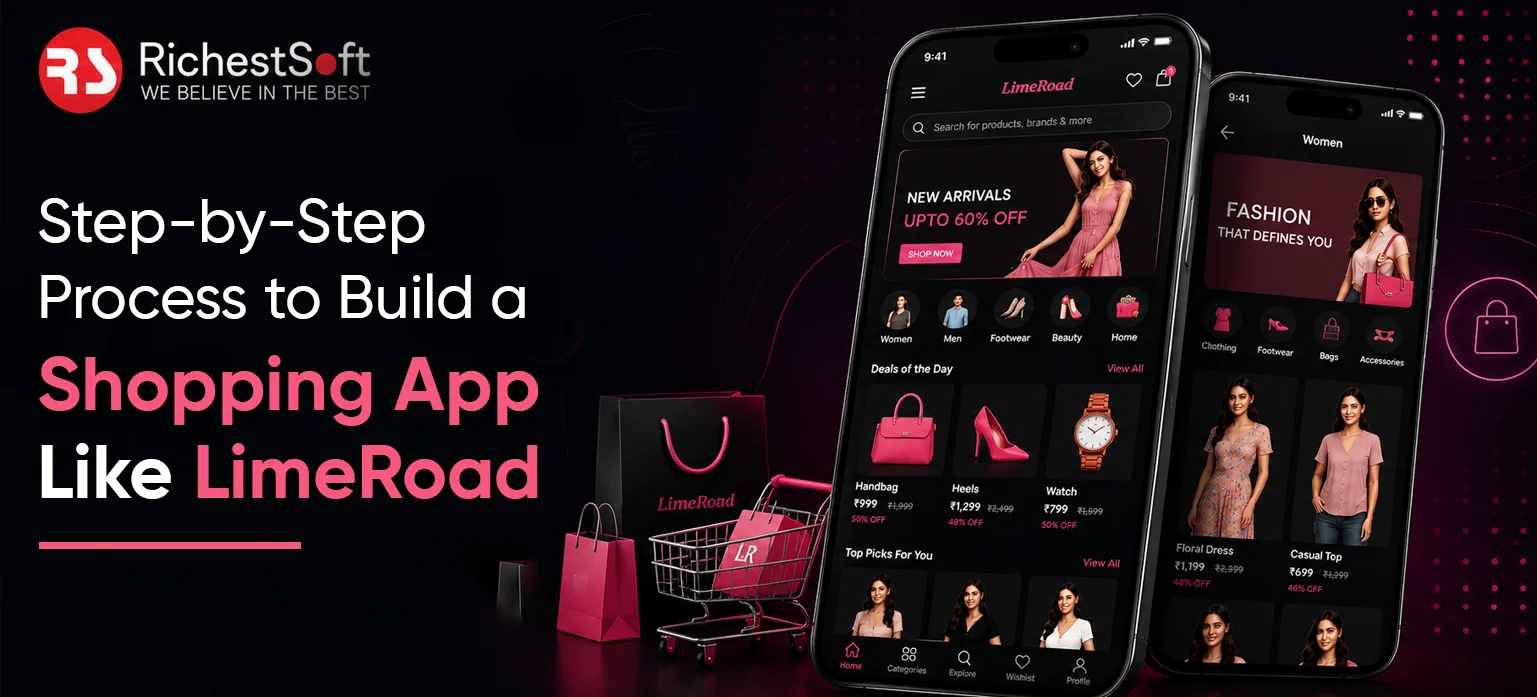
Check out these steps to build a shopping app like LimeRoad:
Define Your Business Model
Start by deciding how your fashion marketplace will operate and who you want to serve. Clearly define your target customers, product categories, seller model, and revenue approach.
Decide on:
- Target audience and market
- Fashion and lifestyle categories
- Seller onboarding model
- Marketplace structure
- Revenue sources
- Delivery and return model
Plan the Core Features
Create a feature list for each part of the platform. A LimeRoad-like shopping app may require separate functionality for customers, sellers, and administrators.
Start with:
- Product search and categories
- Product discovery and collections
- Wishlist and shopping cart
- Checkout and payments
- Order management
- Seller dashboard
- Reviews and ratings
- Admin panel
Design the Shopping Experience
Create an attractive and simple interface that makes product discovery easy. Since fashion shopping depends heavily on visuals, focus on product images, collections, recommendations, and easy navigation.
Design the:
- Customer app
- Seller panel
- Product pages
- Shopping and checkout screens
- Wishlist and collection screens
- Admin dashboard
Choose the Technology Stack
Select technologies according to your expected users, features, budget, and future growth. The technology should support smooth shopping, secure transactions, seller management, and scalable marketplace operations.
You may need:
- iOS and Android development
- Backend framework
- Database
- Cloud infrastructure
- Payment gateway
- Search and recommendation tools
- Push notification services
Develop the Marketplace
Begin development after finalizing the features, design, and technology stack. Build the customer-facing shopping experience, seller platform, and admin system and connect them through a centralized backend.
Key development stages include:
- Frontend development
- Backend development
- API development
- Database development
- Seller management system
- Admin panel development
Add Shopping and Payment Features
A fashion marketplace needs a smooth buying process from product discovery to checkout. Integrate secure payment and supporting services to make transactions convenient for customers.
Important integrations include:
- Payment gateways
- Shipping and delivery APIs
- Address and location services
- Push notifications
- Email and SMS services
Test the App
Test the complete platform before launch to identify problems with browsing, shopping, payments, seller operations, and order processing.
Check for:
- Registration and login issues
- Product listing errors
- Cart and checkout problems
- Payment failures
- Order management issues
- Seller dashboard errors
- Mobile responsiveness
- Security and performance
Launch the MVP
You do not need to launch every possible feature at once. Start with the core shopping and marketplace features, launch in a selected market, and collect feedback from customers and sellers.
Focus on:
- Core shopping features
- Selected product categories
- Initial seller network
- Limited target market
- Customer feedback
- Order performance
Improve and Scale
Use customer behavior, seller feedback, and marketplace data to improve the app after launch. Once the platform gains traction, you can introduce advanced features to improve engagement and increase sales.
You can later add:
- AI product recommendations
- Personalized fashion feeds
- Social shopping features
- Creator or influencer programs
- Loyalty and rewards
- Personalized offers
- Advanced analytics
- Multi-vendor expansion
- Seller advertising tools
Build Your LimeRoad-Like Shopping App with RichestSoft.
Build Your LimeRoad-Like Shopping App with RichestSoft.
Conclusion
Want to build a successful shopping app like LimeRoad? Partner with RichestSoft to enter the fashion business.
As a top-notch ecommerce app development company, RichestSoft helps businesses develop LimeRoad-like shopping apps with customized branding, product discovery, multi-vendor functionality, secure payments, seller management, and a smooth shopping experience.
From planning and UI/UX design to development, testing, deployment, and ongoing support, we help businesses with the complete development process while aligning the platform with your target market, business model, and growth goals.