+1 315 210 4488
 +91 99888 06489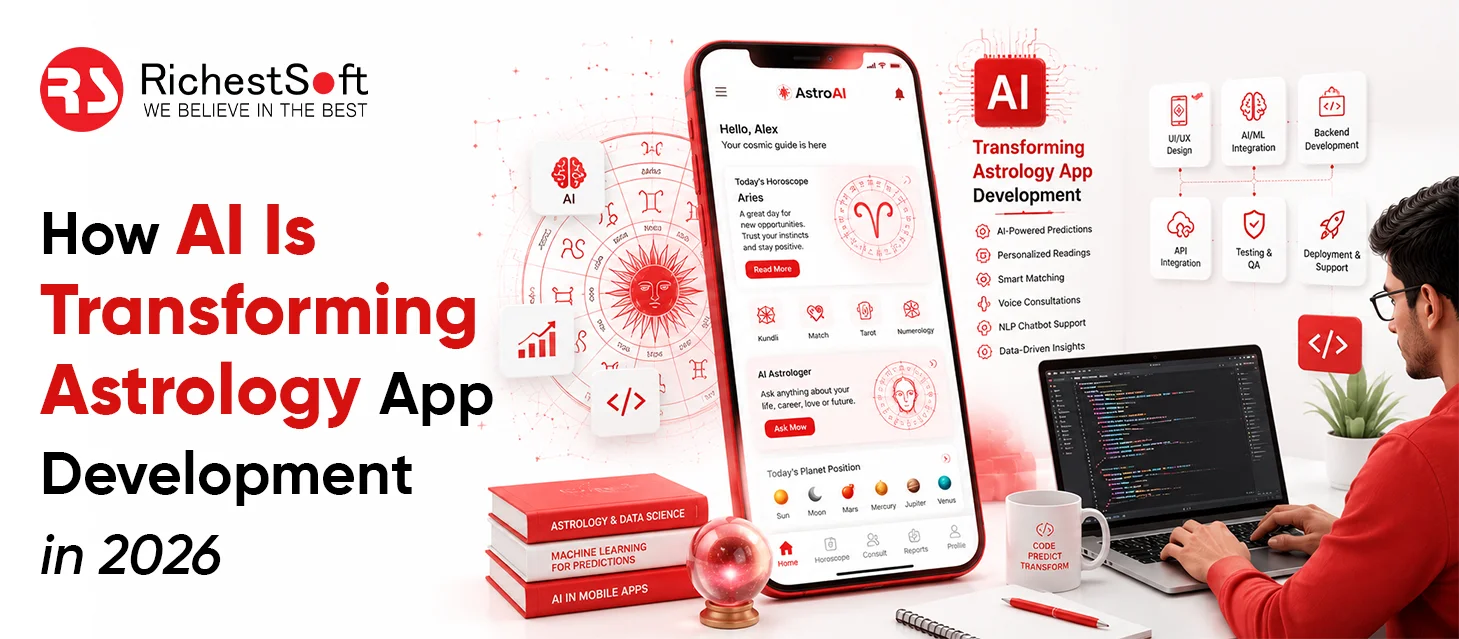


July 29, 2026
In 2026, AI is transforming astrology apps from static sun-sign horoscopes to hyper-personalized, conversational guides. By processing exact natal chart data against real-time planetary transits, natural language processing (NLP) and large language models (LLMs) generate unique, tailored readings based on an individual’s specific birth chart and current circumstances, rather than a generic prediction shared with millions of people born under the same sign. RichestSoft helps businesses build AI astrology apps with intelligent features, seamless user experiences, and scalable technology solutions.
Below, you will find a detailed guide on how AI is reshaping astrology app development in 2026.
Invest in AI-powered astrology app solutions with RichestSoft
Invest in AI-powered astrology app solutions with RichestSoft
Reasons AI Adoption Is Accelerating in Astrology App Development
AI adoption in astrology apps is the result of several reasons, as mentioned below:
Personalized Astrology Experiences
People no longer want the same horoscope that everyone in their zodiac sign reads. They want predictions and guidance based on their own birth details and personal charts.
Why this trend is growing:
- Users expect more personalized readings
- Generic horoscopes feel outdated
- Custom insights keep users more engaged
- Personalized apps often see better retention
This shift is pushing astrology apps to use AI and user data to deliver more relevant and unique experiences.
Market Growth Creating Real Investment Pressure
The financial opportunity behind this shift explains why adoption is accelerating rather than unfolding gradually.
- The astrology app market is valued at $5.69 billion in 2026 and projected to reach $11.71 billion by 2030
- This level of growth is pulling serious investment and competition into the space
- Businesses that don’t adapt risk being left behind in a market moving this fast
Maturing AI Technology Making Real Personalization Possible
AI-powered astrology was technically limited before, but the underlying technology has caught up.
- Large language models combined with real astronomical data can now generate grounded, individualized readings, not just generic text
- This technical foundation is what makes accurate, at-scale personalization possible today
- Without it, “AI astrology” would still mean vague, templated content dressed up with AI branding
Competitive Pressure From Early Movers
This shift isn’t happening in isolation- leading apps have already moved, and others are following.
- Established astrology platforms have already introduced AI chatbots and dynamic, real-time predictions
- Once competitors offer this experience, generic content starts to feel noticeably outdated by comparison
- This pressure is pushing the rest of the market to adopt AI faster than they otherwise might have
Key Ways AI Is Transforming Astrology App Development
Beyond the market forces driving adoption, the real transformation is happening inside the app itself — in what users can now actually experience. Here’s exactly how AI is reshaping astrology apps.
Hyper-Personalized Predictions
Instead of generic, sign-wide horoscopes, AI generates guidance based on a person’s actual chart and behavior.
- Analyzes individual birth chart details, not just a sun sign
- Factors in user behavior and preferences over time
- Delivers predictions that feel relevant to one specific person, not millions
AI Chatbots and Conversational Guides
Static horoscope text is being replaced by interactive, conversational experiences.
- Lets users ask questions and get real-time responses about their chart
- Simulates natural, human-like conversation using NLP
- Makes astrology feel more accessible, especially for beginners
Real-Time Dynamic Horoscopes
Predictions are no longer fixed once a day — they can shift as circumstances change.
- Updates guidance based on live planetary transits, not a static daily post
- Reflects a more accurate, moment-to-moment version of astrology
- Gives users a reason to check back throughout the day, not just once
Data-Grounded Interpretation
AI-generated readings are increasingly backed by real astronomical data, not just generative guesswork.
- Combines precise planetary position data with AI-generated interpretation
- Reduces generic or inaccurate-feeling predictions
- Builds more user trust in the accuracy of what the app provides
Astro-Journaling and Mood Pattern Tracking
AI is helping users understand their own patterns over time, not just read daily content.
- Compares logged moods against planetary transits
- Reveals long-term personal patterns a user might not notice on their own
- Turns the app into an ongoing tool, not a one-time daily check-in
AI-Driven Recommendations
AI helps surface the right content or services for each user, rather than a static menu.
- Suggests relevant content based on engagement patterns
- Recommends live astrologer consultations when relevant
- Personalizes the overall app experience beyond just horoscope content
Emerging AI Trends in Astrology App Development
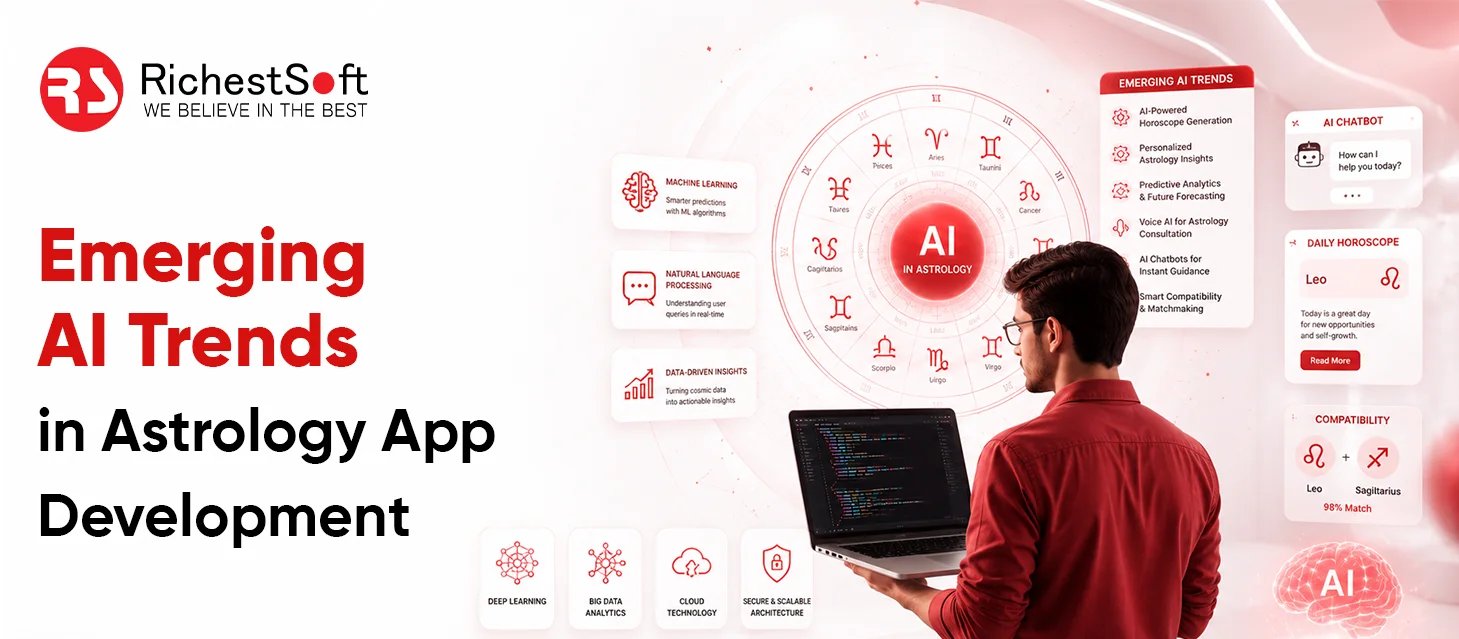
Explore these key AI trends in astrology app development:
AR & VR Astrology Experiences
Astrology apps are moving beyond simple charts and reports. New AR and VR technology allows users to explore astrology in a more visual and interactive way. Some apps are already experimenting with 3D birth charts and virtual astrology experiences.
Key points:
- View birth charts in a more interactive way
- Explore planets and zodiac signs in 3D
- Make astrology more engaging and easier to understand
- Create a more immersive user experience
Blockchain for Data Security and Transparency
Given how personal birth data and chart information are, security and trust are becoming genuine differentiators, not afterthoughts. Blockchain technology is emerging as a way to make user data — birth charts, predictive analyses, and payment records- tamper-proof and independently verifiable.
Beyond protecting sensitive personal data, this same technology is also being explored for secure, transparent premium feature payments, giving users more confidence in both their data privacy and their transactions.
Wearable and IoT Integration
Astrology apps are starting to move beyond the smartphone entirely. Emerging interfaces with wearables and connected devices might allow an app to deliver personalized health notifications or mood predictions based on planetary data without the user opening it.
This reflects a larger goal in the space: making astrology guidance part of a person’s daily life, not just a screen to check.
Voice-Based Astrology Assistants
Many users now prefer listening over reading. Astrology apps enriched with Voice-powered features enhance user engagement and enable them to ask questions, hear predictions, and receive updates without opening multiple screens.
Key points:
- Get horoscope updates through voice commands
- Ask astrology-related questions naturally
- Access predictions hands-free
- Make astrology apps easier and more convenient to use
These versions sound more natural, less AI-written, and easier for general readers to understand.
Multilingual and Culturally Specific AI Interpretation
As astrology apps expand globally, AI is increasingly being used to support multiple languages and culturally specific interpretive traditions- including deeper blends of Vedic and Western astrology systems.
This matters because astrology isn’t interpreted the same way everywhere, and AI models capable of adapting to different cultural frameworks open the door to genuinely global platforms rather than a single interpretive style applied universally.
Proactive AI Agents
AI being self-reaching instead of something consumers must verify is a more subtle yet important change. Some astrology applications use artificial intelligence to offer insights, rituals, or reminders based on forthcoming planetary aspects without the user opening the app, turning them into autonomous guides.
What Businesses Need to Know Before Building an AI Astrology App
Building an AI-powered astrology app isn’t as simple as adding a chatbot on top of a traditional horoscope app. It takes real planning around data accuracy, trust, and technology from the very beginning. Here’s what businesses should understand before getting started:
Plan for AI From Day One
Adding AI personalization to an already-built, static horoscope app is much harder than designing around it from the start.
- Apps built with AI in mind from the beginning can support deeper personalization, like real-time dynamic predictions
- Adding new AI capabilities later becomes far easier without needing a full rebuild
- Retrofitting AI onto an existing app often means working around content structures that were never designed for it
Ground Predictions in Real Astronomical Data
AI-generated readings are only as trustworthy as the data behind them.
- Combining AI with accurate planetary position data helps avoid predictions that feel generic or made up.
- This combination- real data plus AI interpretation- is what separates a credible app from one that just sounds AI-generated
- Skipping this step risks producing content that feels hollow or repetitive, even if it’s technically personalized
Be Transparent About AI-Generated Content
Since trust is central to how users experience astrology guidance, honesty about the technology matters.
- Users should know when they’re interacting with an AI assistant, not a human astrologer
- Apps should avoid overpromising deterministic “this will happen” predictions, since astrology is inherently interpretive
- Being upfront about AI’s role tends to build more long-term trust than presenting it as something it isn’t
Build for Personalization at Scale
Real-time, individualized content generation requires a stronger technical foundation than static horoscope posting.
- The tech stack needs to support LLM integration, ephemeris APIs, and real-time data processing together
- Cross-platform frameworks matter for delivering a consistent experience across devices
- A system built for scale from the start avoids performance issues as the user base grows
Choose the Right Development Partner
This isn’t a typical content app, so the right technical experience matters more than usual. Choosing the best astrology app development company can make a significant difference in delivering an AI-powered solution that is accurate, scalable, and engaging.
- Look for a team like RichestSoft, with genuine experience combining AI/LLM work with domain-specific data integration, not just general app development
- Ask directly whether they’ve worked with astronomical data APIs or similar structured data sources before
- A team without this specific experience is more likely to underestimate the complexity of building genuinely accurate personalization
Invest in AI-powered astrology app solutions with RichestSoft
Invest in AI-powered astrology app solutions with RichestSoft
Conclusion
Looking to build an AI-powered astrology app? Team up with RichestSoft! We build personalized, scalable astrology platforms powered by the latest AI technology — from birth chart analysis and dynamic predictions to conversational guidance features. From strategy and development to deployment and ongoing support, our team helps turn astrology app ideas into market-ready products.