+1 315 210 4488
 +91 99888 06489


July 22, 2026
No single feature can make a crypto wallet secure on its own; it’s a combination of multiple strong security features, such as cold storage, biometric authentication, multi-signature or MPC technology, and non-custodial key control, working together. Whether you are building a custom crypto app or launching a clone, if your system does not align with key security standards, you risk breaches and losing users. That’s why businesses launching crypto wallets must focus on the must-have security features outlined below.
Build a secure crypto wallet solution with RichestSoft.
Build a secure crypto wallet solution with RichestSoft.
Essential Security Features Every Crypto Wallet Should Have
1. Cold Storage / Hardware Wallet Integration
Keeps private keys completely offline, away from internet-based threats like malware and remote hacking. Essential for wallets handling significant asset value.
2. AI-Powered Fraud Detection
AI helps identify unusual transactions and suspicious activity in real time, allowing potential threats to be detected before funds are compromised.
3. Multi-Signature (Multisig) / MPC (Multi-Party Computation)
Requires multiple approvals- or splits key generation across multiple parties- so a single compromised device or key can’t drain funds. Eliminates the single point of failure that most breaches exploit.
4. Non-Custodial Design
Gives users full control over their private keys, removing reliance on a third party’s security infrastructure. Where custodial models are used instead, strong audit and insurance practices become non-negotiable.
5. Biometric Authentication
FaceID or fingerprint verification adds a fast, hard-to-replicate layer of protection against unauthorized device access- particularly critical for mobile wallets.
6. Two-Factor Authentication (2FA)
App-based authenticators or hardware security keys (rather than SMS) protect against SIM-swap attacks, one of the more common ways attackers bypass single-factor logins.
7. Advanced Recovery Options
Shamir Backup (splitting a recovery phrase into multiple shares) or social recovery mechanisms prevent permanent loss of funds if a device is lost or a password is forgotten- without relying on a centralized “reset” option that doesn’t exist in crypto.
8. Anti-Phishing Protection
Features like address whitelisting, transaction confirmation warnings, and phishing-detection alerts guard against the most common attack vector- tricking users into approving malicious transactions themselves.
9. Real-Time Transaction Monitoring
Flags unusual activity as it happens, giving users a chance to catch and stop suspicious transactions before funds are irreversibly moved.
10. Auto-Lock & Session Timeout
Automatically locks the wallet after inactivity, reducing the window of exposure if a device is lost, stolen, or left unattended.
11. Regular Security Audits
Independent, third-party code audits (and public disclosure of results) catch vulnerabilities before attackers do- and increasingly serve as a trust signal for both users and institutional partners.
Understanding Types of Crypto Wallets & Security Implications
Security features are not one-size-fits-all for all types of crypto wallets. Their effectiveness depends on several factors, including the wallet type and its intended use case. Different types of wallets offer distinct levels of control, convenience, and security.
For instance, a cold and a hot crypto wallet represent entirely unique-
- Security Architectures
- Attack Surfaces
- Trust Models
For modern startups planning to build a crypto wallet app, understanding these wallet types helps determine which security features to prioritize.
1. Hot Wallets
Hot wallets remain connected to the internet and are commonly used for everyday crypto transactions.
Security considerations:
- Require strong authentication systems
- Need advanced fraud and phishing protection
- Must support real-time security monitoring
- Often include biometric login and 2FA
Ideal For-
- Trading platforms
- Payment applications
- Everyday crypto transactions
2. Cold Wallets
Cold wallets store private keys offline, reducing exposure to online threats.
Security considerations:
- Secure key storage architecture
- Offline transaction signing
- Backup and recovery mechanisms
- Physical device protection
Ideal For-
- Long-term asset storage
- High-value crypto holdings
- Institutional asset protection
3. Custodial Wallets
In custodial wallets, a third party manages private keys on behalf of users.
Security considerations:
- Enterprise-grade infrastructure
- User account protection systems
- Compliance and regulatory controls
- Secure asset management processes
Ideal For-
- Crypto exchanges
- Fintech platforms
- Beginner-focused crypto products
4. Non-Custodial Wallets
Non-custodial wallets give users complete control over their private keys and digital assets.
Security considerations:
- Secure key generation and storage
- Seed phrase management
- Wallet recovery mechanisms
- User-controlled security settings
Ideal For-
- Decentralized applications (dApps)
- Web3 ecosystems
- Self-custody crypto users
For businesses, the wallet type directly influences authentication methods, key management strategies, compliance requirements, and the overall level of protection offered to users.
For example:
- MetaMask- a software wallet, non-custodial, with DeFi/NFT connectivity- carries smart contract and phishing risk as its primary threat vectors.
- Ledger Nano X- a hardware wallet, non-custodial, purpose-built for cold storage- minimizes remote attack exposure but shifts risk toward physical device security.
Crypto Wallet Regulatory Considerations Across Key Markets
Crypto wallet security is not only about protecting digital assets but also about meeting regulatory requirements in the markets where the wallet operates. Different countries have different rules related to security standards, such as
- User verification
- Data privacy
- Anti-money laundering (AML)
- Financial reporting
Businesses developing crypto wallet solutions should understand these requirements early to avoid compliance challenges later.
Key Regulatory Considerations by Market
| Region | Primary Regulatory Focus | Common Requirements |
|---|---|---|
| United States | KYC AML Financial reporting | Identity verification Transaction monitoring OFAC screening Regulatory reporting |
| European Union | Data privacy Crypto regulations | GDPR compliance Customer consent management MiCA-related requirements |
| UAE | AML compliance Digital asset regulations | Risk assessment systems Transaction monitoring Customer verification |
| India | KYC Financial compliance Data handling | Identity verification Reporting requirements Secure user data management |
Importance of Security Features for Crypto Wallets
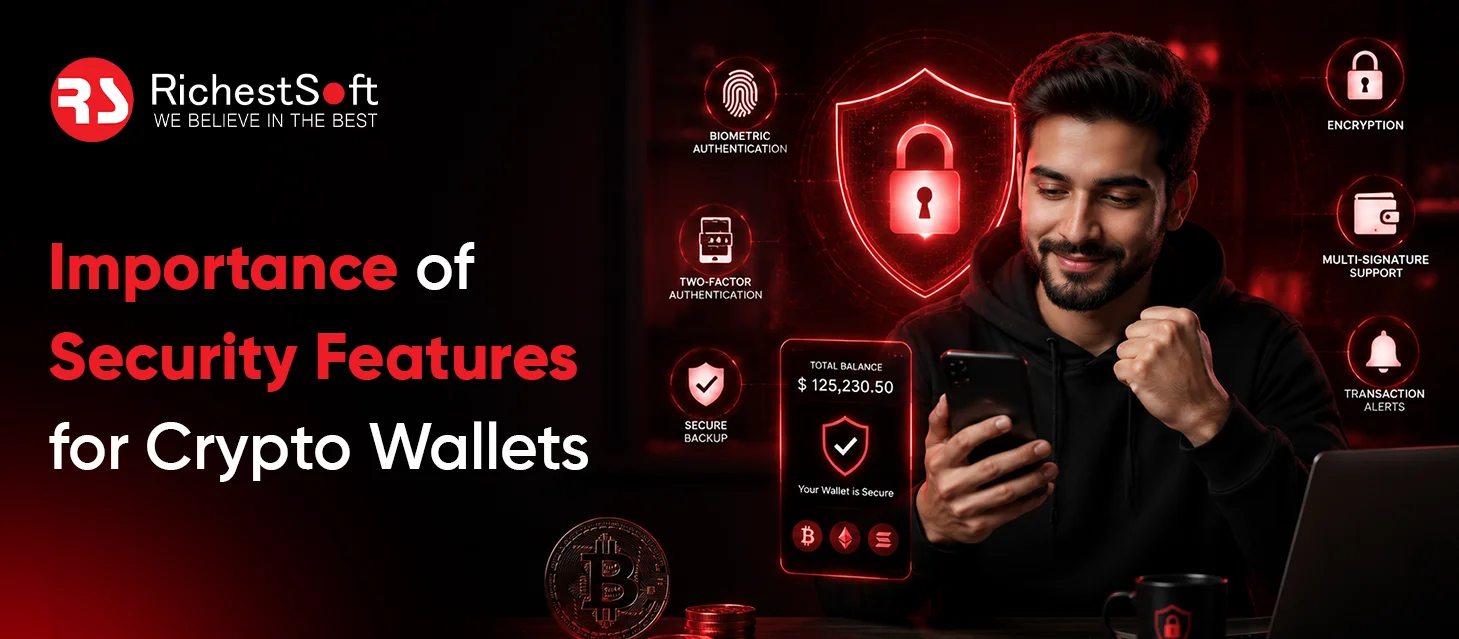
Crypto transactions are different from traditional banking transactions. Once a transaction is completed on the blockchain, it usually cannot be reversed. That’s why strong security features are one of the most important parts of any crypto wallet.
1. Funds Are Difficult to Recover
In traditional finance, fraud can be recovered, but in crypto, once private keys are compromised, funds are typically gone for good. This makes advance prevention the only real strategy- which is exactly why features like multisig and cold storage exist as safeguards before a breach, not as fixes after one.
2. Prevent Cyber Threats
Phishing, SIM-swaps, and malware attacks targeting crypto wallets have grown more sophisticated precisely because the payoff is instant and untraceable in ways traditional banking fraud isn’t. Static security (a password alone) simply can’t keep pace- which is why layered protection through features like (2FA + biometrics + monitoring) has become the baseline, not the exception.
3. Security Directly Impacts User Trust
Users don’t evaluate wallets primarily on features like speed or UI polish; they evaluate them on whether they trust the wallet with their money. A single publicized breach can undo years of user acquisition overnight, while a strong security track record becomes a genuine growth lever- attracting not just retail users but institutional partners who require proof of robust custody practices before they’ll even engage.
4. Security Is Harder to Add Later
Many wallets launch with minimal security to move fast, planning to “harden” later. But retrofitting security into a live product with real user funds is far harder- and riskier- than building it in from day one. Every month security is deprioritized, the cost and complexity of fixing it later increases, often invisibly, until a breach forces the issue.
5. Strong Security Supports Regulatory Compliance
As covered in the regulatory section above, markets like the EU and US increasingly tie compliance directly to security infrastructure- audit trails, data protection, risk monitoring. Wallets without strong security foundations don’t just risk hacks; they risk being locked out of entire markets and institutional partnerships that require compliance-grade security as a baseline.
6. Crypto Wallets Need Built-In Protection
There’s no FDIC equivalent for most crypto wallets. Whatever protection exists has to be built into the wallet itself- which is precisely why features like cold storage, biometrics, multisig, 2FA, and recovery mechanisms aren’t optional add-ons. They’re the substitute for the institutional safety nets crypto simply doesn’t have.
Factors to Consider When Choosing the Right Crypto Wallet Security Features
Not every wallet needs every feature at maximum strength- the right combination depends on how the wallet is actually used. Here’s what should shape that decision.
1. Usage Pattern: Storage vs Active Trading
Long-term holding calls for cold storage and hardware wallet integration. Frequent, daily transactions need faster access methods like biometrics and app-based 2FA that don’t create friction with every use.
2. Value of Assets Held
Smaller, casual holdings may be reasonably protected with strong 2FA and a reputable software wallet. Larger holdings justify the added complexity of multisig or MPC to remove any single point of failure.
3. Technical Comfort Level of the User
Beginners benefit from wallets with guided recovery options- social recovery or simplified Shamir backup flows. Advanced users are typically better served by full self-custody and direct control over seed phrases.
4. Custodial vs Non-Custodial Needs
Choosing non-custodial means full ownership but full responsibility- no recovery support if keys are lost. Custodial wallets trade some control for institutional-grade backing, provided the platform has strong audits and insurance in place.
5. Device and Platform Ecosystem
Mobile-first users should prioritize biometric authentication and device binding. Users operating across multiple devices need strong session management and secure cross-platform sync.
6. Recovery and Backup Preferences
If losing a single device or phrase is a real risk, Shamir backup or social recovery adds redundancy. Users who prefer simplicity may stick with a traditional seed phrase and disciplined offline backup habits.
7. Regulatory and Compliance Requirements
Personal use generally carries lighter requirements. Business or institutional use- as covered earlier- often demands KYC/AML compliance, audit trails, and regulatory-grade security infrastructure.
8. Threat Model: What Are You Actually Protecting Against?
Remote hacking and malware call for cold storage. Phishing and social engineering call for anti-phishing alerts and address whitelisting. Physical device theft calls for biometrics and auto-lock. SIM-swap risk calls for app-based 2FA over SMS.
Build a secure crypto wallet solution with RichestSoft.
Build a secure crypto wallet solution with RichestSoft.
Conclusion
Do you want to make a crypto wallet secure enough to tackle modern threats? At RichestSoft, we help businesses build secure, scalable, and feature-rich crypto wallet solutions designed to meet modern security standards and evolving user expectations. As one of the providers of the best crypto wallet development Services, we focus on delivering wallets with robust security, scalability, and compliance to support long-term business growth.