+1 315 210 4488
 +91 99888 06489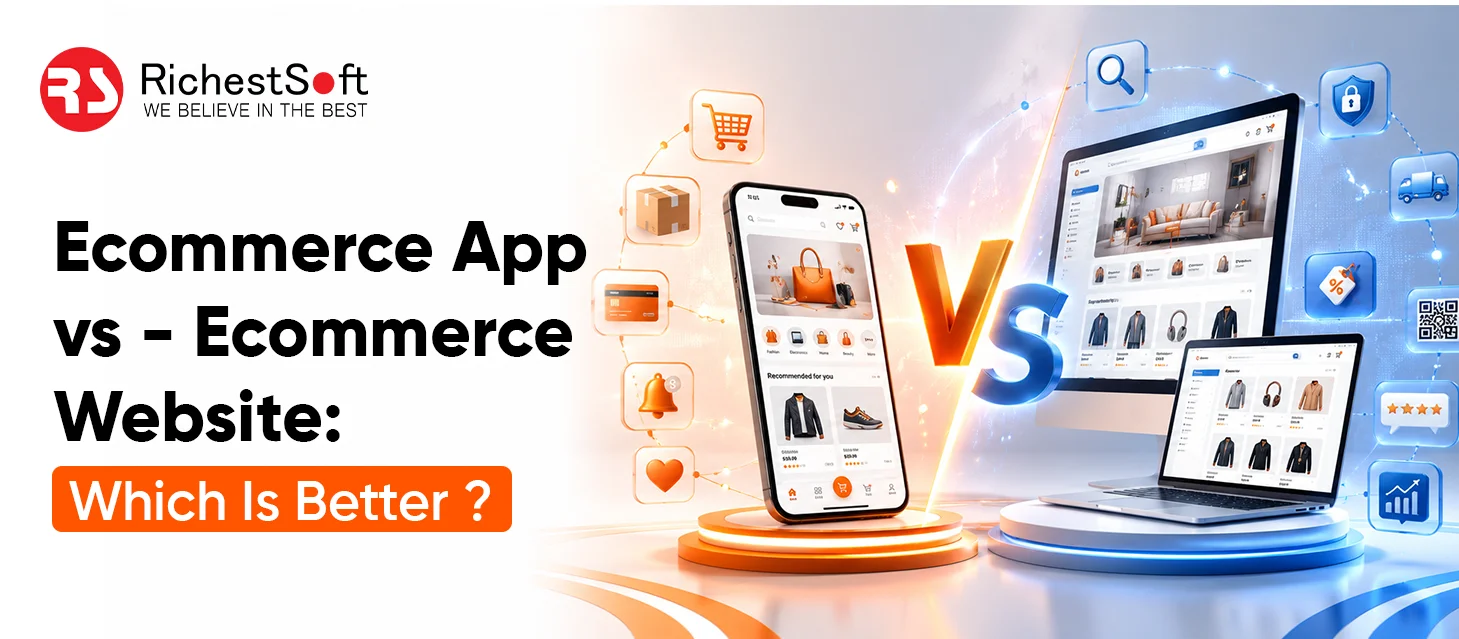


July 21, 2026
An ecommerce app is a downloadable software application designed for mobile devices, acting as a dedicated, high-retention channel for existing customers with optimized performance and better personalization. While an ecommerce website is a browser-based storefront accessible across all devices, serving as a primary discovery and acquisition channel.
An important question that makes sense is: Ecommerce App vs Ecommerce Website: Which Is Better?
This guide will help you understand the difference between ecommerce apps and websites and decide which option best fits your business.
Choose the Right Ecommerce Platform with Trusted Experts at RichestSoft
Choose the Right Ecommerce Platform with Trusted Experts at RichestSoft
What Is an Ecommerce App?
An ecommerce application is a mobile application that allows users to shop online on their mobile phones or tablets. Customers can download the app, sign into their account, browse the catalog, and purchase directly from their phones. Apps are commonly developed by businesses with existing regular customers who want to increase engagement and loyalty .
How an Ecommerce App Functions
An ecommerce application brings customers closer to a brand through a unique mobile experience. It tracks and collects user preferences, the history of purchases and shopping behavior to help users with personalized recommendations. This is why partnering with the best ecommerce app development company can help businesses build feature-rich applications that deliver exceptional customer experiences.
Also, you can incorporate features such as push notifications, location services and device integration to enhance customer engagement.
Types of Ecommerce Apps
1. Native Apps
Native apps are for a specific platform, such as Android or iOS. They generally offer good performance and provide greater access to the device’s features.
2. Hybrid Apps
Hybrid apps combine web and mobile technologies, allowing businesses to build applications faster and reduce development complexity.
3. Progressive Web Apps (PWAs)
PWAs provide an app-like experience through a website. They are fast, work on any device, and have some offline functionality.
Benefits of an Ecommerce App
1. Better Customer Engagement
Through notifications, offers, and even personalized recommendations, apps give brands the opportunity to directly interact with customers.
2. Better Shopping Experience
Apps can offer faster navigation, preference storage for future use, and a smoother checkout process.
3. Increased Customer Retention
Customers who install an app are usually more connected to the brand, making repeat purchases more likely.
4. Personalized Recommendations
Apps track user behavior and predict which products a customer is most likely to buy based on their search and shopping history.
Limitations of an Ecommerce App
- Higher development costs
- Requires regular updates
- Customers need to download the app
- Requires separate development for different platforms
What Is an Ecommerce Website?
An ecommerce site is an online store that people can access via their web browser. Users can shop, make payments, and track orders without downloading any app.
How an Ecommerce Site Works
An ecommerce site is a digital storefront that brings customers and products together. Shoppers browse the site, look for products, review information, place orders through secure payment portals, and wait for their packages to arrive.
The website itself is responsible for inventory management, customer accounts, payments, shipping information, and order fulfillment.
Key Features of an Ecommerce Website
- Product catalogs with images and descriptions
- Search and filtering options
- Shopping cart functionality
- Secure payment gateways
- Customer accounts
- Order tracking
- Product reviews and ratings
- Mobile-friendly design
Benefits of an Ecommerce Website
1. Easy Customer Reach
One of the best things about websites is that they can be discovered. Customers locate your store through Google search, advertisements, social media, and direct links.
2. Better for SEO
Websites enable businesses to boost search rankings through SEO. A well-optimized website has a better chance of getting in search results when customers search for products online.
3. Lower Initial Cost
Typically, websites are cheaper to develop than mobile apps for new businesses.
4. No Installation Required
With nothing to download, your customers can access your store instantly, speeding up the buying process.
Limitations of an Ecommerce Website
Although ecommerce websites are highly effective, they have some limitations.
- Limited direct communication with customers
- Less personalized shopping experiences
- Customers may leave after closing the browser
- Higher competition from other online stores
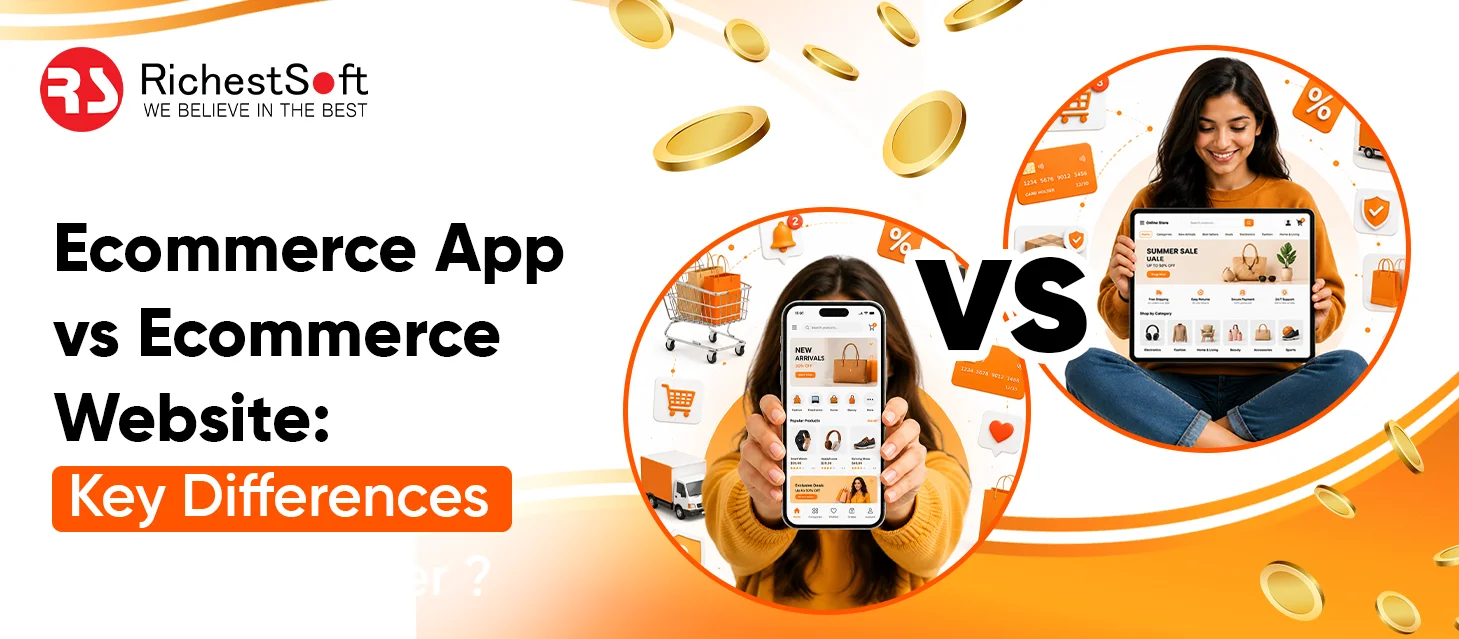
Ecommerce App vs Ecommerce Website: Key Differences
| Parameter | Ecommerce Website | Ecommerce App |
|---|---|---|
| Accessibility | Works on any browser | Requires installation |
| Cost | Lower development cost | Higher development investment |
| SEO | Excellent for search visibility | Limited SEO benefits |
| Speed | Depends on browser and internet | Usually faster performance |
| Personalization | Moderate | Advanced personalization |
| Notifications | Limited | Push notifications available |
| Customer Loyalty | Good | Better for repeat customers |
| Maintenance | Easier updates | Requires app updates |
| User Engagement | Moderate | High engagement |
When Should You Invest in an Ecommerce App?
An ecommerce app is worthwhile when a business has an existing customer base and wants to increase engagement.
1. Businesses With Repeat Customers
Apps are ideal for brands whose customers shop often — such as fashion, grocery, food delivery and subscription services.
2. High-Volume Ecommerce Brands
Large retailers with thousands of customers can develop apps to provide a faster shopping experience and to better manage customer relationships.
3. Loyalty and Rewards Programs
Apps enable you to more easily give loyalty points, exclusive deals, and customized promotions.
4. Brands Focused on Customer Retention
An app can help build a deeper connection with customers if your goal is more repeat purchases.
When Should You Invest in an Ecommerce Website?
A shopping site is a good option for many startups and small businesses, particularly those entering online business.
1. Startups and Small Businesses
If you’re opening an online store for a brand new ecommerce business, a website gives you a way to experiment with your products, attract customers, and get your brand out there without a huge investment.
2. Businesses Focused on Organic Traffic
Organizations that rely on Google searches and content marketing should prioritize websites, as SEO is a significant customer acquisition tool.
3. Brands With Limited Budgets
A website gives you most of the essential ecommerce features without the additional cost of building an app.
4. Businesses Testing Market Demand
If you are learning about customer behavior, a website is usually the best place to start.
Should You Build Both an Ecommerce Website and an App?
When it comes to scaling businesses, both platforms are simply the best approaches to use together.
A site is better at bringing in new customers, an app better at keeping them.
This creates an omnichannel shopping experience, allowing consumers to find products via a search engine and continue shopping in a customized mobile app.
A practical growth roadmap can look like:
- Start with an optimized ecommerce website
- Build customer trust and sales
- Analyze customer behavior
- Launch an ecommerce app when demand increases
Cost Comparison: Ecommerce App vs Ecommerce Website
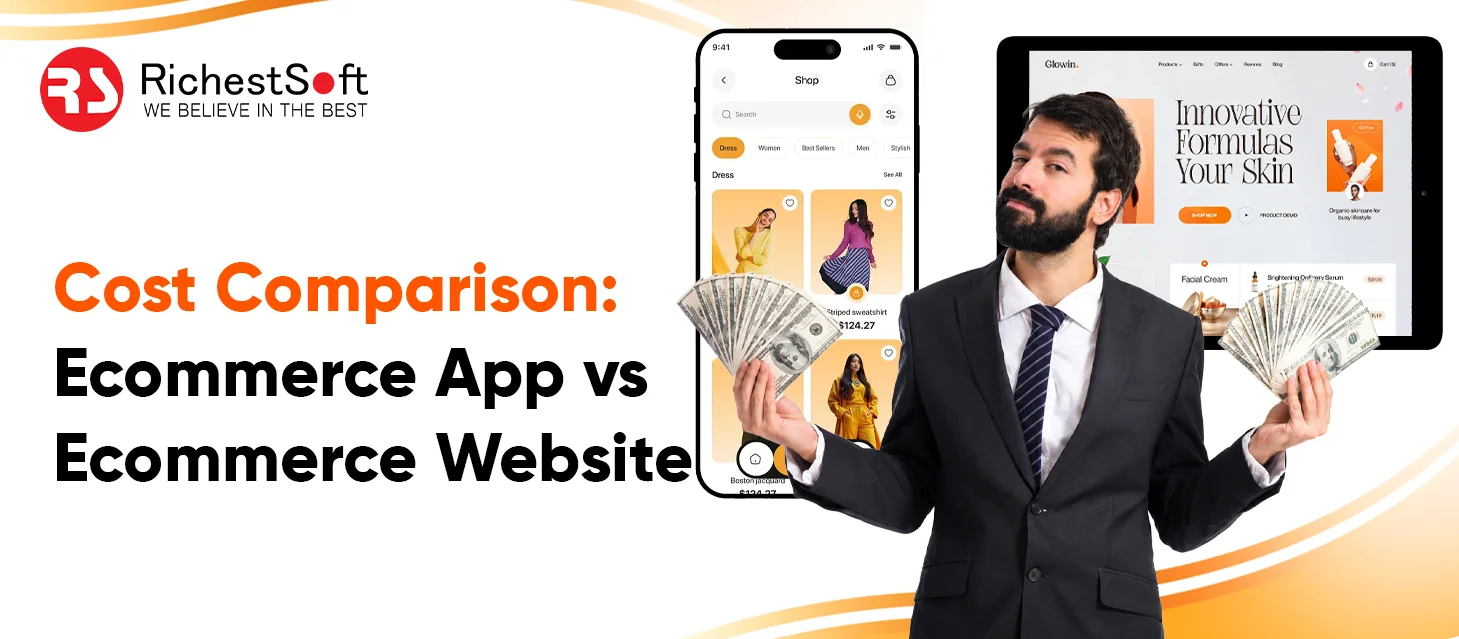
An ecommerce app costs $15,000 – $50,000+ due to custom native (iOS/Android) development, alongside ongoing Apple/Google store maintenance fees.
Conversely, building an ecommerce website is significantly cheaper and faster to launch, costing $1,000 – $5,000 initially via SaaS platforms like Shopify. Additionally, the cost depends on features, design complexity, technology, and business requirements.
1. Ecommerce App Cost
Apps tend to cost more because they need to be built specifically for mobile platforms; they are more difficult to test, require more updates, and run on more platforms than websites.
2. Ecommerce Website Pricing
Due to lower barriers to creation and maintenance, websites are typically less costly to develop and operate.
3. Return on Investment
While a website can generate quick returns through SEO and online visibility, an app can deliver long-term value through customer loyalty and repeat sales.
Essential Features Every Ecommerce Platform Should Have
Whether you choose an app or website, certain features are necessary for success:
- Secure payment gateway
- Product search and filters
- Shopping cart
- Wishlist
- Customer accounts
- Order tracking
- Reviews and ratings
- Multiple payment options
- Customer support integration
A smooth and trustworthy shopping experience is what keeps customers coming back.
Future Trends in Ecommerce
The future of ecommerce looks to be a smarter, faster, and more personalized experience.
1. AI-Driven Buying
With AI, companies can offer personalized recommendations and automated customer service.
2. Voice Commerce
Voice assistants will simplify product searches and purchases.
3. AR Product Visualization
Augmented reality enables shoppers to try products before purchase.
4. Social Commerce
Direct shopping via social media sites will increase.
Choose the Right Ecommerce Platform with Trusted Experts at RichestSoft
Choose the Right Ecommerce Platform with Trusted Experts at RichestSoft
Verdict – Ecommerce App vs Ecommerce Website: Which Is Better
There is no definitive answer on whether an ecommerce app or website is the better choice. An ecommerce website is better for discovering new customers, while an ecommerce app is better for retaining existing ones. For a new business or a brand focused on initial growth, a website is almost always the required first step. However, established brands must develop apps to maximize profitability and foster deeper customer loyalty.
The right one for you depends on the stage your business is at and your customer behavior and growth expectations.
Whether you want to invest in Ecommerce app or Ecommerce website, at RichestSoft, we help businesses build scalable ecommerce solutions tailored to unique goals. Get secure, user-friendly, and growth-focused solutions designed to help your brand succeed in the digital marketplace.