+1 315 210 4488
 +91 99888 06489


February 18, 2026
Urban mobility is changing fast, and electric scooter and bike rental companies are leading the charge as cities look for smarter, greener solutions to move people around and entrepreneurs see a straightforward business opportunity in tech-enabled rental apps and platforms.
This guide covers how Electric Scooter & Bike Rental Clone Apps enable you to quickly enter the market, reduce your risk, and scale with confidence — and all you need to know to turn a proven concept into a successful mobility business.
What are Clone Apps?
Clone Apps provide a viable solution for those business leaders and entrepreneurs who want to start their own rental app business instantly. Rather than creating a whole new app from scratch, companies can leverage tried and tested platforms, tailor them to their brand, and launch faster.
Understanding a Scooter & Bike Rental Clone App
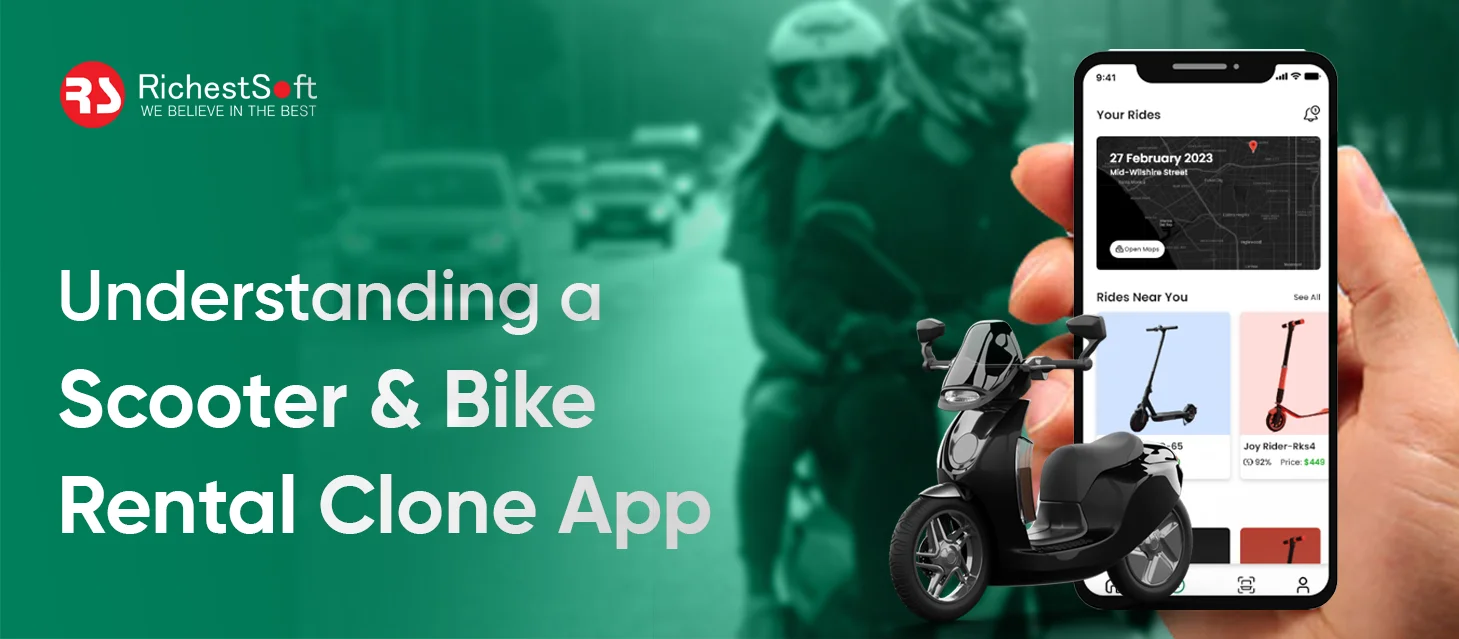
Think of it as starting with a solid foundation. It already contains several built-in features, such as:
- GPS-enabled ride tracking
- Digital payments and wallets
- Fleet management dashboards
- User-friendly booking and unlocking flows
So, leveraging a clone app would mean that you don’t have to spend months or years engineering everything from scratch. You can simply focus on customizing the experience of users on your platform and scaling it to fit your brand and business model.
Why Businesses Choose Clone Apps
The benefits are clear. Clone apps offer:
- Faster launch time, you can launch your own app within weeks instead of months.
- Lowers upfront costs, because you’ll just be utilizing pre-existing frameworks.
- Scalability, as it is designed to handle growth in fleet size and users.
- Compliance readiness, through easy integration with local licensing and safety rules.
- Room for innovation by freeing up resources to invest in advanced features.
Must-Have Core Features of a Ride-Rental App
- For riders, getting started should be simple. A quick sign-up process, a readable map to find nearby bikes or scooters, smooth payments, and easy access to past rides’ data are all must-haves.
- For operators, visibility is everything. Real-time vehicle monitoring, battery status, geofencing to prevent misuse, and proactive maintenance alerts ensure smooth operation.
- For admins, the dashboard should be like a command center. Transparent analytics, pricing management, compliance reporting, and revenue information all in one place.
- A reliable payment system because no one likes their transactions to fail. Multiple gateways, wallet top-ups, and instant receipts create a sense of trust among the users, which helps in retention.
- Security and compliance with data regulations, verified identities of users, and insurance integrations to keep the platform running safely and responsibly throughout its life.
Step-by-Step Development Guide
1. Market & Competitor Research
The first step before building anything is to understand and get a clear picture of the market you’re entering. Research thoroughly to learn about your potential users and the preferred commute areas. Take the time to grasp the real-world patterns rather than relying on assumptions.
Find answers to questions like:
- What pricing models are competitors using?
- How large is the potential fleet size?
- Are there regulatory barriers in the chosen region?
2. Defining the Business Model
Now you need to decide how your app will make money. Will you have users pay per ride, get monthly subscriptions, work with corporates, or concentrate on campus and local user bases?
Your revenue model will affect more than just your income. It also dictates the features you build, how you price, ride algorithms, and even what analytics you track. Getting this foundation laid early ensures the app is consistent with what users want and what operations expect.
3. UI/UX Design
The design and functionality of your app are both extremely important factors in achieving scalable results. The user journey has to be frictionless and smooth. This means any user should be able to access the app, open and locate a nearby vehicle, and start their ride in just a few taps. This will ensure retention and more popularity of your business.
Key points to address in design:
- Simple map interface
- Large, clear CTAs (e.g., “Unlock” button)
- Clean navigation menus
- Accessible ride history and payment options
4. Getting the Right Technology Stack
Choose a tech stack that actually serves your app’s needs. Focus on core features like ride tracking, payments, fleet management, and messaging, and pair them with trusted tools — React Native or Flutter for front end, Node.js or Django for backend, PostgreSQL or MongoDB for data storage, plus cloud hosting and Google Maps or Mapbox. Make sure it also works with IoT Devices for GPS- and Bluetooth-enabled scooters or bikes.
5. API Integration
APIs are central to making the app work seamlessly. Common integrations include:
- Payment gateways (Stripe/PayPal/Razorpay)
- Maps & navigation
- Push notifications for ride updates
- IoT integrations for scooter locks and GPS trackers
Proper API integration ensures reliability and prevents breakdowns in key user actions like unlocking a bike or making payments.
6. Backend Development
The backend acts as the command center for the app. This stage involves setting up:
- Secure user authentication
- Real-time data synchronization (for vehicle availability)
- Payment processing and refund handling
- Admin dashboards and reporting tools
Backend systems must be robust enough to handle spikes in usage, especially during peak hours in urban areas.
7. Vehicle IoT Integration
Unlike a standard eCommerce or booking app, scooter rental platforms require hardware integration. Each vehicle is equipped with IoT modules that connect to the app for:
- Locking/unlocking
- GPS tracking
- Battery level updates
8. Security & Compliance Implementation
It is common in mobility apps to have a lot of sensitive data like user identity, payment details, and location. So, to ensure your platform keeps all this info secure while complying with all regulations, you must implement:
- Encryption
- Authentication layers
- Compliance frameworks like GDPR and PCI DSS
9. Testing & QA
End-to-end testing is critical before launch:
- Functional testing for every feature
- Stress testing for high usage scenarios
- Security testing to prevent breaches
- Compliance checks with local transportation rules
10. Launch & Deployment
After thorough testing, you can deploy the app to the Google Play Store and App Store. For businesses, the launch stage also includes:
- Running marketing campaigns
- Configure backend servers
- Partnering with local fleet providers
- Ensuring customer support is in place
11. Post-Launch Support & Scaling
Launching your app doesn’t end there; you need to stay up to date post-launch as well. An adequate support framework for tracking usage and adjustments, rapidly resolving technical glitches and bugs, and making necessary updates keeps your platform current. Over time, scaling may involve:
- Expanding to new cities
- Supporting multiple languages and currencies
- Adding subscription models
- Partnering with ride-sharing apps or transit authorities
Cost Factors & Development Timelines
The expenses involved in developing an electric scooter & bike rental clone app can vary widely, depending on how ambitious your brand is. It all goes down to:
- Customization – Design can greatly impact investment. Opting for tailored branding, UI/UX design, and third-party integrations adds to the budget.
- Technology Stack – No matter what you choose, iOS, Android, cross-platform, or deeper IoT integration, all of it impacts cost and time.
- Integrations – Features like compliance tracking, real-time analytics, or advanced IoT hardware also demand some extra development and hence extra pricing.
- Post-Launch Support – Even after a successful launch, you still need to maintain continuous updates, get bugs fixed, and require scale support. These are also ongoing costs you need to plan for beforehand.
In general terms, most electric scooter and bike rental clone app development would cost somewhere between $50,000 and $150,000, depending on scope and customizations. Moreover, the development timelines range from 8 to 20 weeks for launch, which is much faster than the 6–12 months typically needed for custom development of such an app.
Conclusion
In this ever-evolving domain of urban mobility, it is an exciting opportunity to launch your own electric scooter or bike rental app. And owing to the current challenges, it is only viable and also a smart approach to opt for a clone app and enter the market right away. A clone app gives you a head start with its tested foundation. You also get the freedom to focus on creating a significantly better user experience by customizing the design features and thus running operations smoothly through your new app.
At RichestSoft, a white label app builder, we provide you with clone app solutions that are customizable and adaptable as per your requirements.