+1 315 210 4488
 +91 99888 06489


February 12, 2026
Do you talk to new people every day, follow up with leads, answer customer questions, yet still lose customers? Well, to maintain a business’s stability, every entrepreneur should have a strong hold on their customer relationships. When you manage everything manually, information becomes scattered, work becomes confusing, and progress slows. This is when CRM development services stand out as a support. Want to know how?
Well, from small teams to growing companies, a well-built CRM supports better planning, smoother communication, and steady growth all in one setup. Instead of guessing or searching for information, businesses can clearly see customer needs, past conversations, and future tasks. Although every company is different, having a CRM that fits its goals makes a big difference. In this blog, we will explain CRM features, business benefits, and real-life use cases in a clear and simple way.
Features to Incorporate in CRM Development Services
Here are some features you must explore in CRM development:
Contact and Customer Records
A strong CRM holds all customer details in one place, including names, phone numbers, and past interactions. This gives a brand a full view of each customer’s history. With clear records, teams work with confidence and avoid confusion. Centralized contact details help businesses manage relationships and grow trust with every client.
Lead Tracking and Sales Progress
CRM systems track all leads from first contact through progress toward a sale. A business can see where each lead stands and what follow‑up is needed next. This gives clarity on opportunities and improves conversion chances. Clear tracking helps teams stay organized and focus on promising leads without missing steps.
Task and Reminder Features
Every task, appointment, or follow‑up should appear clearly inside a CRM. Setting reminders helps teams stay on schedule and never forget important actions. This means customer follow‑ups happen on time and plans stay aligned. A CRM with task features helps keep teams focused and ensures smooth, reliable workflows.
Communication History and Messages
CRM tools record all messages, calls, or emails linked to customers. This means every conversation shows up in one place. Business teams can refer to past chats and respond with context, which builds stronger relationships. Clear communication records also save time searching for details across different systems.
Simple Reports and Business Insights
A CRM should give clear reports that show sales, customer behavior, and team performance. These summaries help leaders understand results and plan future steps with confidence. Insightful reports make it easier for executives to make decisions that align with real data and real business trends.
Task Flow Management
A CRM should help manage work steps for teams, such as sales or customer care. Organized task flows ensure actions are followed in the right order and nothing gets forgotten. Teams can see what to do next and act without delay. This clarity supports smooth daily operations and better customer experience.
Mobile Access and Flexibility
Teams often work in different locations or away from desks. A CRM that works on mobile devices lets team members update details or view tasks anytime. This keeps operations up to date and communication clear across the business. Mobile access supports work on the move without delay.
Business Benefits Of CRM Development Services

When a brand chooses CRM development services, daily work and customer relations become clearer and more reliable. Want to know how? Here are some of the business benefits of CRM development services:
Stronger Customer Relationships
CRM maintains client preferences, previous conversations, and contact history in one place. Teams are able to recognize each client’s priorities and provide thoughtful responses. Over time, this consistent attention promotes repeat business and helps establish enduring trust.
Increased Revenue and Sales
A CRM facilitates the tracking of leads, customer interest, and sales progress. This helps close more agreements by providing sales teams with a clear picture of opportunities. When client follow-ups remain consistent, brands frequently experience a steady rise in revenue.
Enhanced Communication within the Team
Every team may view the same details because a CRM keeps all client data in one location. Marketing, sales, and support all collaborate more easily, exchange information, and steer clear of repetitive messaging. A strong, cohesive strategy throughout the company is supported by this clarity.
Clear Business Insights
CRM systems collect customer and sales data and show simple summaries. These views help business leaders notice patterns and plan with confidence. Clear insights support better choices for sales, marketing, and customer work.
Higher Productivity and Time Savings
CRM systems handle routine entries like customer info, follow‑ups, and reminders. This reduces manual work, so staff focus on important tasks. The result is a smoother workflow and stronger performance without wasted time.
Better Customer Support
CRM systems keep a record of all support history and interactions. Support teams can respond faster and with more context when a customer has a request. Quick, consistent responses help the brand keep customers happy and connected.
Use Cases Of CRM Development Services
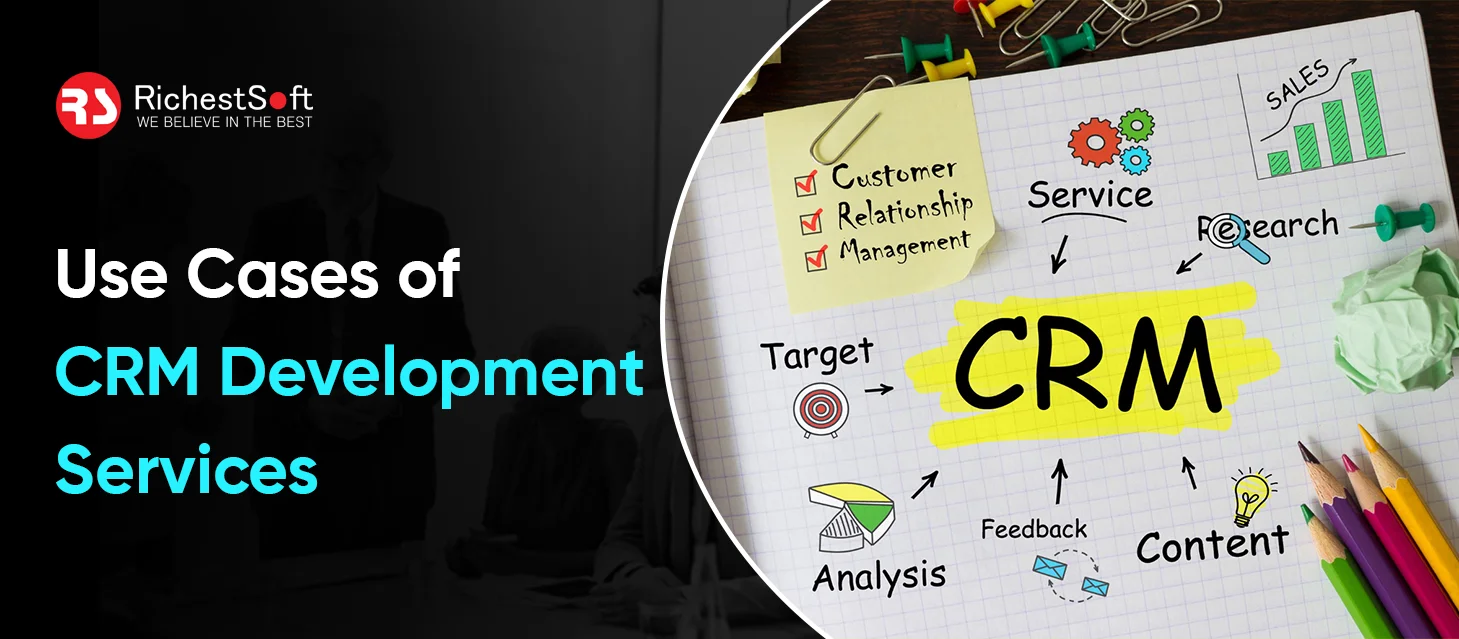
When businesses adopt CRM development services, they apply the system to many daily business activities. A CRM does more than store contacts. It helps teams manage work, serve customers better, and make common tasks easier. Below are simple and real ways businesses use CRM systems in everyday operations:
Manage Leads and Sales Process
Many brands use CRM to track potential buyers and sales progress from first contact to final sale. The system shows where each lead stands and what steps remain. This organized view stops leads from being forgotten and helps sales teams follow the right path toward revenue.
Customer Support and Service Requests
CRM systems store support messages, past conversations, and service history in one place. This way, service teams can see the full customer background before answering. Fast, clear responses help build trust and keep support operations consistent.
Coordinate Work Across Teams
Different departments often need shared customer information. CRM enables the same customer file to be viewed by marketing, sales, and support teams. Task rotation across teams keeps productivity high and eliminates the need for repeated explanations.
Track Customer Behavior and Trends
CRM systems collect simple information about how customers interact with a brand, like their purchases, questions, and choices. This information helps business leaders notice patterns and adjust plans to match what customers really want, supporting growth and smarter decisions.
Industry‑Specific Examples
Retail teams use CRM to manage purchase history and loyalty. Healthcare teams manage patient communication and appointments. Real estate firms track client interests and follow‑ups. In every industry, CRM helps keep customer details clear and work organized.
Conclusion
Finally, we would like to state that investing in CRM development services can help a firm manage clients, enhance relationships, and achieve steady growth. Choosing a custom app development company, like RichestSoft, ensures a smooth, tailored solution that meets business goals. With expert guidance, brands can strengthen bonds, boost output, and succeed over the long run.