+1 315 210 4488
 +91 99888 06489


December 12, 2025
Digital presence drives modern business growth. And your online identity begins with your website. But choosing the right website structure is the first step. And the type you choose will influence your customer experience for years.
That starts with a simple question: Static site or dynamic site?
Let’s keep it simple and break down what each one offers.
What is a Static Website?
Static websites keep things simple: what you publish remains the same until someone manually changes it.
When Businesses Usually Choose Static Websites
- You need something fast and simple.
- Your content doesn’t change often.
- You want lower development and maintenance costs.
- You prioritize speed and basic brand presence.
Key Business Advantages of Static Sites
- Super-fast load times: great for SEO and mobile users.
- Low hosting cost: ideal for startups.
- Strong security: fewer moving parts, fewer vulnerabilities.
What is a Dynamic Website?
A dynamic website is interactive and pulls data in real time. Think: dashboards, ecommerce stores, booking systems, portals, news sites, blogs, SaaS platforms.
When Businesses Choose Dynamic Websites
- Your site needs personalization or user accounts.
- You expect frequent content updates.
- You plan to scale features over time.
- You want automation and real-time data.
Also read – Why You Need a Dynamic Website?
Key Business Advantages of Dynamic Sites
- Flexible and scalable as your business grows.
- Easy to update with CMS options (WordPress, Laravel, custom admin panels).
- High interactivity for better customer engagement.
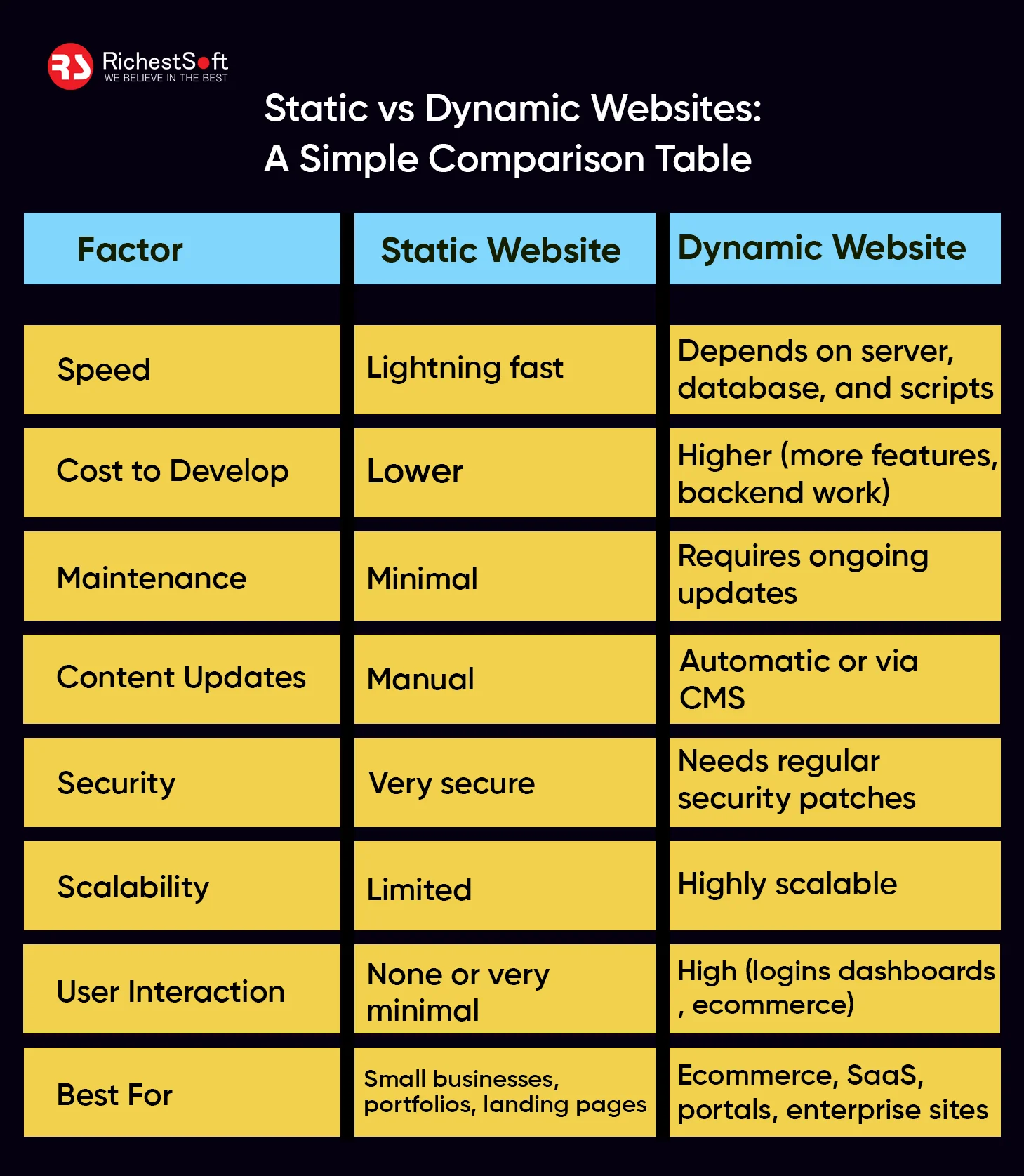
Static vs Dynamic Websites: A Clear Side-by-Side Breakdown
How to Pick the Best Website Structure for Your Growth Stage
If You’re a Startup
Go static if you need:
- A clean online presence
- A fast launch
- Lower upfront cost
Choose dynamic if:
- You’re building a product platform
- You need lead capture, forms, user accounts.
If You’re a Growing Business
A dynamic website will usually serve you better because:
- You’ll update content more often.
- You may add services, pages, integrations, or user roles.
- Automation saves time as operations increase.
If You’re an Established Brand
Dynamic websites offer:
- Personalized experiences
- Advanced analytics
- AI-based recommendations
- Multi-level admin controls
- Integrations with CRM, ERP, and marketing tools
Static sites typically won’t support enterprise needs unless combined with headless CMS solutions.
Real-World Scenarios to Help You Make the Right Choice
Scenario 1: A Local Service Business
Example: Salon, HVAC company, clinic, small law office
Best choice: Static or lightweight dynamic CMS
Reason: Fast, low-maintenance, simple to keep up to date.
Scenario 2: E-commerce Store
Best choice: Dynamic website
Reason: You need inventory management, carts, payments, user data, etc.
Scenario 3: Personal Portfolio or Single Campaign Page
Best choice: Static
Reason: Minimal updates, lightning-fast performance.
Scenario 4: SaaS Product or AI Tool
Best choice: Dynamic (custom development)
Reason: Real-time data generation, user accounts, and dashboards.
Pros & Cons for Business Owners
Static Website
| Pros | Cons |
|
|
Dynamic Website
Pros |
Cons |
|
|
How to Make the Right Choice for Your Business
Here’s a simple rule:
If your website is only meant to show information, go static, and if your website needs to do something, opt for dynamic.
Still unsure? A website consultant or development team can help evaluate:
- Your industry needs
- Your budget
- Your growth plans
- Your tech requirements
- Your automation opportunities
Conclusion: What Should Your Business Choose?
Static websites keep things simple and super fast. Dynamic websites help your business scale with interactive features and automation.
If you’d like help choosing the right fit, RichestSoft- the Best Web Development Company, can design a custom solution using PHP, Laravel, Webflow, Python, and AI.
RichestSoft helps you pick what works best and builds it using modern technologies that support your long-term growth.

FAQs
- What type of website is best for my business—static, dynamic, or something custom?
Static websites are great for small, fast sites. Dynamic ones let you grow and automate. And custom development handles anything that doesn’t fit those two.
- How long does it take to build a fully functional website?
It really comes down to complexity. Simple static sites can be done quickly—in a few weeks—while dynamic or custom sites generally take longer.
- Can my website grow with my business as I add features over time?
New services, pages, or user tools? No problem—your website will grow alongside your business.
- How do you ensure my website is fast and secure?
We make sure your site runs smoothly and safely so visitors have a seamless experience every time.